


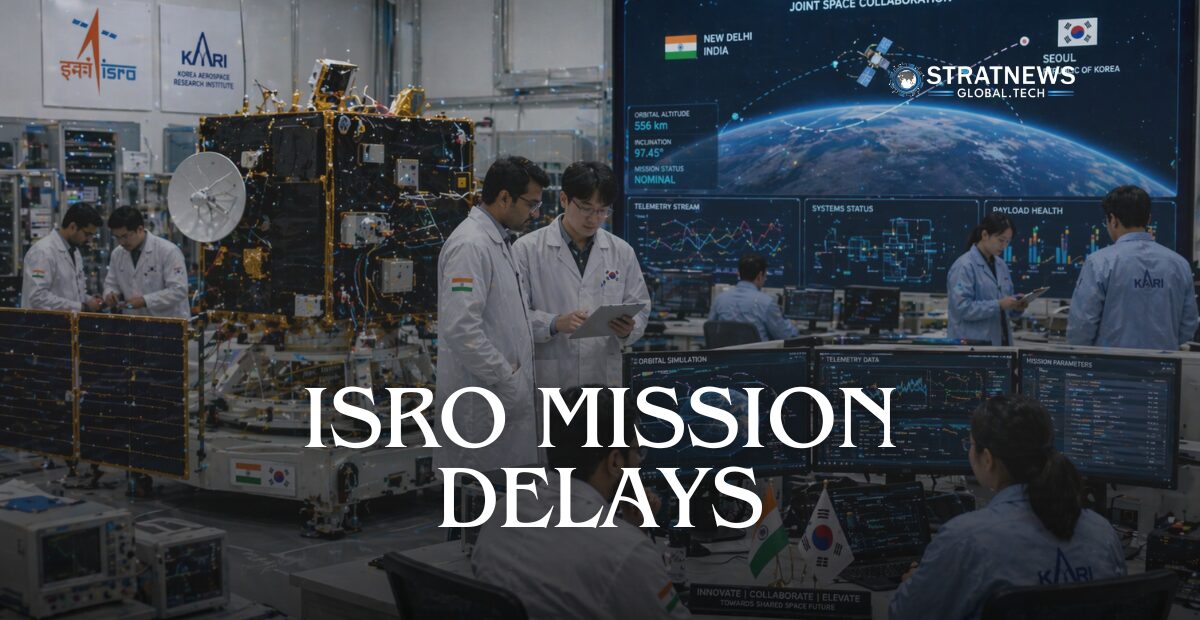
Resignations, Mission Delays and Silence: What’s Happening at ISRO?
For six months, the skies above Sriharikota remained unusually quiet.
The launch pads at the Satish Dhawan Space Centre (SDSC-SHAR), which previously hosted landmark missions such as Chandrayaan-3 and Aditya-L1, did not witness a single ISRO launch after January 2026. As mission timelines slipped and scientists resigned, questions about the agency’s direction and communication continued to grow.
The silence finally ended when Skyroot Aerospace’s Vikram-1 lifted off from Sriharikota under Mission Aagaman. Although the launch marked a milestone for India’s private space sector, it also drew attention to the contrast between the country’s emerging commercial space industry and ISRO’s slower pace during 2026.
Private Launch Highlights Changing Space Landscape
The successful launch of Vikram-1 brought renewed activity to Sriharikota after a six-month lull. The mission featured a young engineering team, a polished public broadcast and extensive behind-the-scenes coverage that introduced viewers to the people behind the launch.
For many observers, the event reflected a changing approach to communicating space missions. At the same time, it prompted fresh questions about ISRO, which has faced scrutiny over delayed missions, limited public communication and the absence of regular launch activity.
Ambitious Plans Meet Early Setbacks
When ISRO Chairman V. Narayanan outlined the agency’s plans for 2026, the year was expected to include several major milestones. These included the first industry-built Polar Satellite Launch Vehicle (PSLV), the Gaganyaan G1 human spaceflight mission, commercial Small Satellite Launch Vehicle (SSLV) missions, navigation satellites, reusable launch vehicle development and preparations for the Bharatiya Antariksh Station.
However, the programme encountered an early setback when the PSLV-C62 mission suffered an anomaly, marking the second consecutive issue involving the launch vehicle within a year.
Since that mission, ISRO has not conducted another launch.
Investigation Yet to Be Made Public
Launch failures are a normal part of space exploration, and agencies worldwide have experienced similar challenges. However, attention has focused on the lack of publicly available information following the PSLV-C62 anomaly.
Nearly six months after the mission, ISRO has not released the findings of the failure assessment committee or provided detailed information about the technical issue. Union Minister of State for Science and Technology Jitendra Singh has stated that the problem has been resolved, although details of the anomaly and corrective measures have not been made public.
According to senior officials cited anonymously in the report, the investigation has been submitted to the government but is awaiting clearance. Meanwhile, requests for additional information regarding launch timelines and the investigation remained unanswered at the time of publication.
Scientist Departures Raise Concerns
Alongside mission delays, the Department of Space has introduced stricter procedures governing resignations and voluntary retirement for scientists associated with key national programmes, including Gaganyaan.
The move followed reports that more than 100 scientists had resigned from major centres such as the U R Rao Satellite Centre (URSC) and the Vikram Sarabhai Space Centre (VSSC).
According to the report, those leaving included personnel involved in programmes such as Chandrayaan-3, SpaDeX and launch vehicle development. The revised policy now requires resignation requests from scientists working on strategically important projects to be referred to the Department of Space instead of being routinely approved by individual centres.
Jitendra Singh said personnel movement is a normal feature of a large scientific organisation, noting that while some employees leave, many new scientists also join ISRO.
Growing Private Sector Creates New Opportunities
The expansion of India’s private space industry since reforms introduced in 2020 has created new career opportunities for engineers and scientists.
Companies including Skyroot Aerospace, Agnikul Cosmos, Pixxel, Bellatrix Aerospace, Digantara and Dhruva Space are offering roles in advanced technologies alongside competitive salaries, equity opportunities and faster career progression. Several of these companies were founded by former ISRO scientists, while other experienced professionals have moved into advisory and leadership positions within the private sector.
According to the report, some current and former officials have also pointed to mission backlogs and slower decision-making within the organisation. They suggested that greater transparency could help address public concerns while acknowledging that the expanding private space ecosystem naturally creates more employment opportunities.
Key Missions Await Launch
Several major ISRO programmes remain without confirmed launch dates.
The industry-built PSLV-N1 mission carrying EOS-10 (Oceansat-3A) and the India-Mauritius Joint Satellite has not received a launch schedule. Similarly, the Gaganyaan G1 mission, originally expected earlier in the year, remains unscheduled.
The commercial SSLV-L1 mission has also not flown, while the GSLV-F17 mission carrying the NVS-03 navigation satellite has yet to appear on the public launch calendar. However, the ISRO Chairman has indicated that the navigation satellite mission could take place within the coming months.
Despite the absence of launches, work continues on Gaganyaan, including validation tests involving drogue parachutes, propulsion systems and the crew module. Nevertheless, limited public updates have contributed to the perception that progress has slowed.
Global Space Race Accelerates
Internationally, space programmes continue to advance rapidly.
China has demonstrated reusable rocket landing technology, while SpaceX continues routine Falcon 9 launches and Starship testing. Blue Origin has advanced its reusable New Glenn rocket, and NASA is progressing with its Artemis programme as it prepares for future lunar missions. Japan has also begun testing reusable launch technologies.
India has initiated work on reusable launch systems through the ADMIRE programme and plans to incorporate reusable first stages into its proposed New Generation Launch Vehicle (NGLV). In addition, ISRO has continued testing its winged reusable launch vehicle technology under the Pushpak programme.
Industry representatives quoted in the report said reusable launch capability will be essential for future programmes, including Gaganyaan and the Bharatiya Antariksh Station. Private companies such as Agnikul Cosmos and Skyroot Aerospace have also announced plans to develop reusable launch systems and increase launch frequency.
Communication Emerges as a Key Challenge
Beyond technical progress, the report suggests that public engagement has also become an important issue.
During the Chandrayaan-2 and Chandrayaan-3 missions, ISRO regularly held press briefings, published technical updates and actively engaged with the public through interviews and social media. Those efforts helped generate widespread public interest, culminating in the successful Chandrayaan-3 Moon landing.
In contrast, updates on current programmes have become less frequent, while delays and investigation findings have often remained unexplained for extended periods.
The report argues that modern space programmes increasingly rely on effective communication to maintain public confidence and enthusiasm. Skyroot’s Mission Aagaman, with its extensive public outreach and behind-the-scenes access, illustrated a different approach to engaging audiences.
Indian Space Programme at a Turning Point
ISRO remains the foundation of India’s space ecosystem, having developed the launch vehicles, infrastructure, testing facilities and expertise that enabled the growth of the country’s private space industry.
The success of Vikram-1 also reflects a broader transition in which government agencies and private companies are expected to play complementary roles in advancing India’s space ambitions.
According to experts quoted in the report, future success will depend on combining ISRO’s experience with the private sector’s agility and innovation. As India’s space ecosystem evolves, maintaining launch momentum, strengthening transparency, retaining specialised talent and expanding collaboration will remain central to achieving the country’s long-term goals.