

Close Menu
Stratnews GlobalStratnews Global
    Facebook X (Twitter) Instagram
    Trending
    • A Decade of Startup India: Driving Innovation and Inclusive Growth
    • Japan Probes Elon Musk’s Grok AI Over Inappropriate Image Generation
    • TikTok to Roll Out Age-Detection Technology Across Europe Amid Regulatory Scrutiny
    • India to Raise Foreign Investment Cap in Defence Sector to 74%
    • CSIR Expands National Skill Training Under Integrated Initiative
    • U.S. Senate Passes Major Science Funding Bill, Rejects Trump’s Cuts
    • BBC to Partner with YouTube for Original Programming, FT Reports
    • Viettel Launches Construction of Vietnam’s First Semiconductor Plant
    Stratnews GlobalStratnews Global
    Write for Us
    Friday, January 16
    • Space
    • Science
    • AI and Robotics
    • Industry News
    Stratnews GlobalStratnews Global
    Home » South Korea’s First Lunar Orbiter Danuri Captures Images Of The Dark Side Of The Moon

    South Korea’s First Lunar Orbiter Danuri Captures Images Of The Dark Side Of The Moon

    StratNewsGlobal Tech TeamBy StratNewsGlobal Tech TeamApril 13, 2023 Science No Comments2 Mins Read

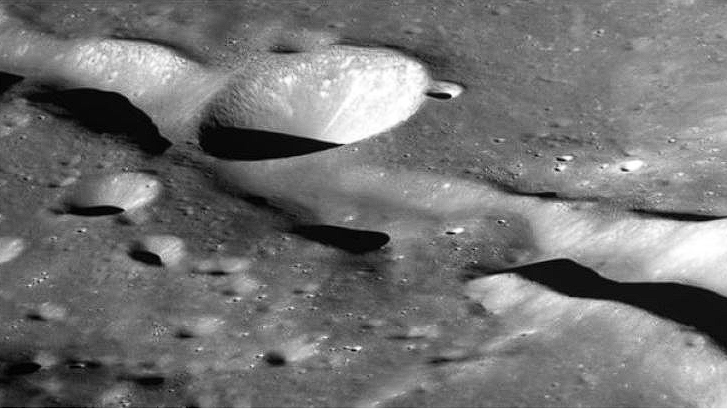
    South Korea’s science ministry has announced that Danuri, which is Korea’s first lunar orbiter, has captured high-resolution images of the dark side of the moon. These images are part of ongoing research to observe the moon from approximately 100 kilometres above its surface. According to a statement from South Korea’s Ministry of Science on Wednesday, this is the first time a Korean spacecraft has photographed craters, valleys, basins, and other traces of the moon’s dark side, which are difficult to observe from Earth due to the moon being tidally locked to our planet.

    Built by the Korea Aerospace Research Institute (KARI) the Lunar Terrain Imager (LUTI) was used to capture high-resolution images of regions on the far side of the moon, including the Szilard and Tsiolkovskiy craters and the Vallis Schrodinger Valley. The ministry stated such high-resolution images would help in understanding the chemical composition of the lunar soil and crater formation.

    The Danuri orbiter clicked the images of the Tsiolkovskiy crater area on March 22 and that of the Schrodinger Valley and Szilard crater on March 24. The ministry said the photos taken on March 24 are of immense significance because they were clicked on the day Danuri orbited the moon 1,000 times.

    The Korean ministry and KARI also released photos of the POLCAM wide-angle polarimetric camera piggybacking on the Danuri. POLCAM is designed to analyse the size and composition of lunar topsoil particles. The ministry intends to publicise a complete and first polarimetric moon map by January next year.

    Danuri’s magnetometer and gamma-ray spectrometer are also collecting observational data. The magnetic field variation data will reveal the moon’s structure and yield its space environment data for upcoming lunar exploration. Danuri’s gamma-ray spectrometer data is designed to research the lunar surface’s X-rays, gamma rays, and neutron environments.

    Cho Sun-hak, who is the Director General of the Space Policy & Nuclear Energy Bureau at the Korean science ministry, stated that Danuri is smoothly sending back observational images and data from the moon. The Korean space community intends to bring about varied and novel scientific research results based on the observations.

    The lunar orbiter was carried by SpaceX’s Falcon 9 rocket and was launched from Cape Canaveral Space Force Station in Florida on August 5, 2022. The orbiter successfully entered the moon’s orbit on December 27 and has been conducting scientific investigations from there since January this year.

    Author

    • StratNewsGlobal Tech Team
      StratNewsGlobal Tech Team

      View all posts
    Featured
    Share. Facebook Twitter Pinterest LinkedIn Tumblr Email Reddit Telegram WhatsApp
    StratNewsGlobal Tech Team
    • Website

    Keep Reading

    A Decade of Startup India: Driving Innovation and Inclusive Growth

    Japan Probes Elon Musk’s Grok AI Over Inappropriate Image Generation

    TikTok to Roll Out Age-Detection Technology Across Europe Amid Regulatory Scrutiny

    India to Raise Foreign Investment Cap in Defence Sector to 74%

    CSIR Expands National Skill Training Under Integrated Initiative

    U.S. Senate Passes Major Science Funding Bill, Rejects Trump’s Cuts

    Add A Comment
    Leave A Reply Cancel Reply

    Anti Drone System (CUAS)
    Latest Posts

    A Decade of Startup India: Driving Innovation and Inclusive Growth

    January 16, 2026

    Japan Probes Elon Musk’s Grok AI Over Inappropriate Image Generation

    January 16, 2026

    TikTok to Roll Out Age-Detection Technology Across Europe Amid Regulatory Scrutiny

    January 16, 2026

    India to Raise Foreign Investment Cap in Defence Sector to 74%

    January 16, 2026

    CSIR Expands National Skill Training Under Integrated Initiative

    January 16, 2026

    U.S. Senate Passes Major Science Funding Bill, Rejects Trump’s Cuts

    January 16, 2026

    BBC to Partner with YouTube for Original Programming, FT Reports

    January 16, 2026

    Viettel Launches Construction of Vietnam’s First Semiconductor Plant

    January 16, 2026

    Madhya Pradesh Hosts Regional AI Conference Showcasing Governance Innovation

    January 16, 2026

    Asian Shares Climb as AI Boom Revives; Dollar Near Six-Week High

    January 16, 2026

    Subscribe to News

    Get the latest sports news from NewsSite about world, sports and politics.

    • Astronomical Events
    • Space Missions
    • Industry News
    • Science
    StratNewsGlobal Tech
    Facebook X (Twitter) Instagram LinkedIn YouTube
    © 2026 StratNews Global, A unit of BharatShakti Communications LLP
    • About Us
    • Contributors
    • Copyright
    • Contact
    • Write for Us

    Type above and press Enter to search. Press Esc to cancel.