


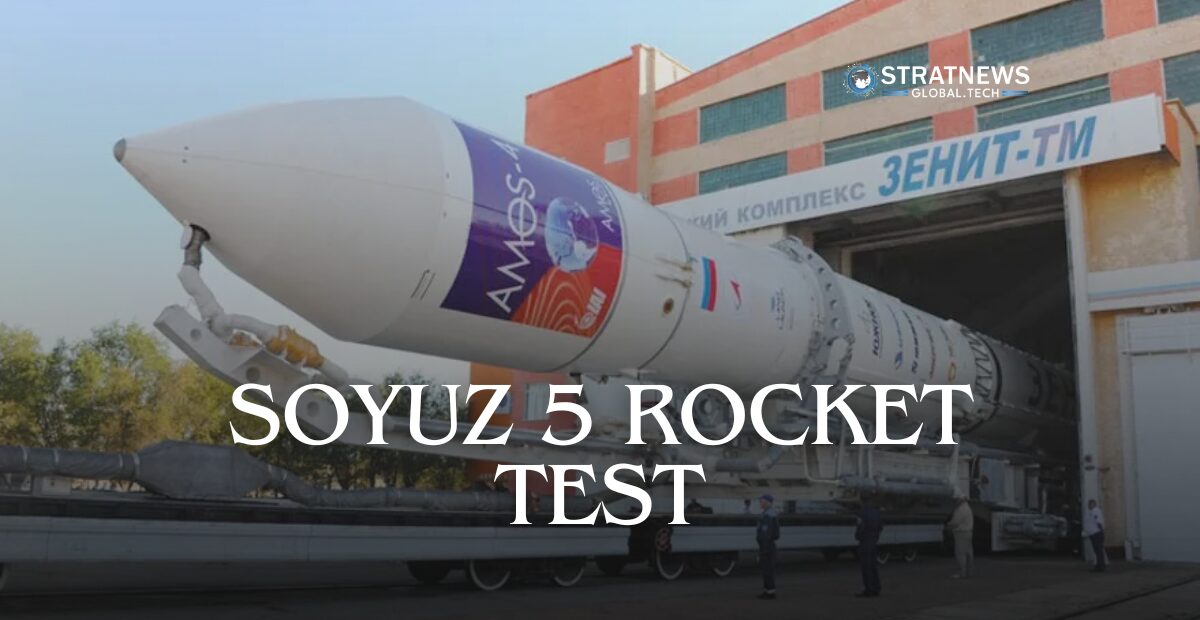
Russia Tests Soyuz 5 Rocket In Landmark Launch
Russia has successfully conducted the first test launch of its new Soyuz 5 rocket, marking a significant development in the country’s space programme. The launch took place late on Thursday from the Baikonur Cosmodrome in Kazakhstan, according to an official statement from the national space agency.
Moreover, officials confirmed that the rocket lifted off without any issues. The mission proceeded as planned, signalling a strong start for the newly developed launch vehicle.
Successful Liftoff And Advanced Capabilities
The Soyuz 5 rocket launched at 2100 Moscow time on April 30. Authorities described the vehicle as equipped with one of the most powerful liquid fuelled engines currently in operation.
In addition, the rocket offers improved performance compared with earlier models. It can carry payloads of up to 17 metric tonnes, making it suitable for a wide range of missions, including satellite deployment in near Earth orbit.
Furthermore, the agency stated that the new system is designed to reduce launch costs. This efficiency could enhance Russia’s competitiveness in the global space launch market while improving mission flexibility.
Strategic Importance For Space Programme
Officials have highlighted the broader significance of the Soyuz 5 project. Dmitry Bakanov, head of the national space agency, described the rocket as a major step forward in space exploration.
He also noted that the programme could generate new employment opportunities in both Russia and Kazakhstan. As a result, the project carries economic as well as technological importance.
Additionally, Bakanov has previously informed President Vladimir Putin that Soyuz 5 represents the first entirely new launch vehicle developed by Russia since 2014. This milestone underscores efforts to modernise the country’s space capabilities.
Looking Ahead To Future Missions
The successful test launch lays the groundwork for future missions using the Soyuz 5 platform. With its enhanced payload capacity and cost efficiency, the rocket is expected to support a range of commercial and scientific objectives.
Consequently, the development may strengthen Russia’s role in satellite launches and orbital operations. It also reflects a broader push to advance domestic aerospace technology amid evolving global competition.
As further tests and deployments follow, the Soyuz 5 programme will remain a key component of Russia’s long term space strategy.
With inputs from Reuters