


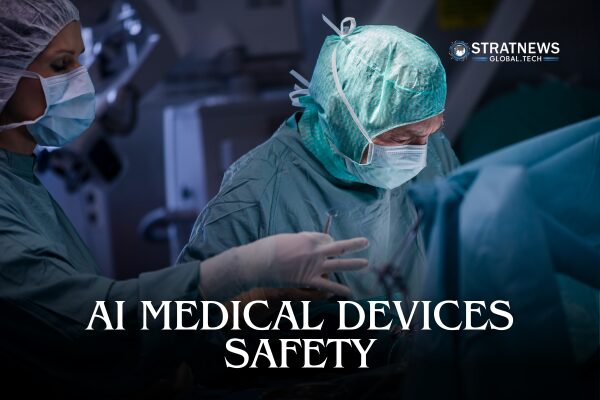
Artificial intelligence is rapidly reshaping healthcare, but growing evidence from safety and legal records is raising questions about AI medical devices safety as regulators struggle to keep pace with the technology’s expansion.
In 2021, a Johnson & Johnson unit announced what it described as a major breakthrough by adding artificial intelligence to a surgical navigation device used to treat chronic sinusitis. The TruDi Navigation System, developed by Acclarent, incorporated machine-learning software to assist surgeons during procedures involving the sinuses and skull base. While the device had been on the market for several years, reports submitted to the U.S. Food and Drug Administration (FDA) suggest a sharp increase in malfunctions and adverse events following the introduction of AI.
Before the software upgrade, the FDA had received reports of seven malfunctions and one patient injury. Since AI integration, regulators have logged at least 100 unconfirmed reports of malfunctions or adverse events. At least 10 patient injuries were reported between late 2021 and November 2025, including cases involving cerebrospinal fluid leaks, skull base punctures and strokes allegedly linked to navigation errors during surgery.
AI Medical Devices Safety and Legal Challenges
Two patients who reportedly suffered strokes have filed lawsuits in Texas alleging that AI-enabled navigation errors contributed to their injuries. The complaints argue that the TruDi system was safer before artificial intelligence was integrated into the software. Acclarent and its parent company, Integra LifeSciences, have denied the allegations, stating there is no credible evidence linking AI technology to the reported injuries.
The FDA cautions that adverse-event reports are not designed to establish causation and may be incomplete or duplicative. Nonetheless, the volume of reports reflects broader concerns about AI medical devices safety as adoption accelerates.
Rising Use of AI Across Medical Devices
The FDA has now authorised at least 1,357 medical devices that use artificial intelligence, double the number approved through 2022. Reports reviewed by Reuters indicate issues involving dozens of AI-enhanced products, including heart monitors and prenatal ultrasound systems. A recent academic review found that AI-enabled devices were linked to 182 product recalls, with nearly half occurring within a year of approval.
Regulatory Strain at the FDA
Current and former FDA scientists told Reuters that staffing losses have strained the agency’s ability to rigorously assess AI-driven technologies. While the FDA says patient safety remains its highest priority, experts warn that existing regulatory frameworks may not adequately address the unique risks posed by adaptive, data-driven medical systems.
As AI becomes more deeply embedded in clinical care, the debate over AI medical devices safety is intensifying, highlighting the tension between innovation, oversight and patient protection.

