


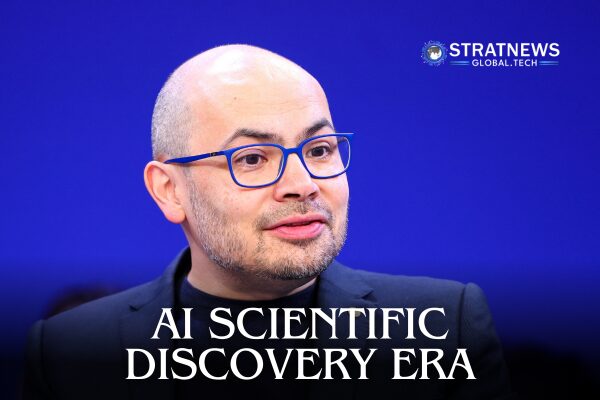
Demis Hassabis, chief executive of Google DeepMind, has said a new era of scientific discovery powered by artificial intelligence is approaching, with major advances expected in medicine, energy and space exploration.
Speaking on Wednesday at the AI Impact Summit in New Delhi, Hassabis described the moment as the beginning of an extraordinary transformation in science and healthcare.
AI To Accelerate Scientific Breakthroughs
Hassabis told the summit that artificial intelligence stands on the brink of delivering profound benefits. He said researchers now possess tools that could dramatically speed up scientific discovery and medical innovation.
“We’re on the cusp of an absolutely incredible transformation that’s going to bring incredible benefits in science and medicine specifically,” he said.
He emphasised that AI systems could help scientists solve complex problems that have remained out of reach for decades. As a result, breakthroughs in drug discovery, clean energy development and space research could arrive more quickly than previously anticipated.
Moreover, he suggested that AI driven research would not only improve efficiency but also open entirely new avenues of exploration. Consequently, the coming years may redefine how laboratories and research institutions operate.
Warning Over Bio And Cyber Risks
However, Hassabis also issued a clear warning about the risks linked to rapid AI progress. He pointed to the potential misuse of advanced systems, particularly in biotechnology and cybersecurity.
“I think we need to worry about things like bio and cyber risk very soon,” he said.
He stressed that policymakers and technologists must address these concerns alongside innovation. While AI offers enormous promise, it also demands responsible governance and safeguards. Therefore, global cooperation will remain essential to prevent harmful applications.
Developing Nations Seek Stronger Voice
Meanwhile, Indian officials have positioned the AI Impact Summit as a forum to strengthen the voice of developing nations in global AI governance. The summit, which began on Monday, marks the first time the international gathering has taken place in the developing world.
By hosting the event in New Delhi, organisers aim to ensure that emerging economies help shape international rules and standards for artificial intelligence. Furthermore, they hope to highlight how AI can support growth and development beyond advanced industrial nations.
As discussions continue, leaders and experts face a dual challenge. On one hand, they must harness AI’s transformative potential for science and medicine. On the other, they must confront its risks with urgency and care.
Hassabis’s remarks captured both sides of that debate. He expressed optimism about unprecedented scientific gains. At the same time, he urged swift action to manage the dangers that could accompany them.
With inputs from Reuters

