



Trump Threatens to Cut Broadband Funds Over State AI Regulations
U.S. President Donald Trump announced on Thursday that his administration will withhold federal broadband funding from states whose artificial intelligence (AI) regulations are deemed to hinder America’s dominance in the field. Trump said he wanted “one central source of approval” for AI oversight, arguing that differing state laws create unnecessary obstacles for innovation.
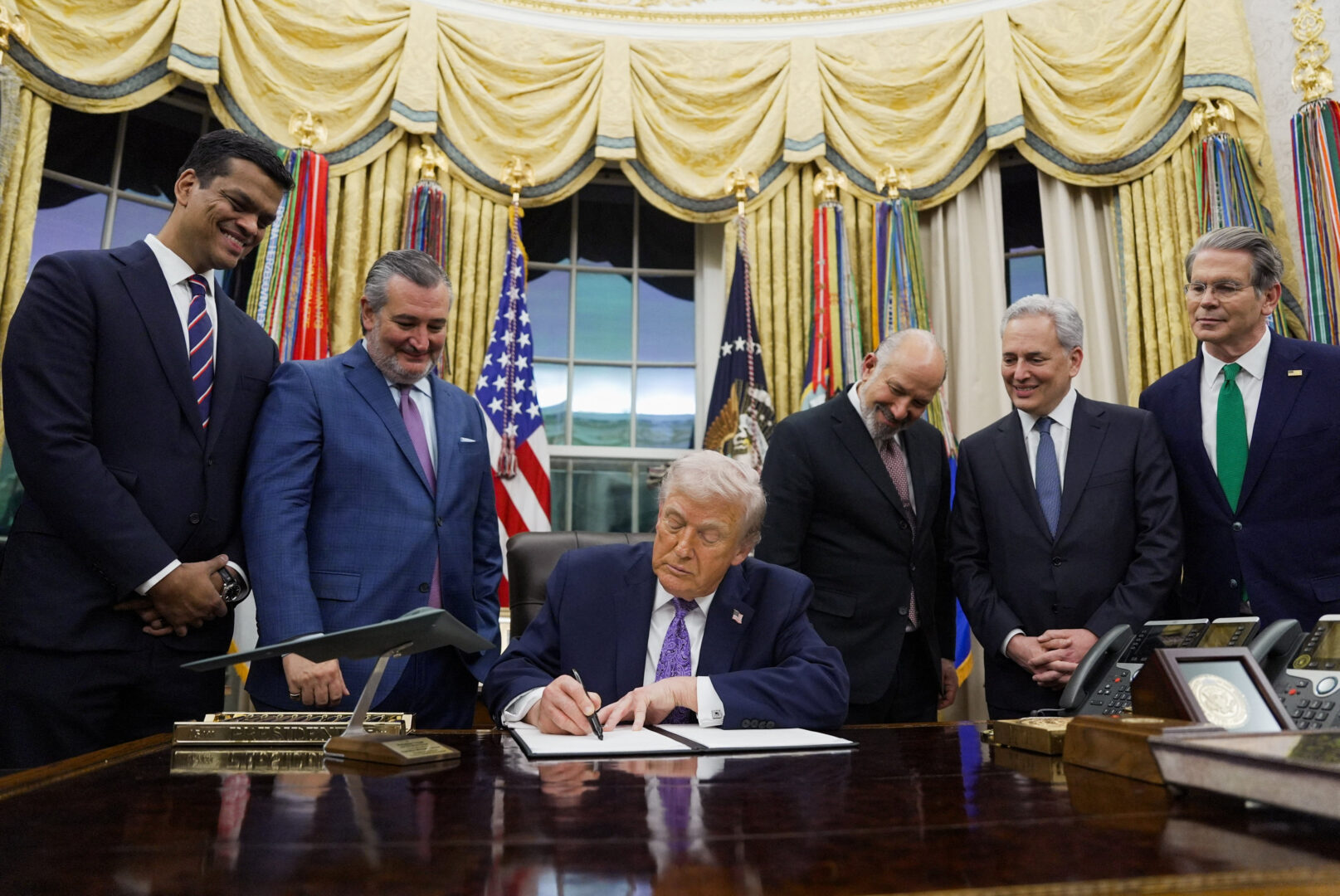
“To win, United States AI companies must be free to innovate without cumbersome regulation,” the presidential order stated. It noted that varying rules across the 50 states make compliance more complex, particularly for emerging start-ups.
Trump has positioned AI as a cornerstone of national competitiveness, working closely with American firms to boost investment in the technology amid growing rivalry with China. However, critics have warned that unrestrained development could expose citizens to potential risks.
Federal Power and State Resistance
The order signals another front in Trump’s campaign against state-level regulations, targeting states such as Colorado that have sought to prevent discriminatory outputs in AI models. The administration argued that such efforts could introduce “ideological bias” and distort AI systems’ results.
White House AI adviser David Sacks said the move would allow the administration to counter the most “onerous” state rules. He added that the White House would not challenge laws focused on child safety.
Under the directive, the Secretary of Commerce must assess whether state laws conflict with the president’s AI priorities. States found in violation could be barred from receiving money from the $42 billion Broadband Equity Access and Deployment fund.
Political and Legal Backlash
Democratic Representative Don Beyer, co-chair of the bipartisan AI caucus, condemned the order, warning it would undermine state safety reforms and create “a lawless Wild West environment for AI companies that puts Americans at risk.” He said the measure could breach the 10th Amendment, which reserves certain powers to the states and the people.
Trump’s order called for cooperation with Congress to establish a national standard for AI governance. This would override conflicting state laws while ensuring protection for children, preventing censorship, respecting copyrights, and safeguarding communities. Until then, the order instructs agencies to curb “onerous and excessive” state legislation that could “stymie innovation.”
Growing Patchwork of State AI Laws
Despite industry pressure for federal oversight, several states have introduced their own AI rules. New York recently became the first to require online retailers using “surveillance pricing” to disclose their use of algorithms and personal data. California and Washington lawmakers are exploring similar bans.
Florida Governor Ron DeSantis has proposed an AI bill of rights focused on data privacy and consumer protection, while California Governor Gavin Newsom approved a law compelling major AI developers to disclose plans to mitigate potential catastrophic risks.
Elsewhere, multiple states have passed laws banning AI-generated non-consensual sexual images and political deepfakes, reflecting growing concern over the misuse of the technology.
with inputs from Reuters