

Close Menu
Stratnews GlobalStratnews Global
    Facebook X (Twitter) Instagram
    Trending
    • Energy Storage Expansion Drives China Solar Strategy
    • Swedish Nuclear Expansion Gains Momentum With Blykalla
    • South Korea Robotics Gains Backing From Jensen Huang
    • Anthropic IPO Prospects Improve Amid US Thaw
    • Shield AI Faces Questions Over V-BAT Safety
    • SpaceX IPO Faces Access Restrictions in China
    • Nano Agriculture Solutions Drive HAS India Expansion
    • Single Window Clearance System Launched by DDA
    • Support Us
    Stratnews GlobalStratnews Global
    Write for Us
    Saturday, June 6
    • Space
    • Science
    • AI and Robotics
    • Industry News
    • Support Us
    Stratnews GlobalStratnews Global
    Home » Elon Musk Demands $134 Billion from OpenAI and Microsoft over “Wrongful Gains”

    Elon Musk Demands $134 Billion from OpenAI and Microsoft over “Wrongful Gains”

    Arushi PandeyBy Arushi PandeyJanuary 19, 2026 General No Comments3 Mins Read
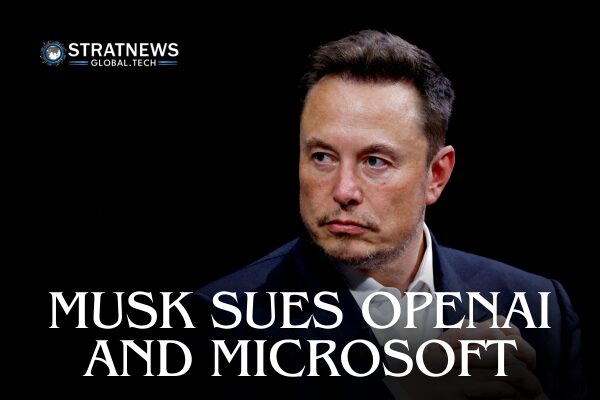
    Musk OpenAI Microsoft

    Elon Musk Seeks $134 Billion from OpenAI and Microsoft in Court Battle

    Elon Musk is demanding as much as $134 billion from OpenAI and Microsoft, claiming he deserves a share of what he calls their “wrongful gains” from his early involvement in founding the artificial intelligence company. The claim was detailed in a court filing submitted on Friday ahead of a trial expected to begin in April.

    Musk’s Claims Against OpenAI and Microsoft

    According to the filing, Musk argues that OpenAI profited between $65.5 billion and $109.4 billion from his early financial and reputational support, while Microsoft, OpenAI’s main investor and partner, gained between $13.3 billion and $25.1 billion. Musk contends that his early contributions were instrumental in building OpenAI’s foundation and success.

    “Without Elon Musk, there’d be no OpenAI,” his lead lawyer Steven Molo said in a statement to Reuters. “He provided the bulk of the seed funding, lent his reputation, and taught them all he knows about scaling a business.”

    Musk’s court filing claims he contributed roughly $38 million, representing about 60% of OpenAI’s initial seed funding. He also says he helped recruit early staff, connected the founders with investors and advisers, and gave the project credibility in its infancy. His argument rests on the idea that his early investment entitled him to share in the vast gains the companies allegedly reaped.

    OpenAI and Microsoft Push Back

    OpenAI dismissed Musk’s claim as an “unserious demand,” calling it part of what it described as his ongoing “harassment campaign” against the company. Microsoft, which has invested billions in OpenAI since 2019, did not comment on the compensation figure outside business hours.

    Both companies have filed their own court responses disputing Musk’s claims. OpenAI said the lawsuit was “baseless,” while a Microsoft attorney argued that there was no evidence suggesting the company “aided and abetted” any wrongdoing.

    In a joint filing, OpenAI and Microsoft asked the judge to restrict the testimony of Musk’s financial expert, economist C. Paul Wazzan. They called his valuation “made up,” “unverifiable” and “unprecedented,” warning it could mislead jurors by suggesting an “implausible” transfer of billions from a nonprofit to a former donor who has since become a competitor.

    Trial Set for April in California

    A judge in Oakland, California, has ruled that a jury will hear the case, which centres on Musk’s claim that OpenAI abandoned its founding mission to develop artificial intelligence for the benefit of humanity. Musk alleges the company’s restructuring into a for-profit entity violated its original nonprofit purpose.

    Now leading his own AI venture, xAI, and promoting its chatbot Grok as a rival to ChatGPT, Musk has positioned his lawsuit as a challenge to what he sees as OpenAI’s drift from its original ideals. The filing indicates he may also seek punitive damages and an injunction, though it does not specify what form that injunction might take.

    with inputs from Reuters

    Author

    • Arushi Pandey
      Arushi Pandey
      View all posts
    Share. Facebook Twitter Pinterest LinkedIn Tumblr Email Reddit Telegram WhatsApp
    Arushi Pandey

      Keep Reading

      Ukraine Opens Battlefield Data For AI Drone Training

      Data Centres Become Election Issue In France

      Google Names London HQ ‘Platform 37’ After AlphaGo Move

      Pentagon Allows Limited Use Of Anthropic AI

      Iran Crisis Sparks Supply Chain Concerns for South Korea’s Chip Industry

      AI Productivity Boom Signals Spread Beyond The United States

      Add A Comment
      Leave A Reply Cancel Reply

      Anti Drone System (CUAS)
      Latest Posts

      Energy Storage Expansion Drives China Solar Strategy

      June 6, 2026

      Swedish Nuclear Expansion Gains Momentum With Blykalla

      June 6, 2026

      South Korea Robotics Gains Backing From Jensen Huang

      June 6, 2026

      Anthropic IPO Prospects Improve Amid US Thaw

      June 6, 2026

      Shield AI Faces Questions Over V-BAT Safety

      June 6, 2026

      SpaceX IPO Faces Access Restrictions in China

      June 6, 2026

      Nano Agriculture Solutions Drive HAS India Expansion

      June 5, 2026

      Single Window Clearance System Launched by DDA

      June 5, 2026

      MY Bharat Guinness World Record Sets New Global Benchmark

      June 5, 2026

      Thailand Meta Lawsuit Targets Facebook Scam Ads

      June 5, 2026

      Subscribe to News

      Get the latest sports news from NewsSite about world, sports and politics.

      • Astronomical Events
      • Space Missions
      • Industry News
      • Science
      StratNewsGlobal Tech
      Facebook X (Twitter) Instagram LinkedIn YouTube
      © 2026 StratNews Global, A unit of BharatShakti Communications LLP
      • About Us
      • Contributors
      • Copyright
      • Contact
      • Write for Us

      Type above and press Enter to search. Press Esc to cancel.