

Close Menu
Stratnews GlobalStratnews Global
    Facebook X (Twitter) Instagram
    Trending
    • Google Rolls Out AI Upgrades and Address Change Option in Major Gmail Update
    • Tesla Gains Edge as Canada Lifts 100% Tariffs on Chinese-Made EVs
    • China’s Shenzhou-20 Capsule Lands Safely After Debris Damage
    • OpenAI to Test Ads in ChatGPT as Revenue Push Intensifies
    • India Accelerates Semiconductor Innovation through Chips to Start-up Programme
    • Scientists Reveal Antarctica’s Hidden Landscape in Unprecedented Detail
    • Elon Musk Demands $134 Billion from OpenAI and Microsoft over “Wrongful Gains”
    • South Korea and Italy Deepen Partnership on AI, Semiconductors and Minerals
    Stratnews GlobalStratnews Global
    Write for Us
    Monday, January 19
    • Space
    • Science
    • AI and Robotics
    • Industry News
    Stratnews GlobalStratnews Global
    Home » 2024 Nobel Prize in Chemistry Awarded for Advances in Protein Design and AI-Powered Predictions

    2024 Nobel Prize in Chemistry Awarded for Advances in Protein Design and AI-Powered Predictions

    Arushi PandeyBy Arushi PandeyOctober 10, 2024Updated:October 14, 2024 Science No Comments3 Mins Read
    2024 Nobel Prize

    Nobel Prize in Chemistry Awarded for Advances in Protein Design and Prediction

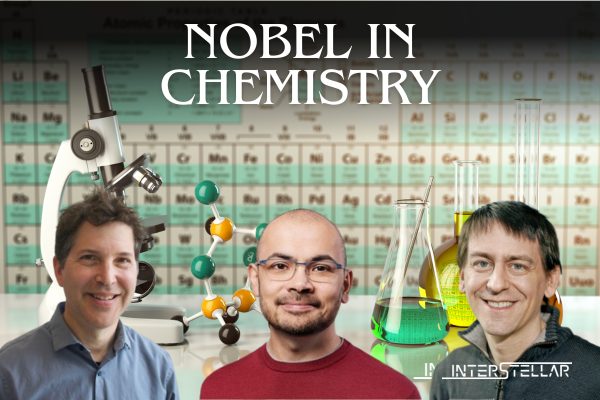
    U.S. scientists David Baker and John Jumper, along with Briton Demis Hassabis, have won the 2024 Nobel Prize in Chemistry for their pioneering work in decoding and designing proteins. Their research has led to significant advancements in drug development and various other scientific fields.

    Decoding the Building Blocks of Life

    The Royal Swedish Academy of Sciences awarded half of the prize to David Baker for his contributions to “computational protein design,” while the other half was shared by Demis Hassabis and John Jumper for “protein structure prediction.” Their work has enabled scientists to better understand how proteins function and to design new proteins with entirely novel shapes and properties.

    David Baker, 62, is a professor at the University of Washington, Seattle. Demis Hassabis, 48, is the CEO of Google DeepMind, where Jumper, 39, works as a senior research scientist. Together, they have made breakthroughs in using artificial intelligence to predict the structures of almost all known proteins, providing a critical tool for the scientific community.

    AI-Powered Protein Predictions

    In 2020, Hassabis and Jumper introduced the world to AlphaFold2, an AI model that can predict the structure of virtually all 200 million known proteins. This development has opened the door to better understanding antibiotic resistance and has even contributed to creating enzymes that can break down plastic.

    “This award highlights the growing role of artificial intelligence in scientific research,” Hassabis stated, noting that while AI has incredible potential for good, it must be used responsibly. His team’s work has provided researchers with a tool that accelerates understanding of complex biological systems and facilitates the development of new treatments and materials.

    Creating New Proteins to Solve Global Challenges

    David Baker’s research, on the other hand, focuses on designing entirely new proteins from scratch. By manipulating amino acids—the building blocks of life—his work has enabled the creation of proteins that do not exist in nature but have the potential to address global challenges such as climate change and emerging diseases.

    “If we wait long enough, new proteins might naturally evolve to solve these problems,” Baker explained. “But with protein design, we can create them now and tackle these issues head-on.” His contributions have led to the rapid development of proteins for use in pharmaceuticals, vaccines, and nanomaterials.

    Recognition for Groundbreaking Research

    Baker, Hassabis, and Jumper’s research has transformed the field of chemistry and biology, with potential applications in health, environmental science, and industry. Their work has paved the way for developing new drugs, understanding complex biological phenomena, and creating sustainable solutions for the planet.

    The Nobel Prize in Chemistry is considered one of the most prestigious scientific awards globally. Alongside the $1.1 million cash prize, the winners will receive a medal presented by the Swedish King on December 10, followed by a lavish banquet in Stockholm’s city hall.

    This year’s prize is part of a long-standing tradition established by Alfred Nobel in his will. It recognises exceptional contributions to medicine, physics, chemistry, literature, and peace, with the economics prize being a later addition funded by the Swedish central bank.

    Author

    • Arushi Pandey
      Arushi Pandey

      View all posts
    Featured Just In
    Share. Facebook Twitter Pinterest LinkedIn Tumblr Email Reddit Telegram WhatsApp
    Arushi Pandey

      Keep Reading

      Google Rolls Out AI Upgrades and Address Change Option in Major Gmail Update

      Tesla Gains Edge as Canada Lifts 100% Tariffs on Chinese-Made EVs

      China’s Shenzhou-20 Capsule Lands Safely After Debris Damage

      OpenAI to Test Ads in ChatGPT as Revenue Push Intensifies

      India Accelerates Semiconductor Innovation through Chips to Start-up Programme

      Scientists Reveal Antarctica’s Hidden Landscape in Unprecedented Detail

      Add A Comment
      Leave A Reply Cancel Reply

      Anti Drone System (CUAS)
      Latest Posts

      Google Rolls Out AI Upgrades and Address Change Option in Major Gmail Update

      January 19, 2026

      Tesla Gains Edge as Canada Lifts 100% Tariffs on Chinese-Made EVs

      January 19, 2026

      China’s Shenzhou-20 Capsule Lands Safely After Debris Damage

      January 19, 2026

      OpenAI to Test Ads in ChatGPT as Revenue Push Intensifies

      January 19, 2026

      India Accelerates Semiconductor Innovation through Chips to Start-up Programme

      January 19, 2026

      Scientists Reveal Antarctica’s Hidden Landscape in Unprecedented Detail

      January 19, 2026

      Elon Musk Demands $134 Billion from OpenAI and Microsoft over “Wrongful Gains”

      January 19, 2026

      South Korea and Italy Deepen Partnership on AI, Semiconductors and Minerals

      January 19, 2026

      India Proposes BRICS Digital Currency Link to Cut Dollar Dependence

      January 19, 2026

      NASA Rolls Out Artemis II Rocket Ahead of Crewed Moon Mission

      January 19, 2026

      Subscribe to News

      Get the latest sports news from NewsSite about world, sports and politics.

      • Astronomical Events
      • Space Missions
      • Industry News
      • Science
      StratNewsGlobal Tech
      Facebook X (Twitter) Instagram LinkedIn YouTube
      © 2026 StratNews Global, A unit of BharatShakti Communications LLP
      • About Us
      • Contributors
      • Copyright
      • Contact
      • Write for Us

      Type above and press Enter to search. Press Esc to cancel.