


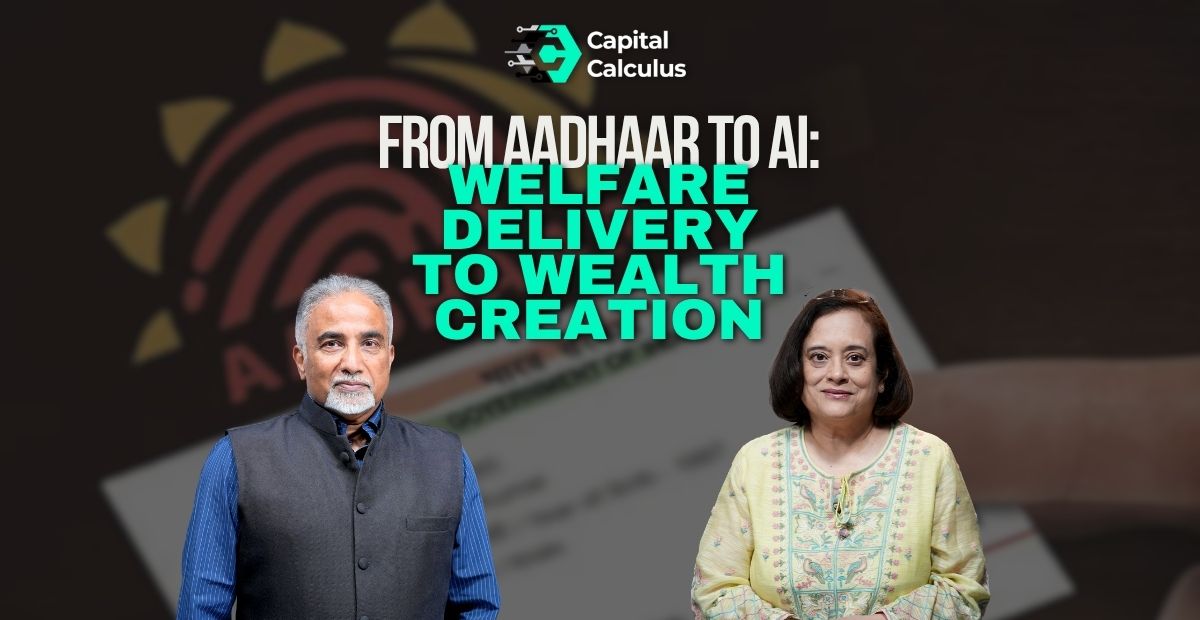
Undoubtedly, India’s Digital Public Infrastructure (DPI) transformed the country over the last decade.
Aadhaar gave over a billion Indians a digital identity; UPI revolutionised payments; more than 50 crore citizens entered the formal banking system in under a decade—a process that would normally have taken nearly five decades.
But inclusion is not prosperity. India now faces a much bigger challenge: how to create livelihoods, improve productivity, and raise incomes at population scale.
This is the promise of DPI 2.0.
In this episode of Capital Calculus, hosted on StratNewsGlobal.Tech, Anil Padmanabhan speaks with Debjani Ghosh, Distinguished Fellow at NITI Aayog, on India’s bold attempt to move from welfare delivery to inclusive wealth creation.
The conversation explores:
- Why India needs non-linear growth to become a $30 trillion economy
- How DPI 2.0 aims to improve total factor productivity
- If DPI 1.0 connected citizens to the state, DPI 2.0 aims to connect citizens to opportunity.
- The idea of the “Blue Dot Economy” and economic visibility
- Why trust and discoverability are hidden barriers to growth
- How AI, interoperability, and district-level innovation could transform livelihoods
- And whether India can create a development playbook for the Global South.

