


Close Menu
Stratnews GlobalStratnews Global
    Facebook X (Twitter) Instagram
    Trending
    • China Launches First Power Grid Monitoring Satellite to Boost Efficiency
    • EU EV Leaders Warn EU Against Weakening 2035 Zero-Emission Goal
    • EssilorLuxottica Smart Glasses Growth
    • China Boosts Tiangong Safety Following Shenzhou-20 Damage
    • PCOS Patients Turn to Weight-Loss Drugs for Relief and Hormonal Balance
    • EU – 90% emissions cut by 2040
    • Nvidia Introduces Location Tracking to Prevent AI Chip Smuggling
    • Bezos Earth Fund Donates $24.5 Million to Create First Cross-Border Marine Reserve
    Stratnews GlobalStratnews Global
    Write for Us
    Wednesday, December 10
    • Space
    • Science
    • AI and Robotics
    • Industry News
    Stratnews GlobalStratnews Global
    Home » 2024 Solar Storm: Intense Geomagnetic Activity Recorded, Highest Since 2003

    2024 Solar Storm: Intense Geomagnetic Activity Recorded, Highest Since 2003

    Kanika SharmaBy Kanika SharmaMay 15, 2024 Science No Comments3 Mins Read
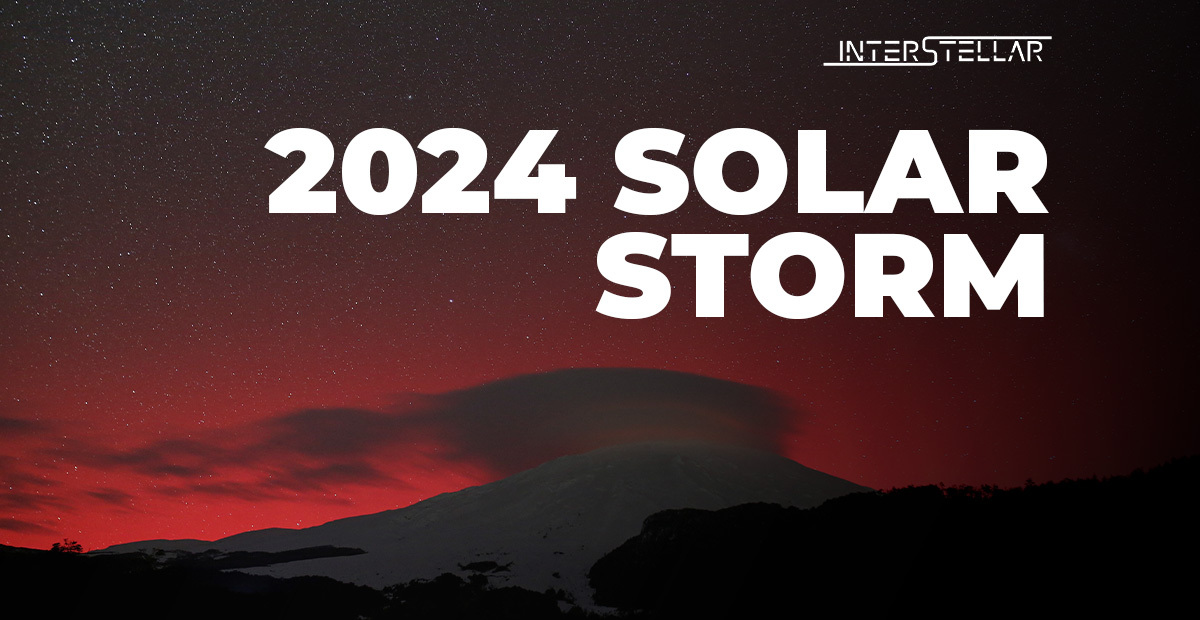
    2024 Solar Storm

    In early May 2024, Earth encountered one of the most severe solar storms in over two decades, induced by the highly active sunspot AR13664. This sunspot released several X-class flares and coronal mass ejections (CMEs) aimed at Earth, leading to a geomagnetic storm with a Dst index reaching -412 nT. The storm’s magnitude matched the most intense disturbances since 2003 and caused widespread disruptions in communication and GPS systems. It featured not only powerful X-class flares but also numerous M-class and C-class flares, many of which were associated with halo CMEs—CMEs aimed directly at Earth.

    Observations from Ground

    Solar flares, the bursts of energy due to magnetic reconnection on the sun, are categorized from B to X, with each class representing a tenfold increase in energy. X-class flares, like the recorded X 5.8, are the most intense and capable of causing significant technological disruptions. The next tier, M-class flares, are slightly less powerful but can still influence Earth’s geomagnetic environment.

    This latest geomagnetic storm is comparable in intensity to the historic 1859 Carrington Event. The high latitudes experienced severe impacts, including disruptions to trans-polar flights, while the Indian sector saw relatively minor effects due to the timing of the storm’s peak. Ground observations from India indicated significant ionospheric disturbances, particularly in changes to the Total Electron Content (TEC), a key measure of ionospheric density.

    Observations from Space

    From a space-based perspective, the Indian Space Research Organisation (ISRO) actively monitored the event using its Aditya-L1 and Chandrayaan-2 satellites. Aditya-L1’s instruments, including the Solar Wind Ion Spectrometer (SWIS) and the SupraThermal and Energetic Particle Spectrometer (STEPS), detected increased solar wind speed, elevated temperatures, and heightened fluxes of energetic particles like protons and alpha particles. These instruments are crucial for understanding the solar wind’s properties and its effects on space weather.

    Observations by Aditya-L1

    Chandrayaan-2, orbiting the moon, also contributed valuable data, particularly through the X-ray Spectrometer Monitor (XSM), which recorded significant solar flare activity and the corresponding effects on the local high-energy particle environment.

    The storm’s impact extended to spacecraft operations, with ISRO’s Master Control Facility reporting disturbances that affected the functioning of various satellite components. Despite these challenges, the overall integrity of the spacecraft remained intact, and no significant degradations in service were reported by ISRO’s Navigation Centre.

    This event underscores the need for continued vigilance and preparedness in the face of solar activity, highlighting the interconnectedness of space weather and technological systems on Earth.

    Author

    • Kanika Sharma
      Kanika Sharma

      View all posts
    Featured
    Share. Facebook Twitter Pinterest LinkedIn Tumblr Email Reddit Telegram WhatsApp
    Kanika Sharma
    Kanika Sharma

      Keep Reading

      China Launches First Power Grid Monitoring Satellite to Boost Efficiency

      EU EV Leaders Warn EU Against Weakening 2035 Zero-Emission Goal

      EssilorLuxottica Smart Glasses Growth

      China Boosts Tiangong Safety Following Shenzhou-20 Damage

      PCOS Patients Turn to Weight-Loss Drugs for Relief and Hormonal Balance

      EU – 90% emissions cut by 2040

      Add A Comment
      Leave A Reply Cancel Reply

      Anti Drone System (CUAS)
      Latest Posts

      China Launches First Power Grid Monitoring Satellite to Boost Efficiency

      December 10, 2025

      EU EV Leaders Warn EU Against Weakening 2035 Zero-Emission Goal

      December 10, 2025

      EssilorLuxottica Smart Glasses Growth

      December 10, 2025

      China Boosts Tiangong Safety Following Shenzhou-20 Damage

      December 10, 2025

      PCOS Patients Turn to Weight-Loss Drugs for Relief and Hormonal Balance

      December 10, 2025

      EU – 90% emissions cut by 2040

      December 10, 2025

      Nvidia Introduces Location Tracking to Prevent AI Chip Smuggling

      December 10, 2025

      Bezos Earth Fund Donates $24.5 Million to Create First Cross-Border Marine Reserve

      December 9, 2025

      Australia Enforces World’s First Social Media Ban for Under-16s

      December 9, 2025

      Bitcoin Faces Volatile Year-End in 2025 as Correlation with Equities Strengthens

      December 9, 2025

      Subscribe to News

      Get the latest sports news from NewsSite about world, sports and politics.

      • Astronomical Events
      • Space Missions
      • Industry News
      • Science
      StratNewsGlobal Tech
      Facebook X (Twitter) Instagram LinkedIn YouTube
      © 2025 StratNews Global, A unit of BharatShakti Communications LLP
      • About Us
      • Contributors
      • Copyright
      • Contact
      • Write for Us

      Type above and press Enter to search. Press Esc to cancel.