


Close Menu
Stratnews GlobalStratnews Global
    Facebook X (Twitter) Instagram
    Trending
    • Bitcoin 16-Month Low Tests $60,000 Amid Global Selloff
    • Intel AMD CPU Shortages Hit China Amid AI Demand Surge
    • Wistron Sees AI Orders Rising
    • India Nuclear Power Capacity Set to Expand to 22,000 MW by 2032
    • NASA Artemis II Mission Delayed to March After Rocket Fueling Issues
    • Germany Plans €35 Billion Military Space Push to Counter Russia and China
    • Super Bowl LX Cybersecurity and Wi-Fi Upgrade Transforms Levi’s Stadium
    • Memory Shortages Weigh on Smartphone Chip Sales
    Stratnews GlobalStratnews Global
    Write for Us
    Saturday, February 7
    • Space
    • Science
    • AI and Robotics
    • Industry News
    Stratnews GlobalStratnews Global
    Home » Europe Launches Hera Asteroid Probe on SpaceX rocket

    Europe Launches Hera Asteroid Probe on SpaceX rocket

    Kanika SharmaBy Kanika SharmaOctober 8, 2024Updated:October 9, 2024 Space Missions No Comments2 Mins Read
    HERA

    Hera Asteroid Probe Begins Two-Year Journey to Dimorphos

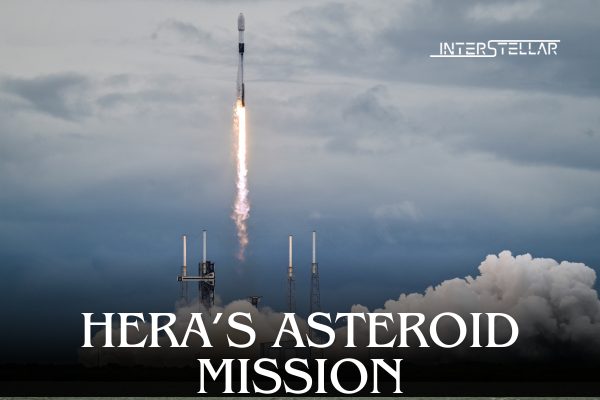
    Europe’s Hera asteroid probe launched from Florida on a SpaceX rocket on Monday, embarking on a two-year mission to study an asteroid that NASA’s DART spacecraft previously deflected off course. The mission aims to deepen our understanding of how to protect Earth from potential asteroid threats.

    Mission Overview: Revisiting the DART Impact Site

    The Hera mission will revisit the Dimorphos asteroid, a small moonlet orbiting a larger near-Earth asteroid called Didymos. The visit comes two years after NASA’s Double Asteroid Redirection Test (DART) intentionally crashed into Dimorphos. This collision was part of an experimental mission to test whether deflecting an asteroid could be a viable planetary defence strategy.

    The European Space Agency (ESA) chose SpaceX, led by Elon Musk, to launch Hera, addressing a gap in Europe’s current space launch capabilities. The spacecraft lifted off aboard a Falcon 9 rocket at 10:53 a.m. local time (1453 GMT), according to a live broadcast of the launch.

    DART’s Impact and its Aftermath

    NASA’s DART mission, carried out in September 2022, was a proof-of-concept project. The spacecraft travelled at approximately 14,000 miles per hour (22,530 kph) before colliding with Dimorphos. This impact occurred around 6.8 million miles (11 million km) from Earth. While Dimorphos and Didymos do not pose a direct threat to our planet, the mission’s success has proven that altering an asteroid’s trajectory is feasible.

    After the impact, scientists discovered that not only did DART change Dimorphos’ path, but it also altered the shape of the small asteroid. Hera’s upcoming survey will further analyse these changes, providing critical data to enhance future asteroid deflection strategies.

    Future Steps for Planetary Defence

    Hera, built by Germany’s OHB SE, will conduct a detailed post-impact survey of Dimorphos. This examination will help ESA and NASA to refine their planetary defence techniques, ensuring that deflection methods can be repeated if a genuine threat to Earth arises in the future.

    The Solar System contains over half a million asteroids, with more than 25,000 classified as near-Earth objects. Of these, over 1,000 are on ESA’s risk list, requiring regular monitoring to assess potential threats. Hera’s findings will contribute significantly to our ability to mitigate the risks these celestial bodies pose.

    Author

    • Kanika Sharma
      Kanika Sharma

      View all posts
    Featured
    Share. Facebook Twitter Pinterest LinkedIn Tumblr Email Reddit Telegram WhatsApp
    Kanika Sharma
    Kanika Sharma

      Keep Reading

      Bitcoin 16-Month Low Tests $60,000 Amid Global Selloff

      Intel AMD CPU Shortages Hit China Amid AI Demand Surge

      Wistron Sees AI Orders Rising

      India Nuclear Power Capacity Set to Expand to 22,000 MW by 2032

      NASA Artemis II Mission Delayed to March After Rocket Fueling Issues

      Germany Plans €35 Billion Military Space Push to Counter Russia and China

      Add A Comment
      Leave A Reply Cancel Reply

      Anti Drone System (CUAS)
      Latest Posts

      Bitcoin 16-Month Low Tests $60,000 Amid Global Selloff

      February 6, 2026

      Intel AMD CPU Shortages Hit China Amid AI Demand Surge

      February 6, 2026

      Wistron Sees AI Orders Rising

      February 6, 2026

      India Nuclear Power Capacity Set to Expand to 22,000 MW by 2032

      February 6, 2026

      NASA Artemis II Mission Delayed to March After Rocket Fueling Issues

      February 6, 2026

      Germany Plans €35 Billion Military Space Push to Counter Russia and China

      February 6, 2026

      Super Bowl LX Cybersecurity and Wi-Fi Upgrade Transforms Levi’s Stadium

      February 6, 2026

      Memory Shortages Weigh on Smartphone Chip Sales

      February 6, 2026

      Third Launch Pad Construction Set for March 2029 Completion

      February 6, 2026

      Slovenia Social Media Ban Planned for Children Under 15

      February 6, 2026

      Subscribe to News

      Get the latest sports news from NewsSite about world, sports and politics.

      • Astronomical Events
      • Space Missions
      • Industry News
      • Science
      StratNewsGlobal Tech
      Facebook X (Twitter) Instagram LinkedIn YouTube
      © 2026 StratNews Global, A unit of BharatShakti Communications LLP
      • About Us
      • Contributors
      • Copyright
      • Contact
      • Write for Us

      Type above and press Enter to search. Press Esc to cancel.