


Close Menu
Stratnews GlobalStratnews Global
    Facebook X (Twitter) Instagram
    Trending
    • India, Japan Advance LUPEX Moon Mission
    • China Hack Network Expands Beyond Control
    • Medicare Data Exposure Raises Security Concerns
    • Lal Bahadur Shastri And The Future India Didn’t Choose
    • Amazon Cloud Outage Disrupts Middle East Services
    • Cell Broadcast Testing Drives Disaster Alert Upgrade
    • Ukraine Demining Effort Accelerates With AI Support
    • Brain Tech Research Expands Amid Global Competition
    • Support Us
    Stratnews GlobalStratnews Global
    Write for Us
    Friday, May 1
    • Space
    • Science
    • AI and Robotics
    • Industry News
    • Support Us
    Stratnews GlobalStratnews Global
    Home » Ghost Particles From Ancient Supernovas May Be Detected

    Ghost Particles From Ancient Supernovas May Be Detected

    Aditya LenkaBy Aditya LenkaMarch 16, 2026 Space No Comments3 Mins Read
    ghost particles

    Deep beneath the mountains of Japan, scientists are preparing a powerful instrument that may soon reveal signals from stars that died billions of years ago. With a major upgrade to a huge underground detector, astronomers hope to observe ghost particles released during ancient stellar explosions.

    These particles come from supernovas, the violent deaths of massive stars. Although such explosions shine brightly, the light shows only a small part of the event. Most of the energy escapes in the form of ghost particles known as neutrinos.

    Because these particles rarely interact with matter, they travel through space almost untouched. As a result, many have journeyed across the universe for billions of years before reaching Earth.

    Ancient stellar explosions leave hidden signals

    Sometimes a star suddenly erupts in an intense flash of light. For a short time, the burst can outshine an entire galaxy. However, this spectacular ending happens only to very massive stars.

    Astronomers estimate that fewer than one percent of stars possess enough mass to explode as supernovas. These stars must contain at least eight times the mass of the Sun.

    Observers have witnessed such explosions for centuries. In 1572, Danish astronomer Tycho Brahe recorded a supernova so bright that people could see it without telescopes for two years.

    However, visible light tells only a small part of the story. During a supernova, roughly ninety nine percent of the energy leaves as ghost particles rather than light.

    Underground detector seeks ghost particles

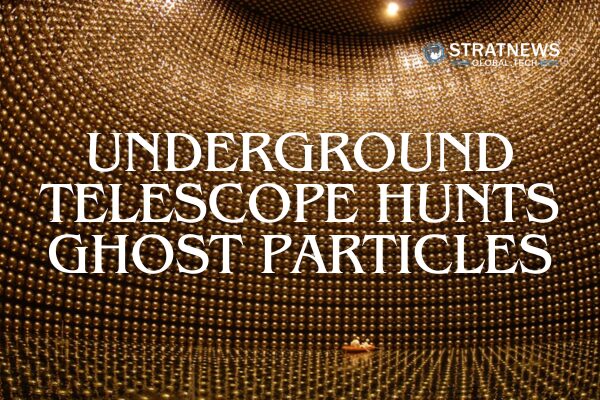
    Scientists hope to detect these elusive signals using the Super Kamiokande detector in Japan. The telescope sits deep underground inside a massive chamber filled with specialised sensors.

    Researchers recently upgraded the facility to improve its sensitivity. Because of this improvement, the detector may soon capture extremely faint signals from distant stellar explosions.

    For particle astrophysicists, this possibility is remarkable. The detector may reveal the combined glow of ghost particles produced by countless supernovas across cosmic history.

    These particles carry information from stars that died long before Earth formed. Some have travelled for more than ten billion years before arriving here.

    Clues about what remains after a star dies

    Astronomers still debate what remains after a massive star collapses. In some cases, the core may become a black hole. In others, it may form a neutron star.

    A neutron star is extremely dense yet very small. Despite containing enormous mass, it measures only about twenty kilometres across.

    If scientists detect the collective signal of supernova ghost particles, they may answer important questions about these outcomes. The data would also reveal how massive stars lived and died throughout the history of the universe.

    Although supernovas occur rarely in the Milky Way, they happen frequently across the wider cosmos. On average, one massive star explodes somewhere in the universe every second.

    Therefore, ghost particles from these events constantly stream through space. Even now, countless particles pass through Earth and through every person without leaving a trace.

    However, with the upgraded underground detector, scientists may finally catch them. If researchers confirm the signal, astronomy could enter a new era of discovery.

    Author

    • Aditya Lenka
      Aditya Lenka

      A multi-faceted professional with a diverse range of skills and experiences. He currently works as a Producer, Digital Marketer, and Journalist for several well-known media outlets, namely StratNewsGlobal, BharatShakti, and Interstellar. With a passion for storytelling and a keen eye for detail, Aditya has covered a wide range of topics and events across India, bringing a unique perspective to his work.

      When he's not busy producing content, Aditya enjoys exploring new places and cuisines, having traveled extensively throughout India. He's also an avid writer and poet, often penning his thoughts and musings in his free time. And when he wants to unwind and relax, Aditya spends time with his two loyal companions, Zorro and Pablo, his beloved dogs.

      Aditya's dynamic personality and varied interests make him a unique individual, always eager to learn and experience new things.

      View all posts
    Featured
    Share. Facebook Twitter Pinterest LinkedIn Tumblr Email Reddit Telegram WhatsApp
    Aditya Lenka
    Aditya Lenka

      A multi-faceted professional with a diverse range of skills and experiences. He currently works as a Producer, Digital Marketer, and Journalist for several well-known media outlets, namely StratNewsGlobal, BharatShakti, and Interstellar. With a passion for storytelling and a keen eye for detail, Aditya has covered a wide range of topics and events across India, bringing a unique perspective to his work.When he's not busy producing content, Aditya enjoys exploring new places and cuisines, having traveled extensively throughout India. He's also an avid writer and poet, often penning his thoughts and musings in his free time. And when he wants to unwind and relax, Aditya spends time with his two loyal companions, Zorro and Pablo, his beloved dogs.Aditya's dynamic personality and varied interests make him a unique individual, always eager to learn and experience new things.

      Keep Reading

      India, Japan Advance LUPEX Moon Mission

      China Hack Network Expands Beyond Control

      Medicare Data Exposure Raises Security Concerns

      Amazon Cloud Outage Disrupts Middle East Services

      Cell Broadcast Testing Drives Disaster Alert Upgrade

      Ukraine Demining Effort Accelerates With AI Support

      Add A Comment
      Leave A Reply Cancel Reply

      Anti Drone System (CUAS)
      Latest Posts

      India, Japan Advance LUPEX Moon Mission

      May 1, 2026

      China Hack Network Expands Beyond Control

      May 1, 2026

      Medicare Data Exposure Raises Security Concerns

      May 1, 2026

      Lal Bahadur Shastri And The Future India Didn’t Choose

      April 30, 2026

      Amazon Cloud Outage Disrupts Middle East Services

      April 30, 2026

      Cell Broadcast Testing Drives Disaster Alert Upgrade

      April 30, 2026

      Ukraine Demining Effort Accelerates With AI Support

      April 30, 2026

      Brain Tech Research Expands Amid Global Competition

      April 30, 2026

      SpaceX Starlink Launch Expands Satellite Network

      April 30, 2026

      Meta AI Spending Rises Amid Legal Risks

      April 30, 2026

      Subscribe to News

      Get the latest sports news from NewsSite about world, sports and politics.

      • Astronomical Events
      • Space Missions
      • Industry News
      • Science
      StratNewsGlobal Tech
      Facebook X (Twitter) Instagram LinkedIn YouTube
      © 2026 StratNews Global, A unit of BharatShakti Communications LLP
      • About Us
      • Contributors
      • Copyright
      • Contact
      • Write for Us

      Type above and press Enter to search. Press Esc to cancel.