


Proba-3 Mission Completes Final Testing Before Shipment to India
The European Space Agency’s (ESA) Proba-3 mission has successfully completed its final test before being shipped to its launch site in India. This double-satellite mission, designed to create an artificial solar eclipse, received commands from its science team and transmitted images back, mirroring its operational mode once in orbit.
Advanced Testing for Complex Mission Operations
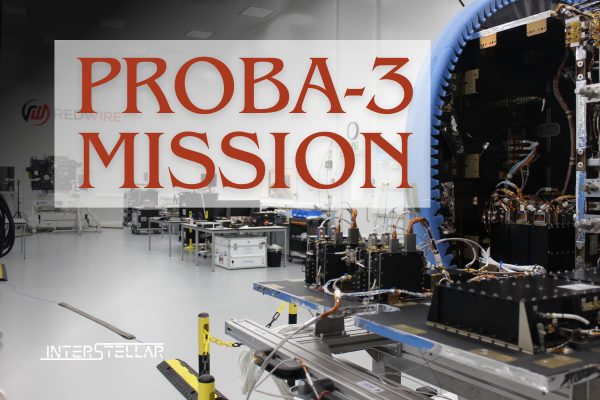
Proba-3’s recent System Validation Test was carried out by the Royal Observatory of Belgium in Brussels. During this test, the science team sent payload operation requests to ESA’s mission control centre at the European Space Security and Education Centre (ESEC) in Redu, Belgium. The control centre then relayed telecommands to the Proba-3 spacecraft, which is currently in a cleanroom at Redwire Space in Kruibeke, Belgium. The spacecraft responded autonomously, executing all scientific observations as planned.
These tests marked the final in a series of five System Validation Tests (SVTs). Each SVT progressively increased in complexity, ensuring that the spacecraft could perform under realistic mission scenarios. Raphael Rougeot, Proba-3 systems engineer, explained, “These SVTs replicate the full chain of operations associated with the mission, using the actual ground segment facilities and software that will be used during flight.”
Autonomous Formation Flying to Study the Sun
The Proba-3 mission will launch aboard a PSLV-XL launcher from the Satish Dhawan Space Centre in India, with the launch scheduled for 29 November. The mission will consist of two satellites that will perform millimetre-precision formation flying to create an artificial eclipse. One satellite, the Occulter, will cast a shadow onto the other, the Coronagraph, blocking the Sun to allow extended observations of the solar corona, the outermost part of the Sun’s atmosphere.
The mission’s elliptical 19.5-hour orbit around Earth will enable it to achieve this formation for six hours at the top of its 60,000 km apogee. During this period, Proba-3 will autonomously maintain its position to enable scientific observations of the Sun’s corona. The testing also involved updating commands in real-time, offering flexibility to react swiftly to exceptional solar events.
Ensuring Seamless Ground and Space Operations
ESA’s mission control team, along with Redwire staff and prime contractor Sener from Spain, collaborated closely to ensure flawless communication between the ground segment and the spacecraft. Esther Bastida Pertegaz, Proba-3 system engineer, noted that this was the first time the mission controllers operated the satellites remotely from the actual mission control site. She described the experience as more realistic, as it closely simulates actual space operations.
Though the ASPIICS coronagraph instrument remained protected during testing, it successfully transmitted a test image back to the Royal Observatory of Belgium. This confirmed the spacecraft’s readiness for its mission.
Looking Ahead: Proba-3’s Ambitious Goals
Proba-3 is set to be the latest in ESA’s line of experimental minisatellites, dating back to 2001. Its main scientific objective is to study the Sun’s corona without interference from the Sun’s intense glare, which is typically impossible to achieve from Earth. The mission is a significant technical and scientific achievement, involving fully automated ground and flight systems.
Upon completing its final tests, Proba-3 will be shipped to India on 21 October. The mission represents a step forward in formation flying technology, potentially opening the door for more complex multi-satellite missions in the future.