

Close Menu
Stratnews GlobalStratnews Global
    Facebook X (Twitter) Instagram
    Trending
    • Bitcoin 16-Month Low Tests $60,000 Amid Global Selloff
    • Intel AMD CPU Shortages Hit China Amid AI Demand Surge
    • Wistron Sees AI Orders Rising
    • India Nuclear Power Capacity Set to Expand to 22,000 MW by 2032
    • NASA Artemis II Mission Delayed to March After Rocket Fueling Issues
    • Germany Plans €35 Billion Military Space Push to Counter Russia and China
    • Super Bowl LX Cybersecurity and Wi-Fi Upgrade Transforms Levi’s Stadium
    • Memory Shortages Weigh on Smartphone Chip Sales
    Stratnews GlobalStratnews Global
    Write for Us
    Saturday, February 7
    • Space
    • Science
    • AI and Robotics
    • Industry News
    Stratnews GlobalStratnews Global
    Home » Voyager 1 Resumes Interstellar Science Operations Post Technical Fix

    Voyager 1 Resumes Interstellar Science Operations Post Technical Fix

    Arushi PandeyBy Arushi PandeyJune 14, 2024Updated:June 26, 2024 Space No Comments2 Mins Read
    Voyager 1
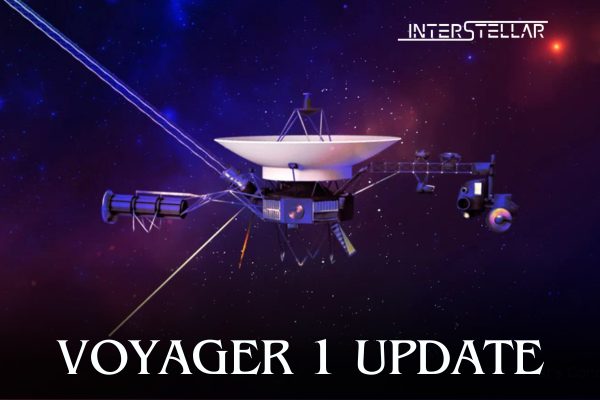
    An artist’s concept of the Voyager spacecraft. Credit: NASA

    Voyager 1 Resumes Normal Science Operations After Technical Issue

    Technical Issue and Resolution

    NASA’s Voyager 1 spacecraft has resumed normal science operations for the first time since encountering a technical issue in November 2023. The team initially addressed the problem in April, allowing the spacecraft to start transmitting engineering data regarding its health and status. On May 19, the mission team sent a command for the spacecraft to return science data. Two of the four science instruments immediately resumed normal operations, and the remaining two required additional work. Now, all four instruments are successfully returning usable science data.

    Science Instruments and Mission

    Voyager 1’s four science instruments study plasma waves, magnetic fields, and particles. Along with its twin, Voyager 2, it is one of the only spacecraft to directly sample interstellar space, the region beyond the heliosphere, which is the Sun’s protective bubble of magnetic fields and solar wind.

    Remaining Tasks and Maintenance

    While Voyager 1 is back to conducting scientific research, some minor tasks remain to fully rectify the issue’s impact. Engineers will resynchronize the timekeeping software across the spacecraft’s three onboard computers to ensure commands are executed precisely. Maintenance on the digital tape recorder, which stores data for the plasma wave instrument and sends it to Earth twice annually, will also be performed. Most of the science data from the Voyagers is transmitted directly to Earth without being recorded.

    Voyager Missions Overview

    Voyager 1 is currently more than 15 billion miles (24 billion kilometers) from Earth, while Voyager 2 is over 12 billion miles (20 billion kilometers) away. Later this year, both probes will mark 47 years of continuous operation, making them NASA’s longest-running and most distant spacecraft. Voyager 1 and 2 have provided invaluable data, having flown past Jupiter and Saturn, with Voyager 2 also exploring Uranus and Neptune.

    Author

    • Arushi Pandey
      Arushi Pandey

      View all posts
    Featured
    Share. Facebook Twitter Pinterest LinkedIn Tumblr Email Reddit Telegram WhatsApp
    Arushi Pandey

      Keep Reading

      Bitcoin 16-Month Low Tests $60,000 Amid Global Selloff

      Intel AMD CPU Shortages Hit China Amid AI Demand Surge

      Wistron Sees AI Orders Rising

      India Nuclear Power Capacity Set to Expand to 22,000 MW by 2032

      NASA Artemis II Mission Delayed to March After Rocket Fueling Issues

      Germany Plans €35 Billion Military Space Push to Counter Russia and China

      Add A Comment
      Leave A Reply Cancel Reply

      Anti Drone System (CUAS)
      Latest Posts

      Bitcoin 16-Month Low Tests $60,000 Amid Global Selloff

      February 6, 2026

      Intel AMD CPU Shortages Hit China Amid AI Demand Surge

      February 6, 2026

      Wistron Sees AI Orders Rising

      February 6, 2026

      India Nuclear Power Capacity Set to Expand to 22,000 MW by 2032

      February 6, 2026

      NASA Artemis II Mission Delayed to March After Rocket Fueling Issues

      February 6, 2026

      Germany Plans €35 Billion Military Space Push to Counter Russia and China

      February 6, 2026

      Super Bowl LX Cybersecurity and Wi-Fi Upgrade Transforms Levi’s Stadium

      February 6, 2026

      Memory Shortages Weigh on Smartphone Chip Sales

      February 6, 2026

      Third Launch Pad Construction Set for March 2029 Completion

      February 6, 2026

      Slovenia Social Media Ban Planned for Children Under 15

      February 6, 2026

      Subscribe to News

      Get the latest sports news from NewsSite about world, sports and politics.

      • Astronomical Events
      • Space Missions
      • Industry News
      • Science
      StratNewsGlobal Tech
      Facebook X (Twitter) Instagram LinkedIn YouTube
      © 2026 StratNews Global, A unit of BharatShakti Communications LLP
      • About Us
      • Contributors
      • Copyright
      • Contact
      • Write for Us

      Type above and press Enter to search. Press Esc to cancel.