



China and Brazil Begin Building Joint Space Technology Lab
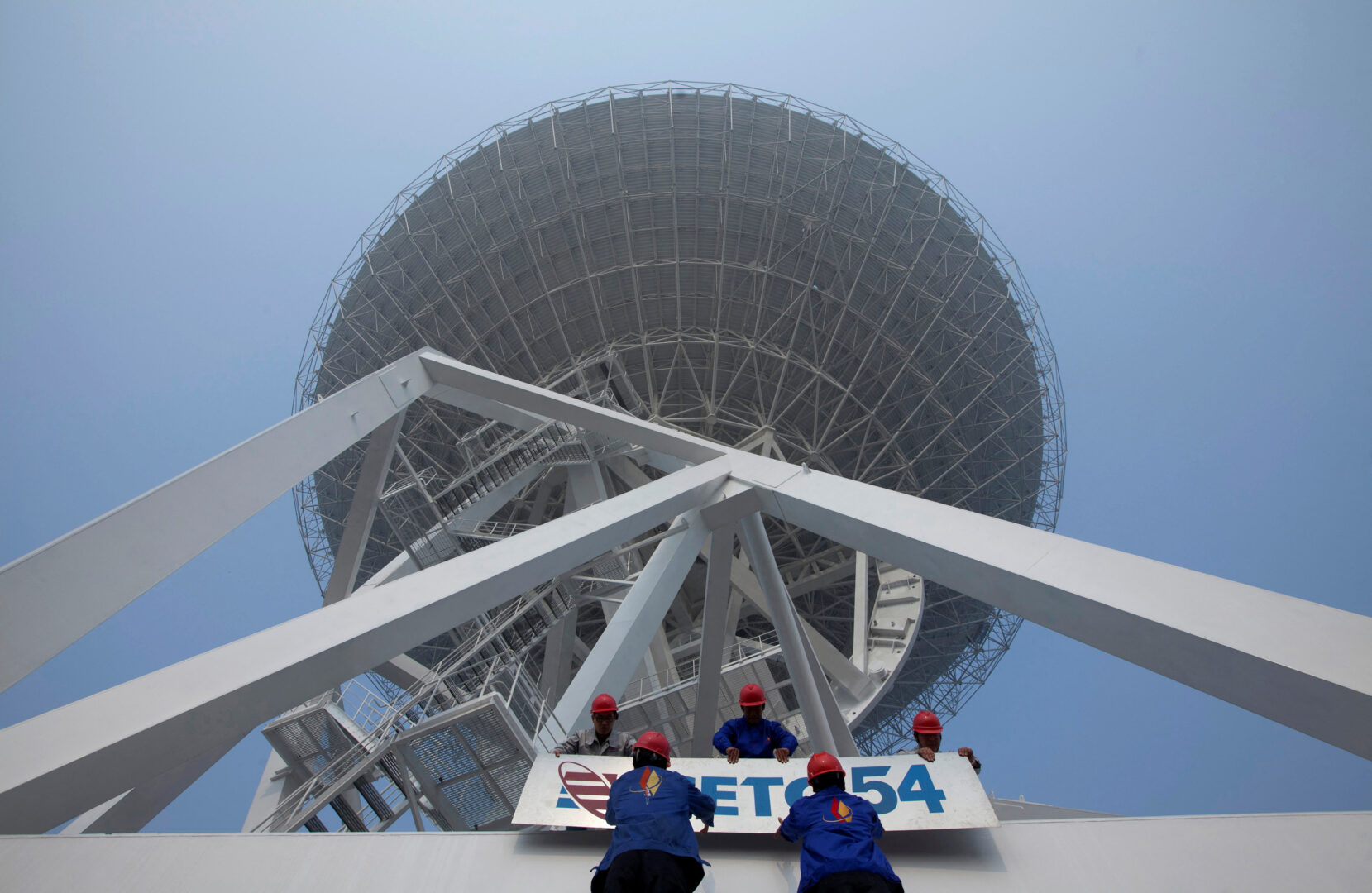
China and Brazil have started constructing a joint laboratory focused on space technologies, marking a new stage in their expanding scientific partnership. The initiative, announced by China Electronics Technology Group Corporation (CETC), strengthens cooperation between the two nations as they advance their ambitious BINGO radio telescope project in South America.
Expanding Cooperation Amid U.S. Pressure
The growing collaboration stands in contrast to mounting U.S. pressure on Latin American nations to scale back relations with China, particularly in the space sector. Two Chinese-led telescope projects in Chile and Argentina have reportedly been frozen since the return of U.S. President Donald Trump, as regional leaders seek to maintain favourable trade terms and avoid potential tariffs.
Washington has expressed concern that China’s overseas telescopes could serve dual purposes, enhancing Beijing’s surveillance capabilities and offering insight into U.S. operations in areas considered vital for homeland defence. Beijing has rejected these allegations, accusing the United States of politicising scientific cooperation and interfering in sovereign nations’ research partnerships.
China–Brazil Joint Laboratory for Radio Astronomy
According to CETC, its Network Communications Research Institute has signed an agreement with Brazil’s Federal University of Campina Grande and the Federal University of Paraíba to establish the China–Brazil Joint Laboratory for Radio Astronomy Technology. The facility will focus on frontier research in astronomical observation and deep-space exploration.
The laboratory complements progress on the BINGO radio telescope—an instrument designed to study the structure of the universe and dark energy. CETC confirmed in June that the main structure had been built in China and shipped from Tianjin to Brazil. Once completed in 2026, BINGO is expected to become the largest radio telescope in South America.
Strategic and Scientific Significance
Beyond cosmological research, CETC noted that BINGO will be capable of tracking satellites, meteoroids, and other near-Earth objects, potentially improving global space situational awareness. The U.S. Defense Intelligence Agency previously warned that such telescopes could also aid in identifying satellite orbits and coordinating the use of anti-satellite systems.
Over the past two decades, Beijing has increasingly used its space technology expertise as a diplomatic instrument, expanding its presence across Asia, Africa, and South America. By constructing observatories, developing satellites, and training international scientists, China continues to strengthen its influence in global space research and strategic partnerships.
with inputs from Reuters

