


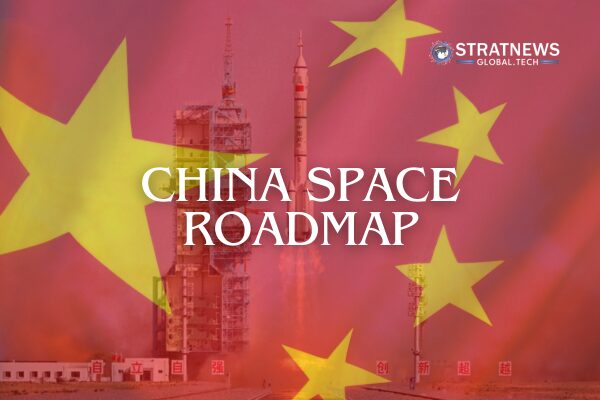
China has unveiled a comprehensive roadmap for its space sector under the 15th Five-Year Plan covering 2026 to 2030. The strategy sets out to accelerate technological advancement while transforming aerospace into a major engine of economic growth. Moreover, authorities aim to shift the sector from symbolic national strength to a productive force capable of generating trillions of yuan.
Shift Towards Market Driven Space Industry
China plans to transition space activities from bespoke, high cost projects into a scalable, market oriented industry. As a result, the focus will move towards standardisation and mass production. Satellites will feature more durable power systems and a universal intelligent control unit. Consequently, developers will no longer need to design custom chips for each satellite.
In addition, the country intends to develop lighter launch vehicles with reusable capabilities. These rockets will function more like aircraft, enabling frequent launches and significantly lowering costs. Therefore, access to space is expected to become more efficient and commercially viable.
Integrated Systems and Satellite Expansion
The blueprint highlights closer integration between rocket and satellite design. This approach will support rapid and large scale deployment of satellite constellations. At the same time, China will advance technologies for active space defence and intelligent satellite cluster management. These systems aim to protect spacecraft from debris, signal disruption and other orbital hazards.
China will also continue building a large satellite internet constellation under national coordination. Furthermore, the plan includes improvements in launch scheduling and in orbit servicing. These measures will ensure stable and continuous network operations.
The system will integrate closely with the BeiDou Navigation Satellite System. As a result, communication, navigation, remote sensing and internet services will merge into a unified infrastructure. This “space air ground network” will support maritime operations, emergency response and connectivity in remote regions. In addition, it will expand global communication capabilities.
Deep Space Exploration and Future Missions
China will continue to prioritise deep space exploration as a core objective. Building on previous lunar and Mars missions, the country plans to expand its exploration efforts further into the solar system. In particular, the second phase of its Mars programme will advance alongside new capabilities to monitor and potentially deflect hazardous celestial objects.
Meanwhile, China aims to explore outer regions of the solar system to unlock new scientific insights. A reusable heavy lift launch vehicle will play a central role in these missions. This technology will support crewed lunar landings and future deep space exploration initiatives.
The plan also includes continued research into an International Lunar Research Station. Additionally, China will expand lunar scientific studies and assess potential resource utilisation. At the same time, the country will collaborate with international partners to advance global space exploration efforts.
With inputs from Reuters

