

Close Menu
Stratnews GlobalStratnews Global
    Facebook X (Twitter) Instagram
    Trending
    • Meta to Give EU Users Real Choice on Personalised Ads
    • Trump Signals He Will Review Netflix–Warner Bros Merger
    • Amnesty Criticises India’s Always-On Tracking Plan
    • Musk and Huang to Discuss AI at U.S.-Saudi Investment Forum
    • EU Designates 19 Tech Firms as Critical Providers for Financial Sector
    • IBM Nears $11 Billion Deal to Acquire Confluent in Cloud Push
    • U.S. Government Equity Plan to Exclude Major Defence Contractors, Says Boeing’s Parker
    • China’s Long March-8A Rocket Launches New Batch of Internet Satellites
    Stratnews GlobalStratnews Global
    Write for Us
    Monday, December 8
    • Space
    • Science
    • AI and Robotics
    • Industry News
    Stratnews GlobalStratnews Global
    Home » Astronomers Solve Mystery of Magnetic Field in ‘Dragon’s Egg’ Nebula

    Astronomers Solve Mystery of Magnetic Field in ‘Dragon’s Egg’ Nebula

    StratNewsGlobal Tech TeamBy StratNewsGlobal Tech TeamApril 12, 2024 Space No Comments2 Mins Read
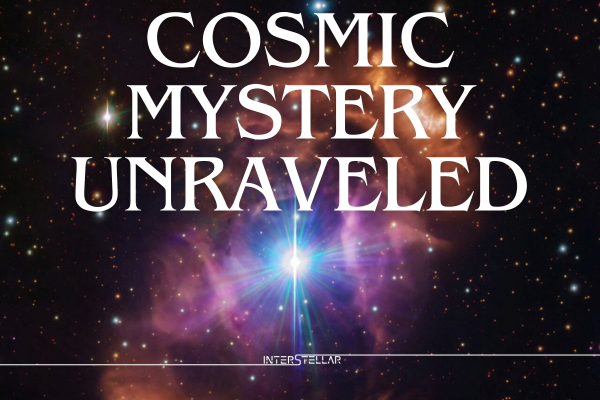
    Dragon’s Egg Nebula

    Astronomers have uncovered the origins of a magnetic field around a massive star within the “Dragon’s Egg” nebula, providing key insights into the formation of such rare phenomena. The nebula, located about 3,700 light-years from Earth in the constellation Norma, is home to two massive stars involved in a cosmic drama of stellar proportions.

    The European Southern Observatory’s Chile-based team, led by Abigail Frost, observed that one of these stars possesses a magnetic field similar to that of our sun, while its companion does not. This distinction has puzzled scientists, especially since massive stars are not typically associated with nebulae.

    The mystery was unravelled through extensive observations and computer simulations over nine years using the Very Large Telescope. Researchers concluded that the magnetic star had, in its earlier stages, absorbed a smaller sibling star. This stellar merger mixed their materials in a violent clash, consequently creating the magnetic field.

    This process not only gave birth to the magnetic star but also expelled vast amounts of gas and dust, forming the nebula visible today. The expelled material, primarily hydrogen and helium, contains an unusually high concentration of nitrogen, a byproduct of the merger.

    “The merger was a highly tumultive event, with material thrown out into space, likely forming the nebula we now observe,” Frost explained. “Our findings serve as the observational evidence confirming the predicted impact of such stellar mergers.”

    The binary system, part of a once larger triple system, reveals that the inner two stars merged about 7,500 years ago, a relatively recent event in cosmic terms. The magnetic star is now about 30 times the mass of our sun, and its companion about 26.5 times.

    Such discoveries highlight the complexity of stellar evolution and the formation of magnetic fields in massive stars, which are otherwise difficult to explain. Only about 7% of massive stars possess magnetic fields, according to current estimates.

    The significance of these findings extends beyond our understanding of star formation. Magnetic fields in stars like our sun can influence planetary atmospheres and can impact technology on Earth, illustrating the broader implications of such cosmic phenomena.

    Author

    • StratNewsGlobal Tech Team
      StratNewsGlobal Tech Team

      View all posts
    Featured
    Share. Facebook Twitter Pinterest LinkedIn Tumblr Email Reddit Telegram WhatsApp
    StratNewsGlobal Tech Team
    • Website

    Keep Reading

    Meta to Give EU Users Real Choice on Personalised Ads

    Trump Signals He Will Review Netflix–Warner Bros Merger

    Amnesty Criticises India’s Always-On Tracking Plan

    Musk and Huang to Discuss AI at U.S.-Saudi Investment Forum

    IBM Nears $11 Billion Deal to Acquire Confluent in Cloud Push

    U.S. Government Equity Plan to Exclude Major Defence Contractors, Says Boeing’s Parker

    Add A Comment
    Leave A Reply Cancel Reply

    Anti Drone System (CUAS)
    Latest Posts

    Meta to Give EU Users Real Choice on Personalised Ads

    December 8, 2025

    Trump Signals He Will Review Netflix–Warner Bros Merger

    December 8, 2025

    Amnesty Criticises India’s Always-On Tracking Plan

    December 8, 2025

    Musk and Huang to Discuss AI at U.S.-Saudi Investment Forum

    December 8, 2025

    EU Designates 19 Tech Firms as Critical Providers for Financial Sector

    December 8, 2025

    IBM Nears $11 Billion Deal to Acquire Confluent in Cloud Push

    December 8, 2025

    U.S. Government Equity Plan to Exclude Major Defence Contractors, Says Boeing’s Parker

    December 8, 2025

    China’s Long March-8A Rocket Launches New Batch of Internet Satellites

    December 8, 2025

    Netflix to Acquire Warner Bros Discovery in $72 Billion Deal

    December 5, 2025

    EngineAI Reveals T800 Humanoid Robot Designed for Real-World Tasks

    December 5, 2025

    Subscribe to News

    Get the latest sports news from NewsSite about world, sports and politics.

    • Astronomical Events
    • Space Missions
    • Industry News
    • Science
    StratNewsGlobal Tech
    Facebook X (Twitter) Instagram LinkedIn YouTube
    © 2025 StratNews Global, A unit of BharatShakti Communications LLP
    • About Us
    • Contributors
    • Copyright
    • Contact
    • Write for Us

    Type above and press Enter to search. Press Esc to cancel.