

Close Menu
Stratnews GlobalStratnews Global
    Facebook X (Twitter) Instagram
    Trending
    • Global Equity Funds Inflows Hit Five Week High On AI Optimism
    • PM AI Roundtable Highlights India’s Deeptech Innovation Push
    • Architecting India’s AI Future With Autonomy Infrastructure And Mass Empowerment
    • AI For Oceans Of Tomorrow At India AI Impact Summit 2026
    • Meta Stock Option Cuts As Meta AI Investment Surges
    • Nvidia OpenAI Investment Nears 30 Billion Agreement
    • Gaganyaan Drogue Parachute Test Marks Major Milestone For India Space Mission
    • Budget 2026: Is India Attempting A Moonshot?
    Stratnews GlobalStratnews Global
    Write for Us
    Saturday, February 21
    • Space
    • Science
    • AI and Robotics
    • Industry News
    Stratnews GlobalStratnews Global
    Home » UK Scientists Test Bioreactors in Space to Fuel Mars Mission Sustainability

    UK Scientists Test Bioreactors in Space to Fuel Mars Mission Sustainability

    Aishwarya ParikhBy Aishwarya ParikhApril 22, 2025 Space No Comments2 Mins Read
    Bioreactors

    UK Scientists Test Space Bioreactors to Feed Future Mars Missions

    Feeding astronauts on a journey to Mars presents one of space exploration’s toughest challenges. With missions lasting years and every kilogram of cargo costing up to $20,000, scientists in the UK believe growing food, fuel, and even medicine during spaceflight could be the solution.

    Cultivated Cells Could Replace Costly Cargo

    “Astronauts consume between 0.5 and 1.5 kilograms of food per day. At around $10,000 per meal in launch costs, we must find sustainable alternatives,” said Dr Rodrigo Ledesma-Amaro, Director of the Bezos Centre for Sustainable Protein at Imperial College London.

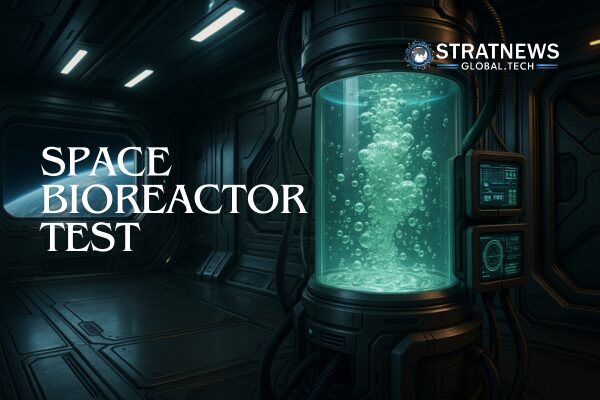
    Rather than shipping tonnes of supplies, researchers are exploring how to grow what astronauts need using bioreactors—devices that turn a few cultivated cells into mini factories that produce food, vitamins, and more.

    Imperial’s work, backed by the Bezos Earth Fund, focuses on using microbial cells and biofoundries to produce essential supplies sustainably, both in space and on Earth.

    SpaceLab Sends Yeast Bioreactor into Orbit

    This innovative approach was tested in orbit on April 22, when Europe’s first commercial returnable spacecraft, Phoenix 1, carried Imperial’s experiment to space. Launched aboard a SpaceX Falcon 9 rocket from Cape Canaveral, the mission included a compact lab system called SpaceLab.

    Developed by UK firm Frontier Space, SpaceLab is a “lab-in-a-box” weighing under one kilogram. It houses three experiments, including yeast cells producing a vitamin precursor, which can be harvested and consumed.

    “This is a bioreactor growing yeast in microgravity, testing whether these cells can make useful compounds without Earth’s gravity,” explained Ledesma-Amaro. The experiment will help researchers reimagine how future bioreactors can function in space.

    Bioreactors for Long-Term Space Living

    The Phoenix 1 spacecraft also carries an inflatable atmospheric decelerator, designed to protect it during Earth re-entry. The system serves as both a heat shield and parachute, enabling safe splashdown and return of samples.

    ATMOS Space Cargo, the makers of Phoenix 1, envision frequent, low-cost missions supporting in-space manufacturing, defence, and scientific research. “Eventually, we aim to build permanent, space-based bioreactors,” said Frontier Space co-founder Aqeel Shamsul.

    As humans plan long-term settlements on the Moon and Mars, such bioreactors could be crucial to sustaining life. Ledesma-Amaro hopes future versions will produce a wide range of items—from biodiesel and dairy to vitamins and even vanilla ice cream.


    with inputs from Reuters

    Author

    • Aishwarya Parikh
      Aishwarya Parikh

      View all posts
    Featured
    Share. Facebook Twitter Pinterest LinkedIn Tumblr Email Reddit Telegram WhatsApp
    Aishwarya Parikh

      Keep Reading

      Global Equity Funds Inflows Hit Five Week High On AI Optimism

      PM AI Roundtable Highlights India’s Deeptech Innovation Push

      Architecting India’s AI Future With Autonomy Infrastructure And Mass Empowerment

      AI For Oceans Of Tomorrow At India AI Impact Summit 2026

      Meta Stock Option Cuts As Meta AI Investment Surges

      Nvidia OpenAI Investment Nears 30 Billion Agreement

      Add A Comment
      Leave A Reply Cancel Reply

      Anti Drone System (CUAS)
      Latest Posts

      Global Equity Funds Inflows Hit Five Week High On AI Optimism

      February 20, 2026

      PM AI Roundtable Highlights India’s Deeptech Innovation Push

      February 20, 2026

      Architecting India’s AI Future With Autonomy Infrastructure And Mass Empowerment

      February 20, 2026

      AI For Oceans Of Tomorrow At India AI Impact Summit 2026

      February 20, 2026

      Meta Stock Option Cuts As Meta AI Investment Surges

      February 20, 2026

      Nvidia OpenAI Investment Nears 30 Billion Agreement

      February 20, 2026

      Gaganyaan Drogue Parachute Test Marks Major Milestone For India Space Mission

      February 20, 2026

      Budget 2026: Is India Attempting A Moonshot?

      February 19, 2026

      Google And Sea Partner To Develop AI Tools For E Commerce And Gaming

      February 19, 2026

      Microsoft Says ICE Not Using Its Technology For Mass Surveillance

      February 19, 2026

      Subscribe to News

      Get the latest sports news from NewsSite about world, sports and politics.

      • Astronomical Events
      • Space Missions
      • Industry News
      • Science
      StratNewsGlobal Tech
      Facebook X (Twitter) Instagram LinkedIn YouTube
      © 2026 StratNews Global, A unit of BharatShakti Communications LLP
      • About Us
      • Contributors
      • Copyright
      • Contact
      • Write for Us

      Type above and press Enter to search. Press Esc to cancel.