


Close Menu
Stratnews GlobalStratnews Global
    Facebook X (Twitter) Instagram
    Trending
    • Britain Under 16 Social Media Ban And Online Safety Act Reform
    • India AI Impact Summit 2026 Highlights Global Collaboration And AI Governance
    • US Microreactor Transport Signals New Era For Military Nuclear Power
    • China CCTV Spring Festival Gala Showcases Humanoid Robot Startups
    • Crew-12 ISS Mission Begins With Historic Arrival At Space Station
    • AI Takes Center Stage in India’s Space Sector Ahead of AI Summit
    • Railways Strengthens Cybersecurity, Ensuring Smooth Tatkal Booking
    • National Biodiversity Authority Secures ₹2.40 Crore Through ABS Contributions
    Stratnews GlobalStratnews Global
    Write for Us
    Monday, February 16
    • Space
    • Science
    • AI and Robotics
    • Industry News
    Stratnews GlobalStratnews Global
    Home » Planet Found Orbiting Two Brown Dwarfs in Rare Polar Path

    Planet Found Orbiting Two Brown Dwarfs in Rare Polar Path

    Aditya LenkaBy Aditya LenkaApril 19, 2025 Space No Comments4 Mins Read
    two brown dwarfs

    Unique discovery challenges assumptions about planetary orbits and binary systems

    In a remarkable astronomical finding, scientists have identified a planet that defies many of the norms associated with planetary systems. Located just 120 light-years away in our Milky Way galaxy, the planet orbits not one or two stars, but a pair of brown dwarfs — celestial objects that are too massive to be considered planets yet not massive enough to sustain nuclear fusion like true stars.

    This discovery marks the first time a planet has been confirmed orbiting two brown dwarfs, making it one of the rarest exoplanets known to date.

    two brown dwarfs
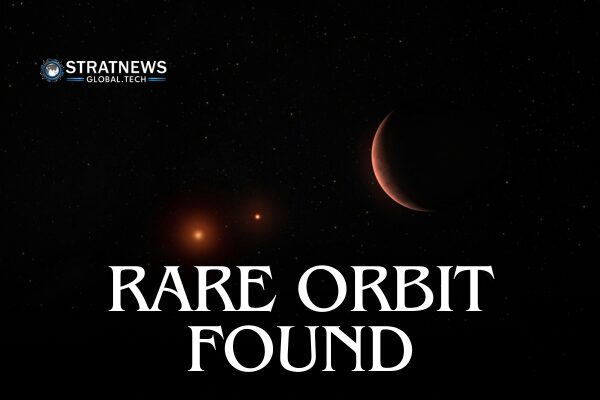
    An artist’s impression shows the exoplanet 2M1510 (AB) b’s unusual orbit around a pair of brown dwarfs, objects bigger than gas-giant planets but too small to be proper stars. The newly discovered planet has a polar orbit, which is perpendicular to the plane in which the two brown dwarfs are travelling. ESO/L. Calcada/Handout via REUTERS

    What makes two brown dwarfs so unusual?

    Brown dwarfs are often described as ‘failed stars.’ They form much like stars but lack the necessary mass to ignite and sustain nuclear fusion. Despite this, they are more massive than the largest planets and emit a faint glow. Each brown dwarf in this newly discovered system is around 35 times more massive than Jupiter, the biggest planet in our solar system.

    These two brown dwarfs form a tightly bound binary system, orbiting each other at a distance just 4% of the Earth-sun distance. The planet, named 2M1510 (AB) b, circles both dwarfs from a greater distance. A third brown dwarf exists in the system but lies far enough away—roughly 250 times the Earth-sun distance—to have no impact on the inner pair or the orbiting planet.

    A rare orbit sets this planet apart

    Out of the nearly 5,800 exoplanets confirmed so far, only 16 are known to orbit two stars or stellar objects—what scientists call circumbinary planets. However, none until now have been found orbiting brown dwarfs. Even more striking, this planet follows an orbit that is almost perpendicular to the orbital plane of the two brown dwarfs—a configuration known as a polar orbit.

    According to Thomas Baycroft, a doctoral researcher at the University of Birmingham and the lead author of the study, “A satellite on a polar orbit around Earth would pass over both the north and south poles. Similarly, this planet follows a path inclined at nearly 90 degrees to the orbital plane of the brown dwarfs.”

    This kind of orbit is unknown within our solar system. The few exoplanets previously found on such polar paths have only been observed around single stars.

    A sky unlike any other

    Though reminiscent of the twin-sunset scene from the film Star Wars, this planetary system offers a vastly different view. Baycroft noted that the two brown dwarfs would appear as identical, dim red lights in the sky—fainter than the Sun due to their lower luminosity. Together, they shine at just 0.1% of the Sun’s brightness.

    Each brown dwarf carries only 4% the mass of the Sun. Their unusual configuration with the planet offers astronomers a fascinating glimpse into the wide range of ways planetary systems can form.

    Astrophysicist Amaury Triaud, a co-author of the study, highlighted the significance: “This appears like an exotic configuration for a planetary system. Probably the most important discovery since the first exoplanet has been how diverse planetary systems are. They seem to defy our expectations, which is great — they present a fantastic opportunity to learn.”

    This discovery provides the strongest evidence yet that planets can follow polar orbits around binary systems, supporting long-held theories but offering a real-world example for the first time.

    with inputs from Reuters

    Author

    • Aditya Lenka
      Aditya Lenka

      A multi-faceted professional with a diverse range of skills and experiences. He currently works as a Producer, Digital Marketer, and Journalist for several well-known media outlets, namely StratNewsGlobal, BharatShakti, and Interstellar. With a passion for storytelling and a keen eye for detail, Aditya has covered a wide range of topics and events across India, bringing a unique perspective to his work.When he's not busy producing content, Aditya enjoys exploring new places and cuisines, having traveled extensively throughout India. He's also an avid writer and poet, often penning his thoughts and musings in his free time. And when he wants to unwind and relax, Aditya spends time with his two loyal companions, Zorro and Pablo, his beloved dogs.Aditya's dynamic personality and varied interests make him a unique individual, always eager to learn and experience new things.

      View all posts
    Featured
    Share. Facebook Twitter Pinterest LinkedIn Tumblr Email Reddit Telegram WhatsApp
    Aditya Lenka
    Aditya Lenka

      A multi-faceted professional with a diverse range of skills and experiences. He currently works as a Producer, Digital Marketer, and Journalist for several well-known media outlets, namely StratNewsGlobal, BharatShakti, and Interstellar. With a passion for storytelling and a keen eye for detail, Aditya has covered a wide range of topics and events across India, bringing a unique perspective to his work.When he's not busy producing content, Aditya enjoys exploring new places and cuisines, having traveled extensively throughout India. He's also an avid writer and poet, often penning his thoughts and musings in his free time. And when he wants to unwind and relax, Aditya spends time with his two loyal companions, Zorro and Pablo, his beloved dogs.Aditya's dynamic personality and varied interests make him a unique individual, always eager to learn and experience new things.

      Keep Reading

      Britain Under 16 Social Media Ban And Online Safety Act Reform

      India AI Impact Summit 2026 Highlights Global Collaboration And AI Governance

      US Microreactor Transport Signals New Era For Military Nuclear Power

      China CCTV Spring Festival Gala Showcases Humanoid Robot Startups

      Crew-12 ISS Mission Begins With Historic Arrival At Space Station

      AI Takes Center Stage in India’s Space Sector Ahead of AI Summit

      Add A Comment
      Leave A Reply Cancel Reply

      Anti Drone System (CUAS)
      Latest Posts

      Britain Under 16 Social Media Ban And Online Safety Act Reform

      February 16, 2026

      India AI Impact Summit 2026 Highlights Global Collaboration And AI Governance

      February 16, 2026

      US Microreactor Transport Signals New Era For Military Nuclear Power

      February 16, 2026

      China CCTV Spring Festival Gala Showcases Humanoid Robot Startups

      February 16, 2026

      Crew-12 ISS Mission Begins With Historic Arrival At Space Station

      February 16, 2026

      AI Takes Center Stage in India’s Space Sector Ahead of AI Summit

      February 15, 2026

      Railways Strengthens Cybersecurity, Ensuring Smooth Tatkal Booking

      February 13, 2026

      National Biodiversity Authority Secures ₹2.40 Crore Through ABS Contributions

      February 13, 2026

      Failed Supernova Black Hole Formation Observed in Andromeda

      February 13, 2026

      Eutelsat, Starlink Rival Revenue Beats Forecasts

      February 13, 2026

      Subscribe to News

      Get the latest sports news from NewsSite about world, sports and politics.

      • Astronomical Events
      • Space Missions
      • Industry News
      • Science
      StratNewsGlobal Tech
      Facebook X (Twitter) Instagram LinkedIn YouTube
      © 2026 StratNews Global, A unit of BharatShakti Communications LLP
      • About Us
      • Contributors
      • Copyright
      • Contact
      • Write for Us

      Type above and press Enter to search. Press Esc to cancel.