


Sheltered from the blazing summer sun, scientists in the northern Italian city of Padua spent weeks preparing an instrument they believe could transform the study of the solar corona.
As a total solar eclipse sweeps across Europe on August 12, the Circular Slit Spectrometer (CISS) will face a decisive test at Spain’s Javalambre Astrophysical Observatory. Researchers hope to demonstrate that it can split the Sun’s light into its constituent wavelengths far faster than existing instruments.
New Instrument Targets A Key Limitation
Unlike conventional linear spectrometers, the CISS prototype uses a circular slit to capture the spectrum of the entire corona at a specific distance from the centre of the Sun in a single photograph.
Principal Investigator Federico Landini of the Astrophysical Observatory of Turin said the design could offer a major advantage over traditional instruments.
Earlier spectrometers could take hours to scan the corona line by line. However, the solar region can change within minutes, making lengthy observations difficult.
The new optical approach is therefore designed to capture information more quickly. If the researchers prove that the principle works, they could eventually apply the technology to a future space mission aimed at studying the Sun’s outer atmosphere.
Eclipse Provides Critical Test
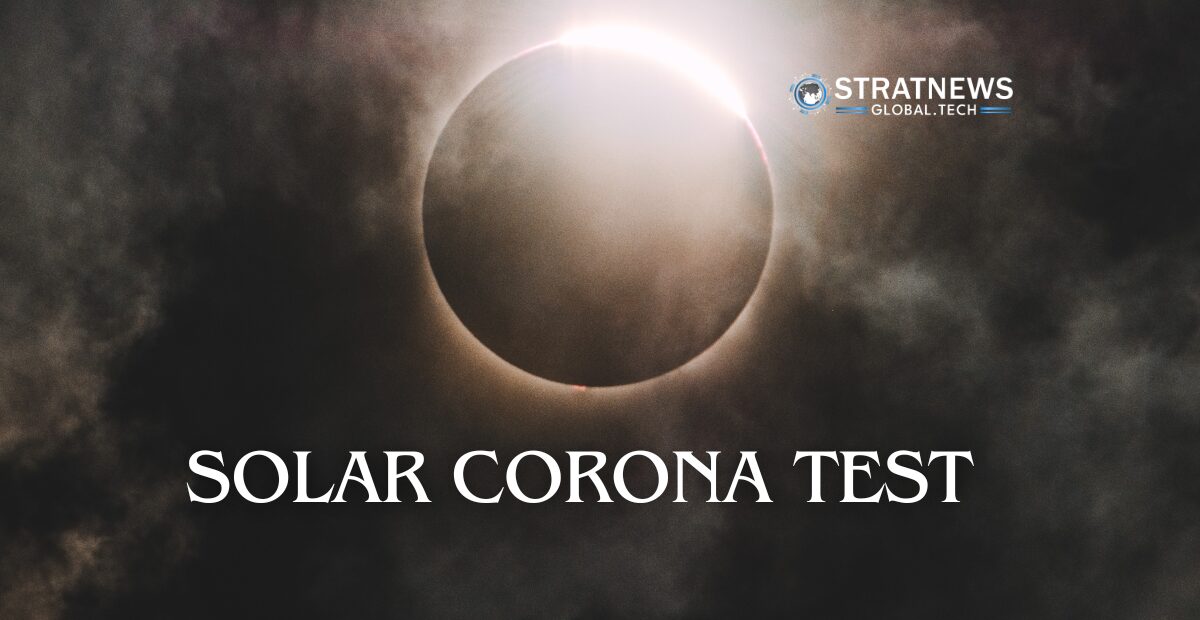
The upcoming eclipse will provide a rare opportunity to test the instrument under the conditions for which it was designed. During totality, the Moon will block the bright solar disc, making the corona visible to scientists.
For the team, the brief period of totality will also provide the first major test of two and a half years of development work.
Senior Researcher Paola Zuppella from the Institute for Photonics and Nanotechnologies of Padua said the team must be fully prepared because there would be little room for mistakes during the observation.
She also stressed the importance of coordination among the researchers. While favourable weather will remain essential, the team must ensure that every part of the operation works as planned during the limited observing window.
Scientists Choose Road Journey
The researchers also had to consider how to transport the delicate instrument to Spain. Rather than flying, the team decided to travel by road so they could keep the CISS assembled throughout the journey.
The decision was also intended to reduce the risk of disruptions caused by flight cancellations.
Landini travelled by road with his colleagues on Friday, August 7. He said the uncertain situation surrounding flights made it preferable to ensure that the team could reach Spain as planned.
The journey reflects the practical challenges surrounding an experiment that depends on a short and precisely timed period of totality.
Once at the Javalambre Astrophysical Observatory, the researchers will have to coordinate the instrument, observation and team operations around the eclipse. The results could determine whether the circular-slit approach can deliver faster measurements of the solar corona.
If successful, the test could mark an important step towards using the technology beyond ground-based observations and potentially in a future mission dedicated to studying the Sun’s outer atmosphere.
With inputs from Reuters