


Close Menu
Stratnews GlobalStratnews Global
    Facebook X (Twitter) Instagram
    Trending
    • TSMC profit to soar 27% on AI demand
    • Japan Begins Deep-Sea Mission to Extract Rare Earths near Minamitori Island
    • OmniVision Surges 6.7% in Hong Kong Debut after US$616 Million Listing
    • ISRO Aborts PSLV-62 Mission After Third-Stage Anomaly
    • India’s Source Code Proposal Alarms Tech Giants amid Security Overhaul
    • Malaysia Blocks Grok AI as Anger Grows over Sexualised Image Scandal
    • Erich von Daeniken, Ancient Alien Theorist and Author of Chariots of the Gods?, Dies at 90
    • Shenzhou-21 Crew Advances Experiments and Safety Drills on Tiangong Station
    Stratnews GlobalStratnews Global
    Write for Us
    Monday, January 12
    • Space
    • Science
    • AI and Robotics
    • Industry News
    Stratnews GlobalStratnews Global
    Home » Taiwan-Japan Satellite Captures Record-Breaking Earth Images

    Taiwan-Japan Satellite Captures Record-Breaking Earth Images

    Aishwarya ParikhBy Aishwarya ParikhFebruary 7, 2025 Space No Comments2 Mins Read

    Taiwan-Japan Satellite Captures High-Quality Earth Images

    A Japanese startup, ArkEdge Space, announced on Friday that an observation satellite it helped build for Taiwan’s space agency has captured what could be the highest-quality Earth imagery ever taken. The Taiwan-Japan satellite is smaller than a suitcase.

    ONGLAISAT’s Impressive Imaging Capabilities

    The small optical observation satellite, ONGLAISAT, took 2.5-metre resolution images after entering orbit at about 400 km above Earth in December. ArkEdge’s CEO, Takayoshi Fukuyo, highlighted the satellite’s capability, stating, “The pictures are as clear as aerial photography despite being taken by a satellite of this size.” He believes ONGLAISAT has set a new benchmark for small “cubesats” in terms of imaging quality.

    Released black-and-white images from the satellite show detailed views of land, trees, and buildings, including areas in a Seattle suburb and Argentina’s Patagonia.
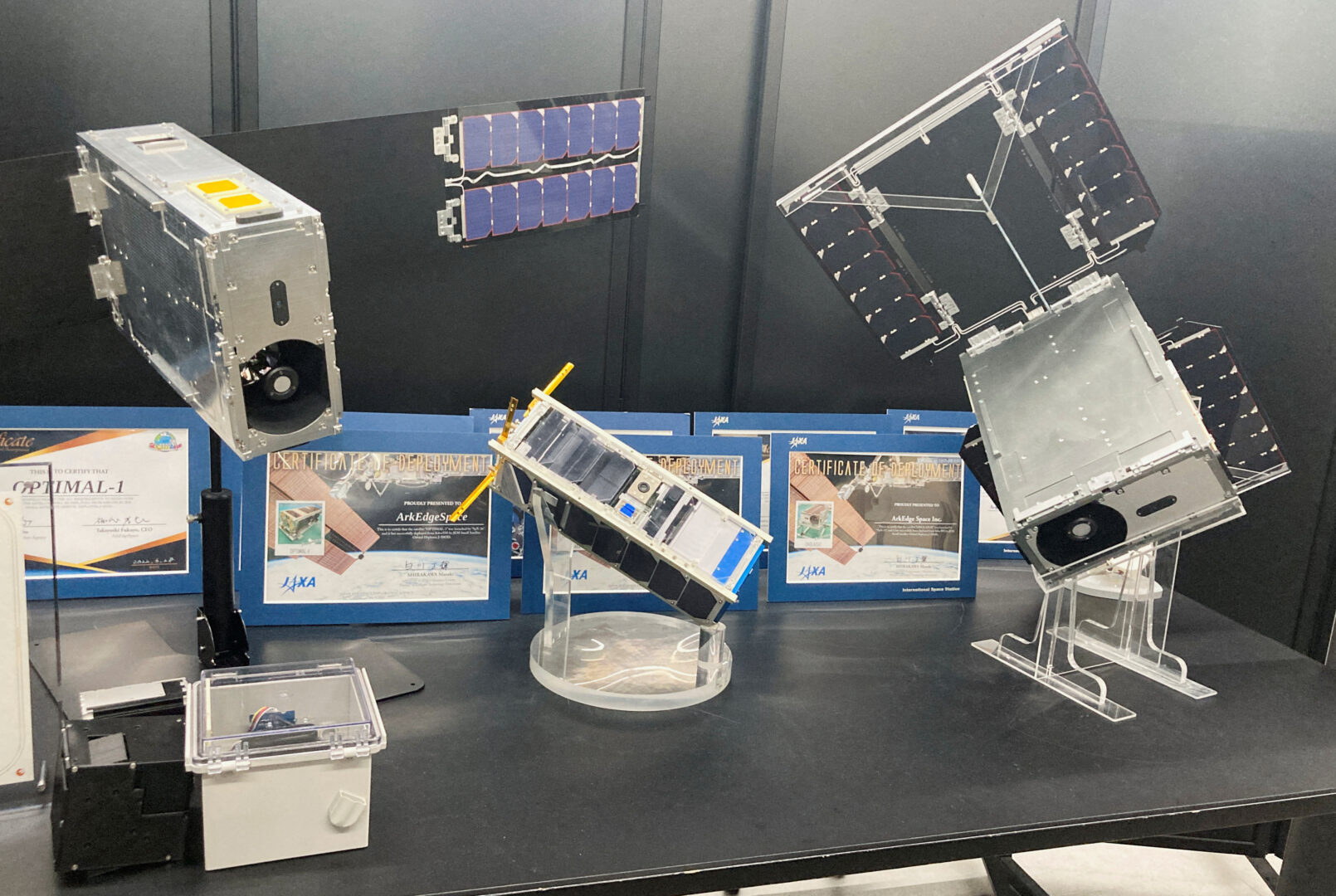
    Taiwan-Japan satellite
    Mockups of ArkEdge Space’s small satellites, including ONGLAISAT, jointly developed with the University of Tokyo’s Intelligent Space Systems Laboratory and Taiwan Space Agency, are kept at the company’s office in Tokyo, Japan, February 5, 2025. REUTERS/Kantaro Komiya

    A Collaboration Between Taiwan and Japan

    ONGLAISAT, short for “onboard globe-looking and imaging satellite,” features optical equipment from the Taiwan Space Agency (TASA). It is mounted on a cubesat about the size of a desktop computer, co-developed by ArkEdge and a University of Tokyo aerospace lab. While its mission is set to end in early March, TASA has stated that the optical technology demonstrated will be used in future remote sensing satellite projects.

    Taiwan’s focus on space technology has intensified due to rising tensions with China. The island is working on enhancing its space infrastructure, including Earth observation and communication. In 2023, Taiwan launched a domestically built weather satellite and entered discussions with Amazon for its Kuiper satellite internet service.

    Strengthening Taiwan-Japan Space Ties

    Taiwan’s growing space ambitions have fostered deeper cooperation with Japanese space companies. Last year, TASA partnered with Japan’s Space One and ispace, a moon exploration company. While Space One faced setbacks with its Kairos small rocket, Taiwan remains committed to expanding its space collaborations.

    Additionally, Taiwanese private space firm TiSpace, founded by a former TASA official, plans to test its rocket at a private launch site in northern Japan later this year. This marks another step in Taiwan’s increasing role in the global space industry.

    With inputs from Reuters.

    Author

    • Aishwarya Parikh
      Aishwarya Parikh

      View all posts
    Featured
    Share. Facebook Twitter Pinterest LinkedIn Tumblr Email Reddit Telegram WhatsApp
    Aishwarya Parikh

      Keep Reading

      TSMC profit to soar 27% on AI demand

      Japan Begins Deep-Sea Mission to Extract Rare Earths near Minamitori Island

      OmniVision Surges 6.7% in Hong Kong Debut after US$616 Million Listing

      ISRO Aborts PSLV-62 Mission After Third-Stage Anomaly

      India’s Source Code Proposal Alarms Tech Giants amid Security Overhaul

      Malaysia Blocks Grok AI as Anger Grows over Sexualised Image Scandal

      Add A Comment
      Leave A Reply Cancel Reply

      Anti Drone System (CUAS)
      Latest Posts

      TSMC profit to soar 27% on AI demand

      January 12, 2026

      Japan Begins Deep-Sea Mission to Extract Rare Earths near Minamitori Island

      January 12, 2026

      OmniVision Surges 6.7% in Hong Kong Debut after US$616 Million Listing

      January 12, 2026

      ISRO Aborts PSLV-62 Mission After Third-Stage Anomaly

      January 12, 2026

      India’s Source Code Proposal Alarms Tech Giants amid Security Overhaul

      January 12, 2026

      Malaysia Blocks Grok AI as Anger Grows over Sexualised Image Scandal

      January 12, 2026

      Erich von Daeniken, Ancient Alien Theorist and Author of Chariots of the Gods?, Dies at 90

      January 12, 2026

      Shenzhou-21 Crew Advances Experiments and Safety Drills on Tiangong Station

      January 12, 2026

      China Stocks Soar to Decade High as AI and Space Sectors Shine

      January 12, 2026

      U.S. Withdraws Plan to Restrict Chinese Drones Imports

      January 10, 2026

      Subscribe to News

      Get the latest sports news from NewsSite about world, sports and politics.

      • Astronomical Events
      • Space Missions
      • Industry News
      • Science
      StratNewsGlobal Tech
      Facebook X (Twitter) Instagram LinkedIn YouTube
      © 2026 StratNews Global, A unit of BharatShakti Communications LLP
      • About Us
      • Contributors
      • Copyright
      • Contact
      • Write for Us

      Type above and press Enter to search. Press Esc to cancel.