


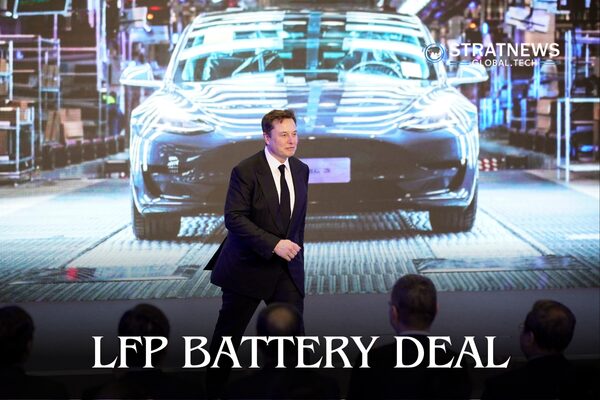
The United States government confirmed on Monday that Tesla and LG Energy Solution have entered a major supply agreement. The deal focuses on building a lithium iron phosphate battery manufacturing facility in Lansing, Michigan. The project carries an estimated value of $4.3 billion. Moreover, the companies expect production to begin in 2027.
Major Investment in Domestic Battery Production
The planned facility will manufacture prismatic LFP battery cells at scale. As a result, the project strengthens domestic production capacity for energy storage components. Officials stated that these batteries will support Tesla’s Megapack 3 systems. These systems are produced in Houston and play a key role in energy storage deployment.
Furthermore, the initiative aims to reduce dependence on foreign battery imports. By establishing local production, the agreement supports a more resilient supply chain. Consequently, the project aligns with broader efforts to expand U.S. manufacturing in clean energy technologies.
Strategic Shift Away from Imports
Earlier reports indicated that Tesla sought alternatives to Chinese battery suppliers. This shift followed the impact of tariffs on imported components. Therefore, the agreement with LG Energy Solution reflects a strategic move to secure reliable supply within the United States.
In July, a source revealed that LG Energy Solution had agreed to supply batteries worth $4.3 billion. At that time, the company confirmed a global contract for LFP battery supply over three years. However, it did not disclose the customer or specify the application of those batteries.
Now, the latest announcement clarifies that the batteries will support energy storage systems rather than vehicles. This distinction highlights growing demand for grid-scale storage solutions.
Expanding LFP Battery Presence in the U.S.
LFP battery technology has traditionally been dominated by Chinese manufacturers. These companies maintain a limited presence in the U.S. market. Therefore, LG Energy Solution’s role becomes increasingly significant.
As one of the few LFP producers operating in the United States, the company contributes to diversifying supply. In addition, the new facility will enhance local expertise and production capability. This development supports long-term growth in the energy storage sector.
The agreement also formed part of a broader set of deals highlighted during the Indo-Pacific Energy Security Summit. These initiatives aim to strengthen cooperation and investment in energy infrastructure.
With inputs from Reuters

