


TDB Backs Bio-Waste Project For Sodium-Ion Battery Materials
The Technology Development Board under the Department of Science and Technology has extended financial support to Indigenous Energy Storage Technologies Private Limited for a project focused on commercialising hard carbon derived from bio-waste and agricultural residues. The initiative aims to build indigenous capabilities in advanced anode material production and strengthen India’s push towards sustainable energy storage solutions.
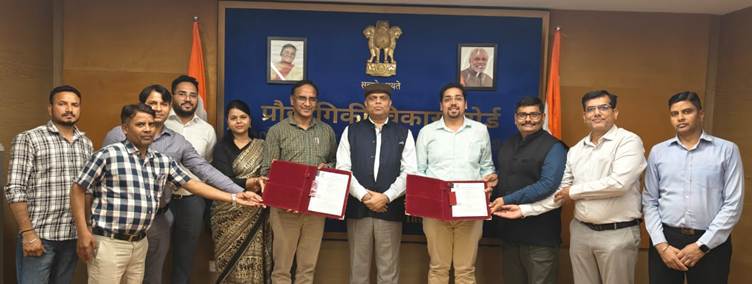
Moreover, the project will enable the large-scale manufacturing of hard carbon, a critical component used in sodium-ion batteries. This development will support the creation of cost-effective alternatives to existing battery technologies while promoting local innovation.
Focus On Scalable And Sustainable Production
The project centres on producing hard carbon from agricultural and bio-waste streams at a commercial scale. This approach not only reduces dependence on imported raw materials but also introduces a circular and resource-efficient manufacturing model.
In addition, sodium-ion battery technology is gaining attention as a practical alternative to lithium-ion systems. It is particularly suitable for applications such as grid-scale energy storage, inverter systems, solar street lighting, and low-speed electric mobility, including e-rickshaws and e-scooters.
By leveraging locally available biomass resources, the initiative ensures both sustainability and cost efficiency. Consequently, it aligns with broader efforts to develop environmentally responsible industrial processes.
Hard Carbon Offers Performance Advantages
Hard carbon plays a crucial role in sodium-ion batteries due to its favourable properties. It provides high initial efficiency, stable cycling performance, and improved energy storage capacity. Furthermore, its disordered microstructure and inherent porosity remain stable even at high temperatures.
Unlike conventional graphite, hard carbon supports sodium-ion chemistry more effectively. Therefore, it emerges as a preferred material for next-generation battery systems. The use of biomass-derived precursors further enhances the environmental benefits of this technology.
At the same time, sodium and carbon resources are more widely available compared to lithium. This reduces exposure to global supply chain risks and strengthens long-term resource security.
Strengthening India’s Battery Ecosystem
With financial backing from the Technology Development Board, the company will scale up production and accelerate the commercial rollout of indigenous hard carbon materials. This step is expected to reinforce India’s position in emerging battery technologies.
Additionally, the initiative supports the country’s transition to clean energy by encouraging innovation in alternative storage systems. Officials emphasised that developing indigenous materials through waste-to-value approaches is vital for building a resilient and self-reliant ecosystem.
The company also noted that the support will help advance affordable and scalable energy storage solutions. As a result, the project is set to contribute significantly to sustainable manufacturing and energy independence in India.
With inputs from Reuters

