

Close Menu
Stratnews GlobalStratnews Global
    Facebook X (Twitter) Instagram
    Trending
    • NASA Artemis II Mission Delayed to March After Rocket Fueling Issues
    • Germany Plans €35 Billion Military Space Push to Counter Russia and China
    • India’s Export Ambition Faces Its Toughest Test Yet
    • Super Bowl LX Cybersecurity and Wi-Fi Upgrade Transforms Levi’s Stadium
    • Memory Shortages Weigh on Smartphone Chip Sales
    • Illinois Man Pleads Guilty to Snapchat Account Hacks
    • Alphabet AI Investment Sends Tech Shares Tumbling
    • YouTube’s Rise Forces Media Firms to Rethink Distribution
    Stratnews GlobalStratnews Global
    Write for Us
    Thursday, February 5
    • Space
    • Science
    • AI and Robotics
    • Industry News
    Stratnews GlobalStratnews Global
    Home » Pakistan’s Rooftop Solar Power to Surpass Grid Demand in 2026

    Pakistan’s Rooftop Solar Power to Surpass Grid Demand in 2026

    ReshamBy ReshamNovember 24, 2025 World No Comments3 Mins Read
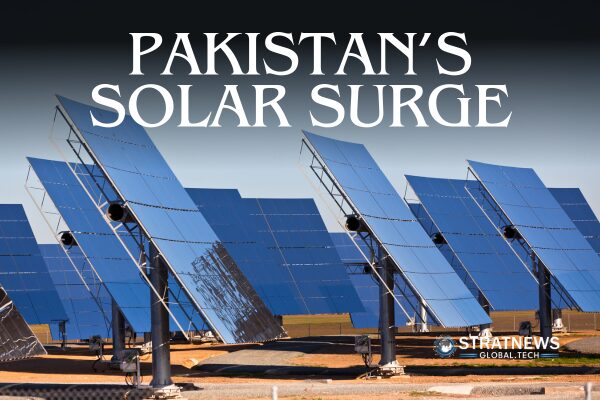
    Pakistan’s rooftop solar power

    Pakistan’s Rooftop Solar Power Set to Surpass Grid Demand in 2026

    Pakistan is poised for a major energy shift next year, as rooftop solar generation is expected to exceed power demand on the national grid during daytime hours in several industrial regions. This milestone highlights a rapid solar boom that has transformed the country’s energy landscape.

    Solar Boom Reshaping Energy Demand

    According to Aisha Moriani, Secretary of Pakistan’s Climate Change Ministry, the country will soon face “negative grid-linked demand” during certain hours. This means that solar energy generated on rooftops will fully offset electricity drawn from the grid. Speaking at the COP30 climate conference in Brazil, Moriani said this trend marks a significant change in how Pakistan’s industries consume power.

    Regions such as Lahore, Faisalabad and Sialkot are leading the shift, driven by industrial users who have invested heavily in solar technology. Power cuts and rising tariffs have pushed many businesses and households to turn to solar panels, making Pakistan the world’s third-largest importer of solar equipment.

    Grid and Market Challenges Ahead

    The increase in solar power has reduced both emissions and power costs for many consumers. However, it has also placed financial pressure on utilities already burdened with debt, as demand for grid-based electricity continues to fall.

    Moriani noted that Pakistan’s biggest challenge is not the growth of renewables, but how quickly the grid, regulations and market structures can adapt. The government plans to introduce new tariffs for large-scale solar users and adjust fee structures so that solar-powered businesses contribute fairly to the costs of maintaining the grid.

    Impact on Energy Imports and Future Outlook

    With solar generation rising, Pakistan is rethinking its reliance on imported liquefied natural gas (LNG). The country has already cancelled cargoes from Italy’s Eni and is seeking to renegotiate its contracts with Qatar, its top LNG supplier. Moriani explained that Pakistan aims for lower prices, flexible delivery schedules and a reduction in cargo volumes to match the new energy mix.

    Although no formal negotiations took place during COP30, Moriani said the conference created “diplomatic space for engagement” with energy leaders. She added that Pakistan’s goal is to align its gas import strategy with fiscal limits, energy demand and seasonal needs, ensuring affordability rather than expanding LNG dependence.

    As solar energy adoption accelerates, the coming year could mark a turning point in Pakistan’s energy journey — one that balances sustainability, affordability and energy security.

    with inputs from Reuters

    Author

    • Resham
      Resham

      Research Associate at Interstellar.| China Scholar | China Social Media & Foreign Affairs|

      View all posts
    Featured
    Share. Facebook Twitter Pinterest LinkedIn Tumblr Email Reddit Telegram WhatsApp
    Resham
    • X (Twitter)

    Research Associate at Interstellar.| China Scholar | China Social Media & Foreign Affairs|

    Keep Reading

    NASA Artemis II Mission Delayed to March After Rocket Fueling Issues

    Germany Plans €35 Billion Military Space Push to Counter Russia and China

    India’s Export Ambition Faces Its Toughest Test Yet

    Super Bowl LX Cybersecurity and Wi-Fi Upgrade Transforms Levi’s Stadium

    Memory Shortages Weigh on Smartphone Chip Sales

    Illinois Man Pleads Guilty to Snapchat Account Hacks

    Add A Comment
    Leave A Reply Cancel Reply

    Anti Drone System (CUAS)
    Latest Posts

    NASA Artemis II Mission Delayed to March After Rocket Fueling Issues

    February 5, 2026

    Germany Plans €35 Billion Military Space Push to Counter Russia and China

    February 5, 2026

    India’s Export Ambition Faces Its Toughest Test Yet

    February 5, 2026

    Super Bowl LX Cybersecurity and Wi-Fi Upgrade Transforms Levi’s Stadium

    February 5, 2026

    Memory Shortages Weigh on Smartphone Chip Sales

    February 5, 2026

    Illinois Man Pleads Guilty to Snapchat Account Hacks

    February 5, 2026

    Alphabet AI Investment Sends Tech Shares Tumbling

    February 5, 2026

    YouTube’s Rise Forces Media Firms to Rethink Distribution

    February 5, 2026

    Raytheon Signs Seven-Year Missile Production Deal With Pentagon

    February 5, 2026

    US Drone Makers Target Asia Amid China Concerns

    February 5, 2026

    Subscribe to News

    Get the latest sports news from NewsSite about world, sports and politics.

    • Astronomical Events
    • Space Missions
    • Industry News
    • Science
    StratNewsGlobal Tech
    Facebook X (Twitter) Instagram LinkedIn YouTube
    © 2026 StratNews Global, A unit of BharatShakti Communications LLP
    • About Us
    • Contributors
    • Copyright
    • Contact
    • Write for Us

    Type above and press Enter to search. Press Esc to cancel.