


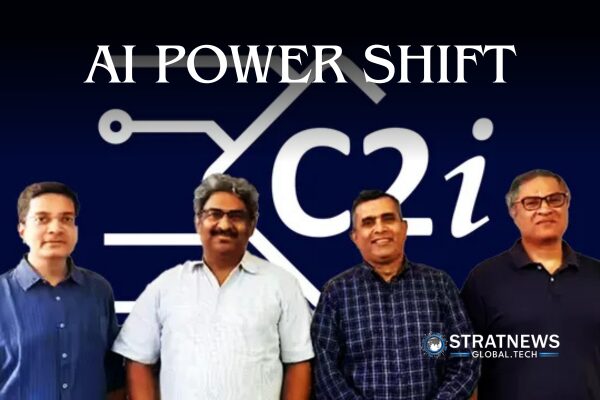
Peak XV Partners Backs C2i Semiconductors To Tackle AI Data Center Power Crunch
Power, rather than compute, is rapidly emerging as the key constraint in scaling AI data centres. As demand surges, investors are turning their attention to energy efficiency. Against this backdrop, Peak XV Partners has backed C2i Semiconductors, an Indian startup building plug and play, system level power solutions for large scale AI infrastructure.
C2i, short for control conversion and intelligence, has raised 15 million dollars in a Series A round led by Peak XV Partners. Yali Deeptech and TDK Ventures also participated. As a result, the two year old company has secured a total of 19 million dollars in funding.
Rising Energy Demand Reshapes AI Economics
The investment comes as global data centre energy demand accelerates. A December 2025 report by BloombergNEF projects that electricity consumption from data centres could nearly triple by 2035. Meanwhile, Goldman Sachs Research estimates that data centre power demand may surge 175 per cent by 2030 compared with 2023 levels.
However, much of the strain lies not in generating electricity but in converting it efficiently inside facilities. Data centres must step down high voltage power thousands of times before it reaches GPUs. This conversion process wastes roughly 15 to 20 per cent of energy, according to C2i co founder and chief technology officer Preetam Tadeparthy.
He noted that voltage levels have already shifted from 400 volts to 800 volts and may climb further. Therefore, efficiency at every stage of conversion has become critical.
Integrated Grid To GPU Architecture
Founded in 2024 by former Texas Instruments power executives and industry engineers, C2i is redesigning power delivery as a single integrated system. Instead of optimising individual components, the company treats conversion, control and packaging as one platform spanning the data centre bus to the processor.
By integrating these layers, C2i estimates it can reduce end to end losses by around 10 per cent. That equates to saving about 100 kilowatts for every megawatt consumed. Consequently, operators could lower cooling costs, improve GPU utilisation and enhance overall data centre economics.
For Peak XV Partners, the attraction lies in the long term cost structure of AI infrastructure. After the initial capital investment in servers and facilities, energy becomes the dominant ongoing expense. Even incremental efficiency gains can therefore unlock significant savings at scale.
Execution Test Ahead
C2i expects its first two silicon designs to return from fabrication between April and June. It then plans to validate performance with data centre operators and hyperscalers that have requested technical data. According to investors, the next six months will determine whether the technology can meet commercial expectations.
The Bengaluru based startup employs about 65 engineers and is establishing customer facing operations in the United States and Taiwan. Nevertheless, power delivery remains one of the most entrenched segments of the data centre stack. Large incumbents dominate the market, and qualification cycles can last years.
Even so, backers argue that India’s semiconductor ecosystem has matured. Growing engineering depth and supportive policy incentives have reduced the cost and risk of chip design. As a result, startups such as C2i now aim to build globally competitive semiconductor products from India.
Whether that ambition translates into production success will become clearer once customer validations begin in the coming months.