


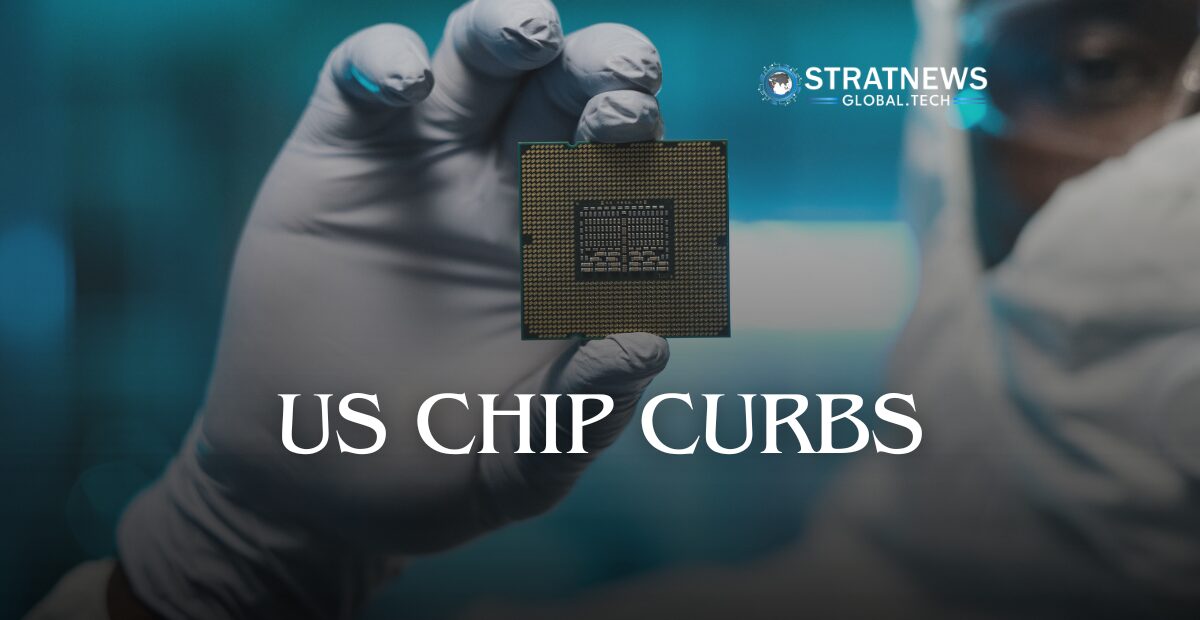
US Orders Fresh Curbs on Chip Exports to China
The United States Department of Commerce has ordered several chip equipment manufacturers to halt specific tool shipments to China’s second-largest chipmaker, Hua Hong. According to two individuals familiar with the matter, this move represents the latest effort to slow China’s progress in developing advanced semiconductor technologies.
The department issued formal letters to multiple companies, outlining new restrictions on tools and materials intended for two Hua Hong facilities. Officials believe these sites may be involved in producing some of China’s most advanced chips. Consequently, the restrictions directly target operations that could strengthen China’s domestic chipmaking capabilities.
Targeted Facilities and Industry Impact
The affected facilities include Fab 6 in Shanghai, which reportedly operates with 28 and 22 nanometre technology, and another site known as 8a, believed to be under construction. Additionally, the restrictions extend to Huali Microelectronics, Hua Hong’s contract chipmaking arm, which has been working on developing a 7 nanometre manufacturing process.
Major US equipment suppliers, including Lam Research, Applied Materials, and KLA, are among those believed to have received the letters. These companies have substantial business ties with China, making the restrictions particularly significant for their revenues. Following the announcement, their shares declined notably, reflecting investor concerns about potential losses.
The measures could result in billions of dollars in lost sales for US suppliers. This risk is especially pronounced for projects involving new or upgraded facilities aimed at producing advanced chips. However, despite these constraints, Hua Hong may attempt to source alternative equipment from non-US or domestic providers.
Strategic Goals and Rising Tensions
The restrictions align with broader US efforts to protect its technological lead in artificial intelligence and advanced semiconductors. In recent years, Washington has increasingly limited exports of sensitive technologies to China on national security grounds. These latest actions reinforce that policy direction.
At the same time, the move may heighten tensions between the two countries. It comes ahead of a planned meeting between US President Donald Trump and Chinese President Xi Jinping in Beijing. The timing suggests the restrictions could influence broader diplomatic and economic discussions.
Meanwhile, collaboration within China’s semiconductor sector continues. Hua Hong has reportedly worked with domestic partners to advance chip development, including efforts to produce 7 nanometre chips. Production capacity for these chips is expected to begin on a limited scale by the end of 2026.
Policy Mechanism and Future Implications
The Commerce Department implemented these restrictions through “is-informed” letters. This mechanism allows authorities to impose licensing requirements quickly without undergoing lengthy regulatory processes. In previous instances, similar letters later evolved into broader rules affecting additional companies.
Although this approach enables swift action, it does not guarantee long-term regulatory changes. Under the current administration, such letters have been used frequently, yet not all have resulted in permanent rules.
These developments highlight the ongoing strategic competition in semiconductor technology. While the restrictions may slow China’s progress, they also introduce uncertainty for global supply chains and industry stakeholders.
With inputs from Reuters