


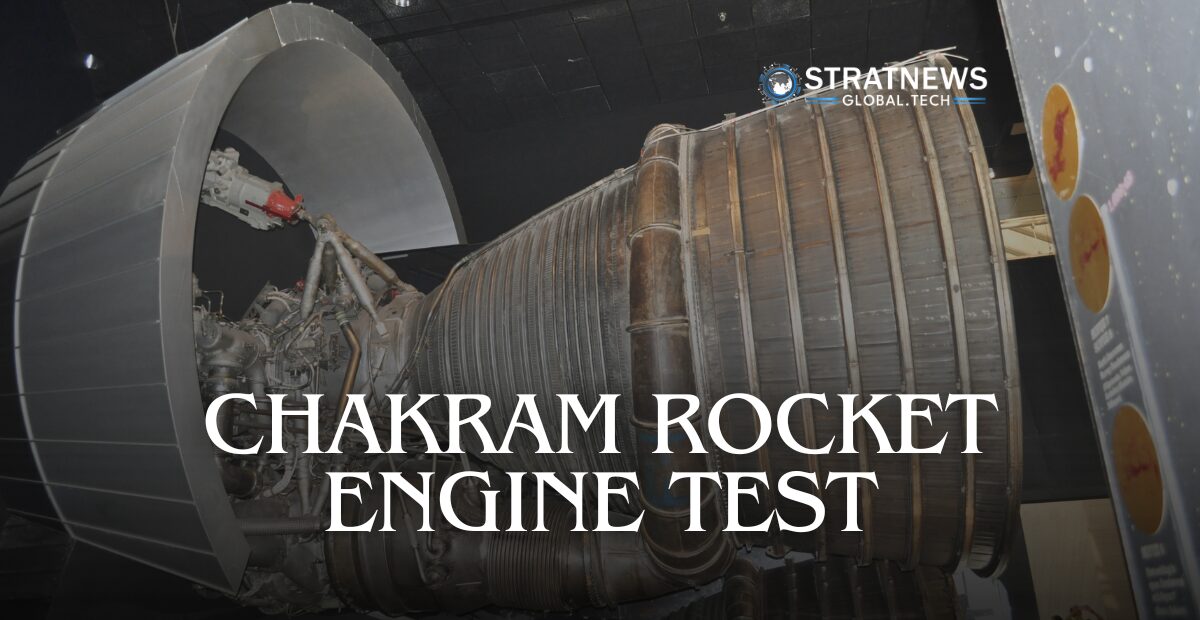
Astrobotic Successfully Tests Advanced Chakram Rocket Engine
Astrobotic, a developer of lunar landers and suborbital rockets, has successfully completed a series of tests for its advanced Chakram rocket engine. The Pittsburgh-based company conducted these tests at NASA’s Marshall Space Flight Center, marking a significant step in the development of next-generation propulsion systems.
The testing campaign involved two engine prototypes, which collectively fired for 470 seconds. Notably, one of the tests achieved a continuous burn lasting 300 seconds. The company reported no signs of damage following the trials, indicating strong performance and reliability under test conditions.
Breakthrough In Rotating Detonation Engine Technology
The Chakram engine is based on rotating detonation rocket engine technology. This advanced approach uses a detonation wave that travels in a circular path within the engine at supersonic speeds. As a result, it offers the potential for higher efficiency compared with conventional rocket engines.
During testing, the engine generated more than 4,000 pounds-force of thrust. Astrobotic stated that this thrust level ranks among the highest recorded for engines of this type. Furthermore, the 300-second burn represents one of the longest sustained operations achieved for such technology.
Despite its advantages, rotating detonation technology remains challenging to control. However, the successful tests suggest that Astrobotic has made meaningful progress in addressing these complexities.
Strong Performance Exceeds Expectations
The company expressed confidence in the results, noting that the engine performed beyond expectations during initial trials. Engineers had anticipated potential uncertainties when transitioning from design to testing. Nevertheless, the engine demonstrated stable and efficient operation throughout the process.
The development of Chakram has been supported by NASA through Small Business Innovation Research awards, along with a Space Act Agreement. These programmes have enabled Astrobotic to explore advanced manufacturing methods, including additive manufacturing, to improve engine production.
The project was completed by a relatively small team working with limited resources. This achievement highlights the effectiveness of focused engineering efforts in advancing complex technologies.
Future Applications In Lunar And Suborbital Missions
Astrobotic plans to integrate the Chakram engine into future space vehicles. Potential applications include upgraded versions of its Griffin lunar lander, which is expected to conduct its first flight later this year. In addition, the company aims to deploy the engine in a new line of reusable suborbital vehicles.
The company previously secured contracts worth 17.5 million dollars from NASA and military partners to develop these suborbital systems. These vehicles are based on designs acquired through the purchase of assets from Masten Space Systems.
Looking ahead, Astrobotic will continue refining the Chakram engine. Key areas of focus include improving cooling systems, enabling thrust control, and reducing overall engine mass. While no timeline has been provided for flight readiness, ongoing development is expected to bring the technology closer to operational use.