


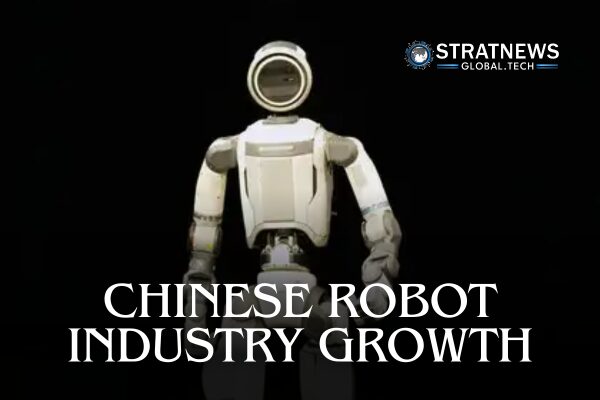
Chinese businesses are accelerating the large scale commercialisation of humanoid robots. Supported by favourable national policies and strategic planning, companies are moving these machines from laboratories into factories, homes and classrooms.
After embodied intelligence appeared in China’s 2025 Government Work Report as a new driver of economic growth, humanoid robots continued to display their capabilities. They have run marathons, staged combat demonstrations and performed on television. However, beyond spectacle, they now take on practical roles across different industries.
Data factories power humanoid training
In Shanghai, one major training hub operates inside the data factory of Agibot, a leading humanoid producer. The facility resembles a miniature human world. Trainers teach robots daily and professional tasks in an open source environment. Moreover, other companies can use the data generated there to train their own machines.
Nearly 1,000 humanoids undergo training at the site each day. Human instructors guide every movement to generate what engineers describe as expert data. As a result, robots gradually master complex skills.
Wang Sukai, an algorithm expert at Agibot, explained that progress relies on constant improvement. He said data, hardware and algorithms advance together in a positive spiral. As developers gather more data, they refine their models and algorithms. Consequently, the wider developer community can contribute more effectively and accelerate overall technological growth.
Shipments surge as industry expands
The open development model has delivered results. Global humanoid robot shipments reached around 18,000 units in 2025. This figure marked an increase of more than five times compared with the previous year. Chinese firms accounted for a dominant share of the market.
Agibot alone shipped more than 5,100 units last year. That total represented nearly 40 percent of global shipments. Therefore, the company strengthened its position within the expanding sector.
Wang Chuang, president of Agibot’s General Business Division, highlighted several advantages. He said China benefits from what he described as an engineer dividend built on strong human resources. Teams bring innovation experience from smart vehicles, drones and laser radars. In addition, the country maintains a complete industrial chain. Sensor ecosystems from electric vehicles, sensors and computing power can be recalibrated for robotics. The company also receives rent discounts and talent subsidies. Meanwhile, early customer participation has supported rapid growth and improved product stability.
Education adapts to rising demand
As demand increases, educational institutions are adjusting their programmes. In Shanghai, vocational schools now introduce robotic engineering courses. These initiatives aim to prepare students for emerging industries.
Yin Hua, principal of Shanghai Fengxian Secondary Vocational School, noted that authorities promote AI education at the national level. Early exposure to embodied intelligence, he said, helps students develop deeper understanding and stronger practical skills.
At the same time, concerns about unemployment continue to surface. However, analysts argue that robots encourage technological up skilling rather than job losses. Su Lian Jye, chief AI analyst at Omdia, said designers created these robots to address structural social challenges. Smaller families and fewer young people limit the supply of workers for heavy blue collar roles. With adequate policy support and training initiatives, enterprises can retrain existing staff. Therefore, he said the industry remains on the right track.

