


Ukraine Demining Efforts Highlight Scale of Hidden War Threat
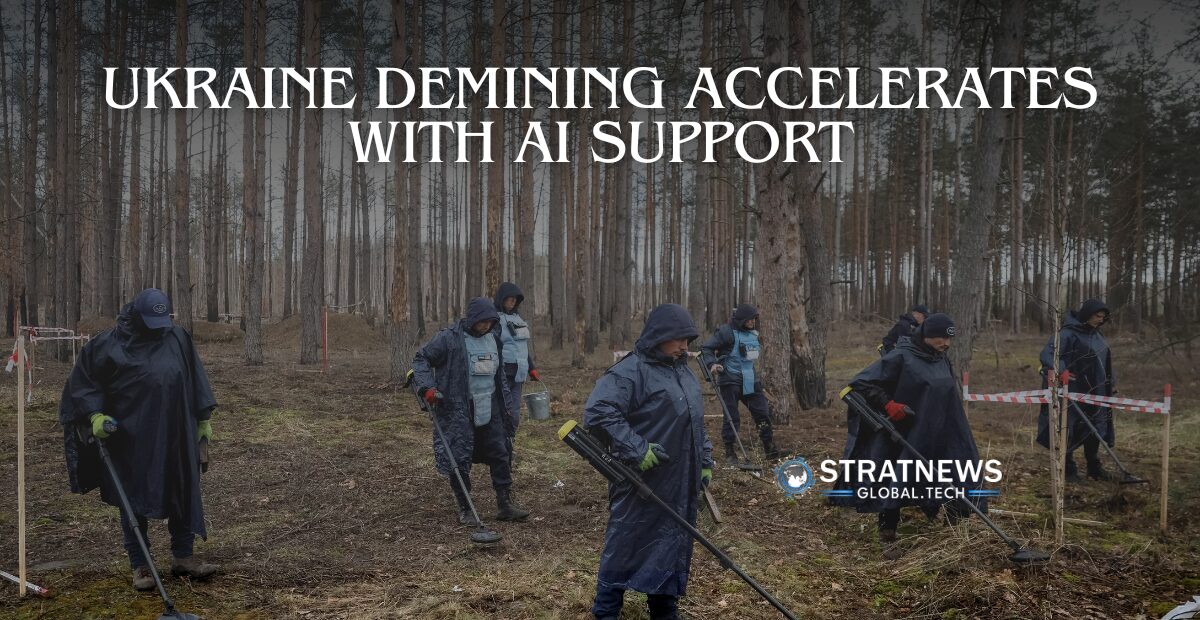
Near the village of Myrotske in central Ukraine, a group of mine clearers advances slowly across woodland and fields. They move in a coordinated line, sweeping metal detectors in unison with careful precision. Their work focuses on removing mines and unexploded ordnance left behind after Russian forces occupied the region during the early stages of the invasion four years ago.
This area, located around 40 kilometres northwest of Kyiv, represents only a small fraction of a much larger problem. Vast stretches of land across Ukraine remain contaminated with explosive remnants of war. These hidden dangers continue to threaten civilian lives long after active fighting has shifted elsewhere.
According to Olena Shustova, a media manager for a leading demining organisation, Ukraine is now considered the most heavily mined country in the world. She stated that clearing the country will take at least a decade due to the sheer scale of contamination.
Long Road to Recovery and Safety
Demining operations in the Myrotske area began after a Ukrainian serviceman was injured by an anti personnel mine while gathering firewood. This incident highlighted how even seemingly peaceful areas remain hazardous.
Shustova explained that wherever occupation occurred, minefields and explosive ordnance remain embedded in the landscape. The organisation currently employs more than a thousand local staff in Ukraine, reflecting the intensity of the ongoing effort.
Official estimates suggest that over 132,000 square kilometres of land remain contaminated. Although nearly 42,000 square kilometres have been cleared, a significant portion still poses a threat to communities and agriculture.
Given the scale of the challenge, traditional methods alone are insufficient. Therefore, demining teams are increasingly turning to advanced technologies to accelerate progress.
Technology Transforms Demining Operations
Artificial intelligence now plays a growing role in identifying hazardous areas. By analysing high resolution drone imagery, systems can detect potential threats with increasing accuracy. Current models have achieved around 70 percent reliability, offering valuable support to human teams.
At another site north of Kyiv, operators use remote controlled machinery to minimise risk. One worker guides a customised excavator using virtual reality equipment and a joystick while remaining protected inside a reinforced enclosure. The machine digs through contaminated soil and processes it using specialised equipment designed to neutralise explosives.
This approach allows teams to cover larger areas more safely and efficiently. It also reflects broader changes in how technology is reshaping both warfare and post conflict recovery.
Human Courage at the Front of Demining
Despite technological advances, human involvement remains essential. Deminers continue to work in hazardous conditions, relying on skill, discipline, and focus.
In nearby woodland, one deminer carefully searches for explosive devices while wearing protective gear. She previously worked in the travel industry and chose to join demining efforts after seeing others enlist following the invasion.
She acknowledged the presence of fear but described it as a force that reinforces caution and responsibility. Her experience reflects the broader reality faced by many civilians who have taken on dangerous roles to support recovery efforts.
As Ukraine continues to rebuild, clearing explosive remnants remains a critical priority. While progress is ongoing, the task will require sustained effort, innovation, and resilience over many years.
With inputs from Reuters