


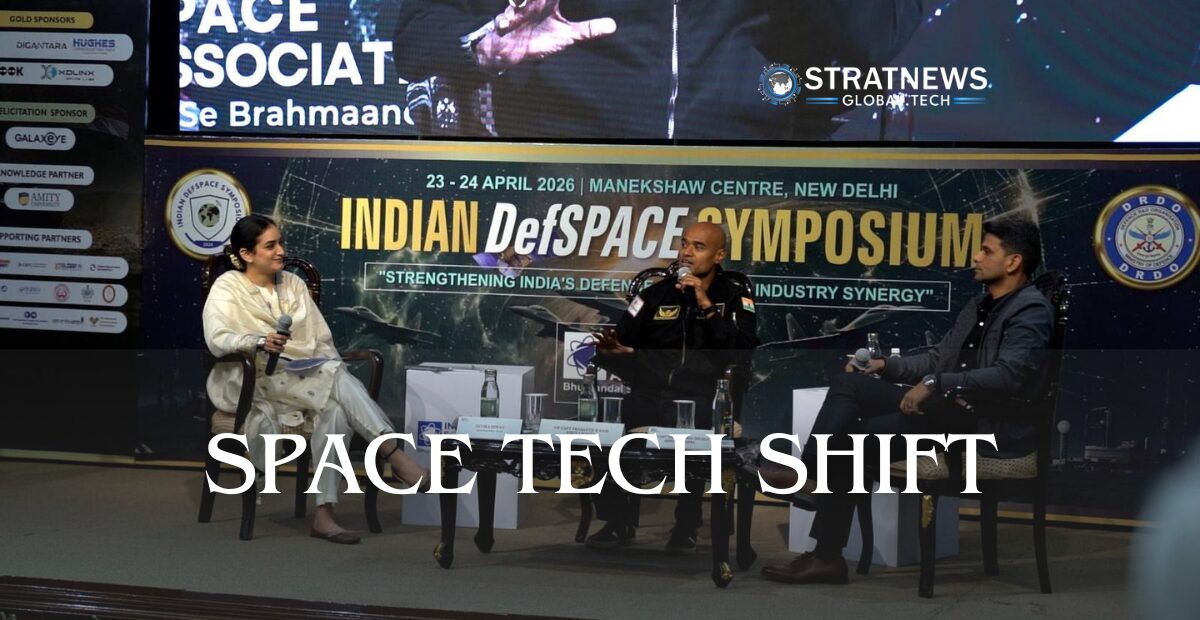
At a recently held event in New Delhi, Group Captain Prashant Nair called on Indian startups to prioritize “space toilets” over satellites. As the Indian Defspace symposium 2026, he said that the global space community remains tethered to a Russian monopoly on such technology so efficiently that it famously distils “today’s urine into tomorrow’s coffee”. For the upcoming Bharatiya Antariksh Station (BAS), mastering these human-centric technologies will be the difference between being a guest and a master of the domain.
This shift from satellites to humans was recently stress-tested by Group Captain Shubhanshu Shukla during his 18-day mission as the pilot of Axiom-4 (Ax-4). While Shukla’s scientific payload validated India’s microgravity research, the mission exposed a critical infrastructure bottleneck: data bandwidth. The sheer volume of high-resolution time-lapses generated by the crew forced NASA to order a halt to certain photography. The resulting month-long backlog to downlink this data underscores why the merger of space and defense tech must prioritize high-bandwidth laser communications. It represents the exact point of cross-pollination where civilian requirements dictate the future of secure military communications
These developments will push India’s human spaceflight to reach newer heights. Having missed the nuclear high table and a permanent seat on the UN Security Council, the Gaganyaan program ensures India is not just a participant but a rule-writer in the “new oceans” of space, said Nair. As Japan, Canada, and nations in Europe seek democratic alternatives to Russian or Chinese spacecraft, India emerges as a critical third pillar for the Global South. By 2036, the goal is for India to move beyond “playing catch-up” and instead project unique, futuristic frameworks that other nations strive to copy. As the Ashoka Chakra awarded to Shukla in 2026 signifies, the sky was never the limit; it was merely the first layer of India’s strategic depth.

