


China’s Space Station Returns 41kg Of Scientific Samples For Ground Analysis
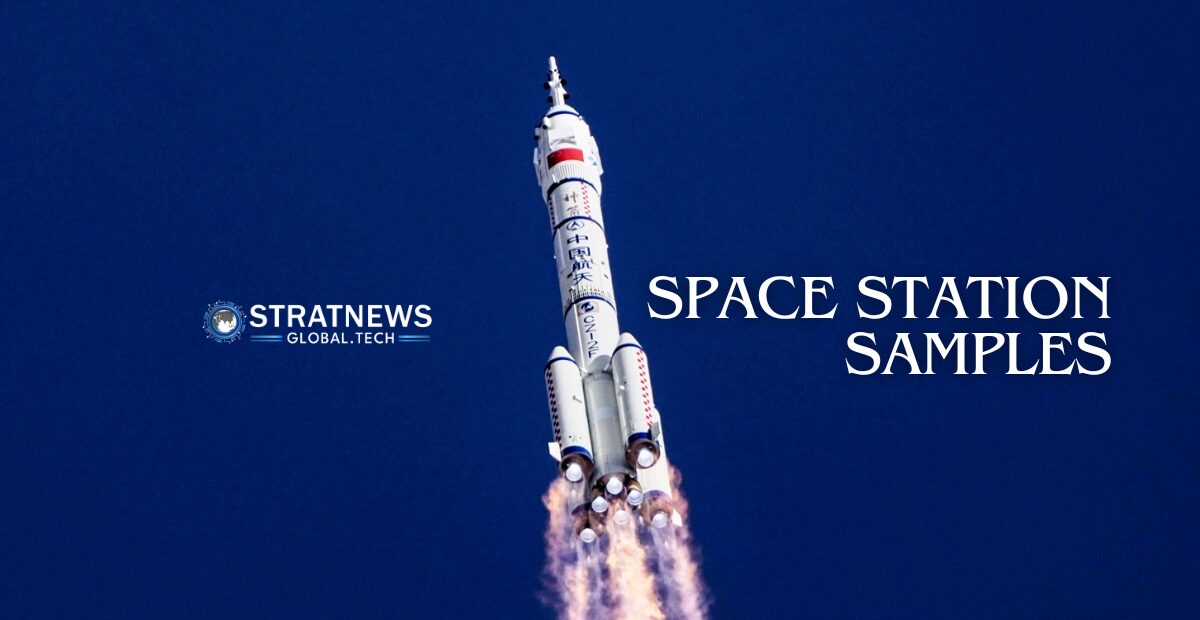
China has successfully returned approximately 41 kilograms of scientific samples from its space station aboard the Shenzhou-22 return capsule, marking another milestone in the country’s expanding space research programme.
According to the Technology and Engineering Center for Space Utilization under the Chinese Academy of Sciences, the shipment represents the 10th transfer of scientific materials from the orbiting laboratory. The samples originated from 23 experiments spanning space life sciences, materials science and combustion research.
The collection includes nine biological sample categories, 12 material samples and two combustion-related samples. Scientists say the results could deepen understanding of how living organisms and advanced materials behave in the space environment, while supporting future long-duration human missions and deep-space exploration.
Zebrafish Embryos Successfully Hatch In Orbit
One of the most significant findings involved zebrafish embryos that successfully developed and hatched aboard the space station.
Researchers closely monitored the embryos throughout the experiment due to the rapid pace of biological development in orbit. Scientists continuously adjusted imaging equipment and captured photographs to document changes in the samples.
According to senior engineer Sun Yuanyuan, the research team was delighted when the embryos hatched and began swimming inside the space station environment.
The successful development of zebrafish in microgravity provides valuable data on how vertebrate organisms grow and adapt in space. These findings may help scientists better understand biological processes that could affect future astronauts during extended missions.
Artificial Embryo Study Offers New Insights
Another highly anticipated project focused on stem cell-derived artificial human embryos.
Researchers successfully recorded the entire experiment in orbit and reported that the samples returned in excellent condition. Scientists will now conduct transcriptome sequencing and proteomic analysis to examine how space conditions influence early embryo development and stem cell behaviour.
The study will also investigate the effects of microgravity on kidney organoid development and fibrosis. In addition, researchers aim to uncover molecular mechanisms linked to bone metabolism imbalance and cardiovascular dysfunction under weightless conditions.
These investigations are expected to improve scientific understanding of how human tissues and organs respond to prolonged exposure to space environments.
Chirality Experiment Explores Molecular Behaviour
Scientists are also examining samples from a chirality experiment first sent to the space station during the Shenzhou-21 mission.
Chirality describes the property of molecules that exist as mirror images but cannot be perfectly superimposed, similar to human left and right hands. This characteristic plays a fundamental role in biological systems and chemical reactions.
Researchers are investigating how small biological molecules select specific chiral forms in space and whether these processes differ from those observed on Earth. The findings may offer new insights into the origins and development of life-related molecular structures.
Advanced Materials Undergo Detailed Examination
The returned materials science samples include new titanium alloys, high-strength steel and relaxor ferroelectric single crystals.
Scientists will analyse their microstructures, chemical composition and elemental distribution to determine how gravity influences material growth and performance. The research is expected to improve understanding of composition segregation, solidification defects and structural properties in advanced materials.
Such discoveries could support the development of next-generation aerospace systems, industrial technologies and high-performance manufacturing processes.
Combustion Research Supports Future Technologies
The returned combustion experiment samples include burners and soot collection plates used during microgravity testing.
Researchers will study semiconductor nanomaterial synthesis, soot formation processes and the characteristics of nanocarbon particles. These investigations could contribute to advances in aerospace engineering, new energy technologies, high-end equipment manufacturing and fire safety systems for future space missions.
By analysing the latest batch of returned samples, Chinese scientists hope to unlock new knowledge about life, materials and physical processes in space, strengthening the foundation for future human exploration beyond Earth.
With inputs from Reuters

