


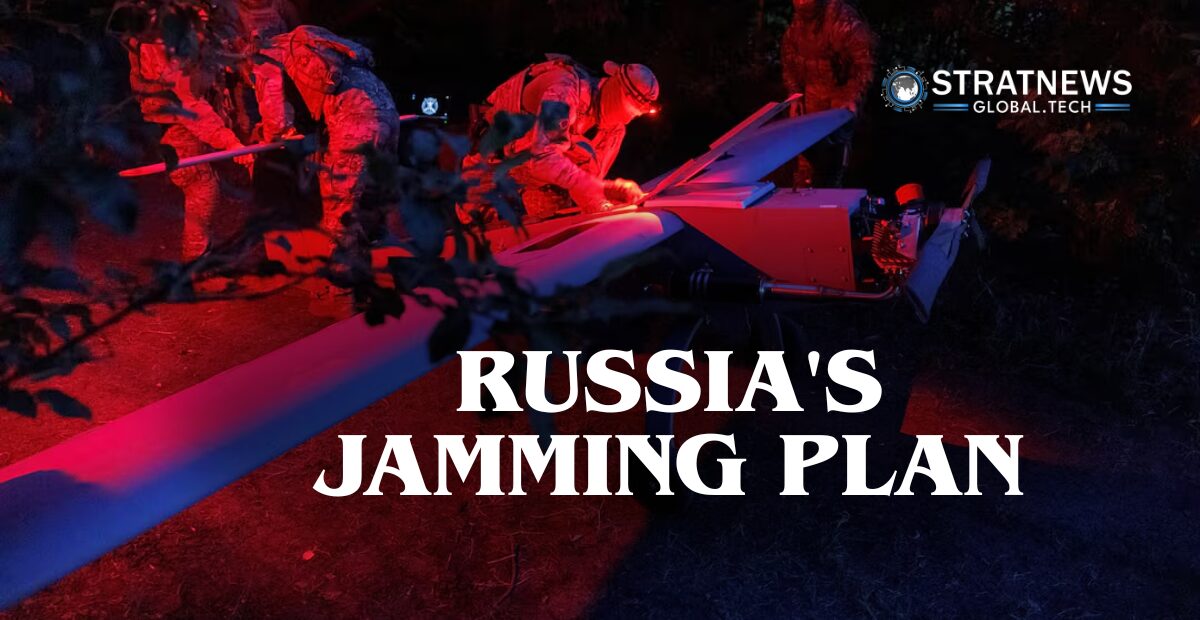
Russia is ramping up efforts to counter Ukraine’s increasingly successful mid-range drone strikes by deploying advanced electronic jamming systems, disguising military supplies as civilian cargo and changing the way it transports fuel and ammunition, according to Ukrainian drone commanders.
Ukraine’s growing use of so-called “mid-strike” drones capable of accurately hitting targets dozens of kilometres behind the front line has become one of the war’s most significant tactical developments. Many of these drones rely on Elon Musk’s Starlink satellite internet system, allowing operators to maintain long-range communication during missions.
Japan’s ispace Partners With SpaceX for Low-Cost Moon Cargo Missions
This year, Ukrainian forces have used the drones to strike supply routes, fuel depots, air-defence systems and command centres, disrupting Russian logistics and contributing to fuel shortages in occupied Crimea.
However, Ukrainian military personnel say Moscow is quickly adapting.
According to commanders from Ukraine’s 422nd Unmanned Systems Regiment, Russia has begun deploying sophisticated electronic warfare systems capable of disrupting Starlink communications. The jamming systems are reportedly being installed near towns and military facilities to interfere with drone operations.
Serhii Beskrestnov, an adviser to Ukraine’s Defence Ministry, said Russia is using a system known as Volna Kupol Garant, which emits a powerful signal capable of destabilising Starlink connections across an area of around 20 square kilometres. Ukrainian forces have detected roughly ten such systems so far.
The electronic warfare installations have themselves become high-value targets.
The 422nd Regiment says it has already participated in operations that destroyed two of the systems, including one in coordination with Ukraine’s Security Service (SBU). Drone operators involved in the mission said Starlink-equipped drones were able to fly normally again once the jammer had been eliminated.
Neither SpaceX nor Russia’s Defence Ministry responded to requests for comment, and Reuters was unable to independently verify the battlefield claims.
Russia Changes Logistics
Beyond electronic warfare, Russia is also altering how it moves military supplies.
Ukrainian commanders say fuel and ammunition are increasingly being transported in vehicles disguised as civilian transport, including water tankers, milk trucks, motorcycles and small passenger cars.
Fuel is also reportedly being hidden in abandoned buildings, agricultural facilities, camouflaged underground shelters and even civilian petrol stations to reduce the risk of Ukrainian drone attacks.
Military convoys are now using smaller roads and travelling with armed escort vehicles fitted with machine guns to improve protection.
Ukraine’s military intelligence has similarly reported increased use of civilian vehicles, quad bikes and motorcycles to transport supplies to frontline positions.
Drone War Evolves
Military analysts say Ukraine’s mid-range drone campaign has fundamentally changed the battlefield by threatening Russian logistics far behind the front lines.
However, experts also believe Moscow’s expanding electronic warfare capabilities could gradually reduce the effectiveness of these operations if production of advanced jamming systems increases.
Despite Ukraine’s successes, the conflict remains highly contested. During Reuters’ visit to the 422nd Regiment, one drone strike targeting a Russian fuel tanker missed its target, while a surveillance drone was shot down by a Russian Tor air-defence system.
Even unsuccessful missions provide valuable intelligence, Ukrainian operators said, allowing newly identified Russian air-defence positions to be logged for future strikes.

