


China Launches AI Satellites to Expand Space-Based Computing
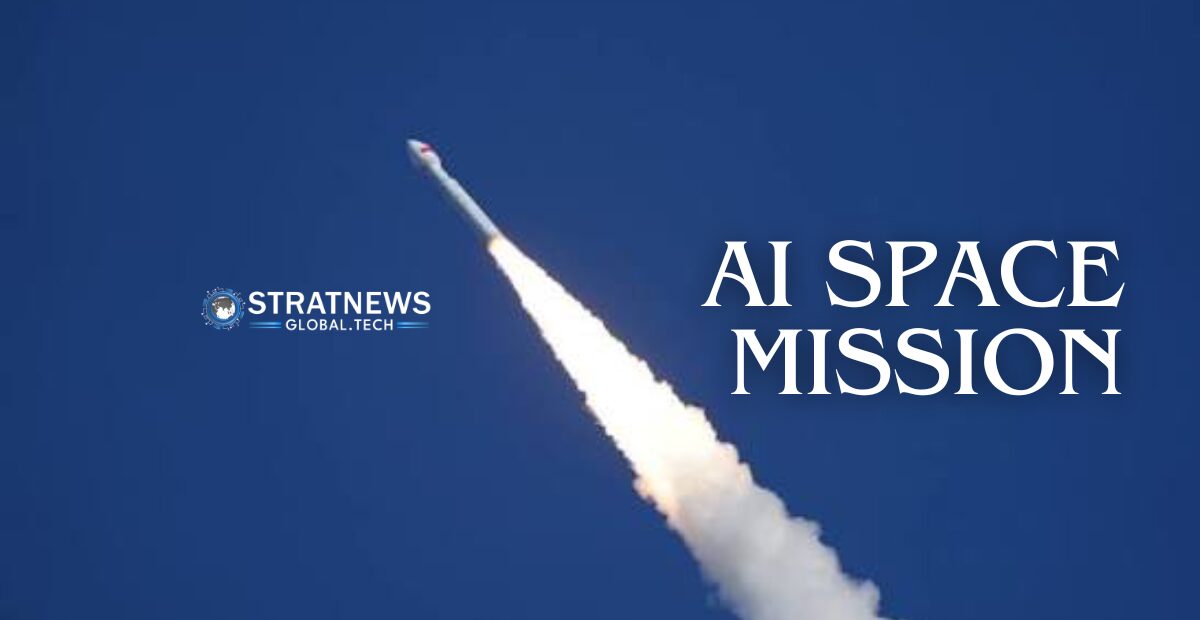
China launched a Lijian-1 Y15 carrier rocket on Friday, placing five satellites into orbit. Among them, two satellites carry advanced artificial intelligence large models in a significant step towards expanding AI applications in space.
The mission supports efforts to improve in-orbit data processing and reduce reliance on ground-based systems. As a result, researchers aim to enable satellites to analyse information more efficiently while operating in space.
AI Powers Autonomous Satellite Operations
The Jitian Star A-04 satellite carries embodied intelligent models developed by Zhejiang Lab, a research institution based in Hangzhou in east China’s Zhejiang Province.
The AI model allows the satellite to manage itself by completing multiple in-orbit tasks without continuous ground intervention. For example, it can monitor its own operational status while planning and carrying out onboard missions. In addition, it can coordinate activities for either a single satellite or an entire satellite cluster.
This capability marks an important development in autonomous satellite operations. Instead of relying heavily on instructions from Earth, the system can make operational decisions during missions while remaining in orbit.
Weather Forecasting Receives an AI Upgrade
The Xiguang-2 03 Satellite carries three AI meteorological models designed to improve the speed and accuracy of forecasting sudden weather events. These include short-duration torrential rainfall and strong winds.
Under conventional methods, meteorological satellites typically require around 90 minutes to transmit recorded weather data to ground stations. After receiving the information, ground teams must also parse and correct the data before issuing forecasts. Consequently, the overall refresh rate remains too slow for rapidly developing weather events.
Although this workflow meets the needs of routine weather services, it does not fully satisfy the demand for timely forecasts during abrupt and fast-changing conditions. By processing information in orbit, the AI models aim to improve both efficiency and forecasting precision.
Three-Body Computing Constellation Expands
Both satellites form part of the “Three-Body Computing Constellation” project, an initiative led by Zhejiang Lab. The project seeks to bring artificial intelligence into space by enabling satellites to process data directly while in orbit.
Earlier, on May 14, 2025, the first batch of 12 computing satellites for the constellation successfully entered orbit. According to the project’s plan, the constellation will expand to 100 satellites by 2027.
Experts said stronger coordination among satellites, combined with onboard AI models, will improve the efficiency of processing data collected around the world.
Li Chao, chief technology engineer of the “Three-Body Computing Constellation” project, said there is currently no coordinated global effort to process data in space while ensuring real-time data transmission. He added that closer cooperation among satellites, supported by AI models, would enable real-time processing of globally collected data and extend AI applications from the ground into space.
With inputs from Reuters

