


AI, Nuclear, Space And Quantum Technologies To Shape India’s Future Growth: Dr Jitendra Singh
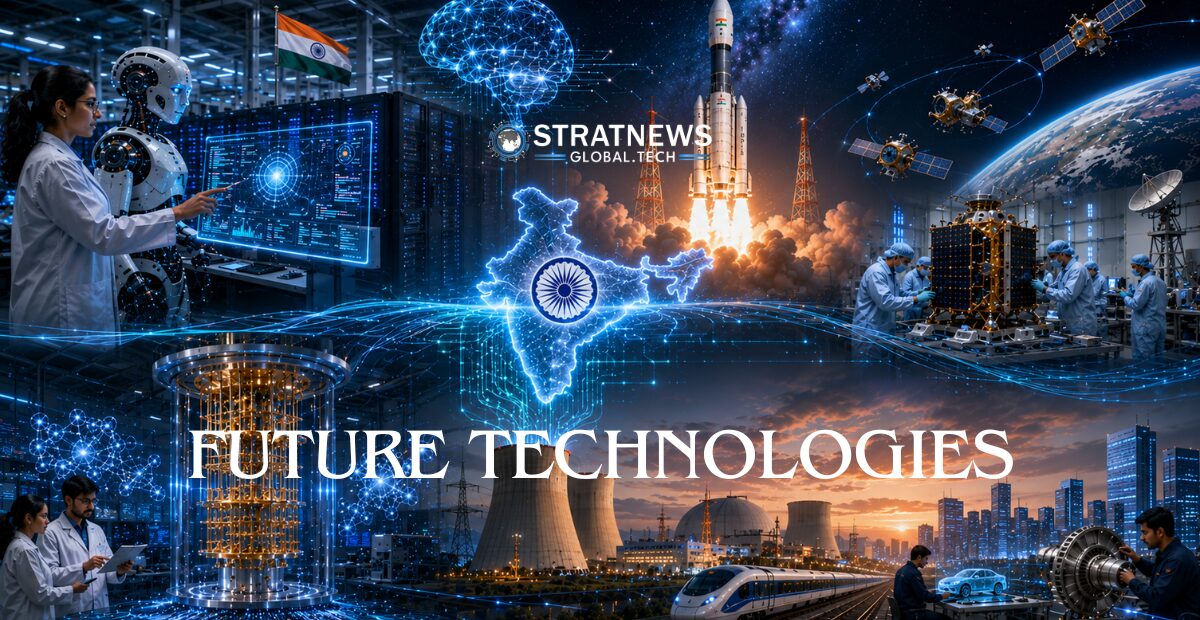
Artificial Intelligence, Nuclear Energy, Space and Quantum Technologies will define the next phase of economic growth, national security and global competitiveness, Union Minister Dr. Jitendra Singh has said. Speaking at a media conclave in New Delhi, the Minister highlighted India’s growing capabilities in frontier technologies and emphasised that sustained investment in innovation will be critical to the country’s long-term development.
He said India is making rapid progress across several advanced technology sectors and is positioning itself alongside leading global economies. According to the Minister, initiatives launched in recent years are strengthening scientific research, encouraging innovation and creating the foundation for a knowledge-driven economy.
National Quantum Mission Registers Strong Progress
Dr. Jitendra Singh said the National Quantum Mission (NQM), launched in 2023, has already achieved more than half of its targeted outcomes within three years.
He noted that India has made significant advances in quantum-secure communication, a field with important applications in defence, strategic communications, cybersecurity and the protection of sensitive information. He added that the pace of progress reflects the country’s growing scientific capabilities and its commitment to becoming a global leader in emerging technologies.
The Minister also said India continues to expand its expertise across the broader quantum ecosystem, including quantum computing, quantum communication and related research.
Frontier Technologies to Drive Global Competitiveness
According to Dr. Jitendra Singh, Space, Nuclear and Quantum Technologies will play a decisive role in shaping the future global order. He said these technologies will influence economic growth, strategic strength and geopolitical positioning.
He cautioned that countries failing to invest in these critical sectors risk falling behind in both development and national security. Therefore, India is steadily building capabilities that will support future economic expansion while strengthening its strategic interests.
Artificial Intelligence Becoming Central Across Sectors
Dr. Jitendra Singh described Artificial Intelligence as an essential tool that is increasingly transforming governance, industry, education, healthcare, scientific research and public service delivery.
He said the government is simultaneously strengthening the supporting ecosystem by investing in digital infrastructure, computing capacity, data resources and dependable energy systems. These investments, he noted, will enable the wider adoption of AI while supporting innovation across multiple sectors.
The Minister added that technological advancement has become the principal driver of modern economic growth and stressed that no nation can sustain long-term development without embracing frontier technologies and innovation.
Policy Reforms Encouraging Innovation
Dr. Jitendra Singh said policy reforms introduced under the leadership of Prime Minister Narendra Modi have expanded opportunities for entrepreneurship, scientific advancement and technological innovation.
He pointed to the opening of the Space sector as a major catalyst for a growing startup ecosystem. In addition, he said recent reforms in the Nuclear sector are expected to accelerate investments, foster technological collaboration and enhance capacity in a strategically important field.
He also highlighted the increasing demand for advanced computing, data centres and digital services. In this context, he said Nuclear Energy will play an increasingly important role in supporting India’s technology-driven economy while contributing to the country’s clean energy transition.
NEP 2020 Strengthening Research and Innovation
Speaking about education reforms, Dr. Jitendra Singh described the National Education Policy (NEP) 2020 as a transformative initiative that has fundamentally changed higher education and research in India.
He said the policy has replaced rigid academic pathways with greater flexibility and multidisciplinary learning opportunities. As a result, students can pursue careers that better align with their interests, abilities and aspirations.
The Minister added that NEP 2020 is helping create a stronger research ecosystem by encouraging students to participate in research and innovation based on genuine interest and capability. This approach, he said, will improve the quality of scientific research while nurturing future innovators, entrepreneurs and technology leaders.
Collaborative Innovation Ecosystem Expanding
Dr. Jitendra Singh said India is witnessing a structural shift from a government-led innovation model to a more collaborative ecosystem involving academia, industry, startups and private enterprises.
He noted that scientific advancement depends on combining financial, technological and intellectual resources. Accordingly, the country is creating an environment that encourages stronger partnerships across sectors.
The Minister said recent reforms have significantly strengthened India’s innovation ecosystem and generated new opportunities for scientific discovery, technology development and the commercialisation of research outcomes.
Looking ahead, he said Artificial Intelligence and Quantum Technologies are expected to transform societies at an unprecedented pace over the coming decades. The institutions, policies and technological capabilities being built today, he added, will shape the future trajectory of nations.
Dr. Jitendra Singh also called on young people to actively participate in India’s scientific transformation. He said students today have access to knowledge and learning resources on an unprecedented scale and urged them to develop a scientific temper while contributing to India’s emergence as a leading knowledge and innovation-driven nation.
He concluded that the reforms undertaken in education, research, space, nuclear energy and emerging technologies will strengthen India’s journey towards becoming a developed nation by 2047 and help position the country among the world’s leading innovation-driven economies.
With inputs from Reuters