


Trump Signs Memo to Expand U.S. Commercial Space Launches
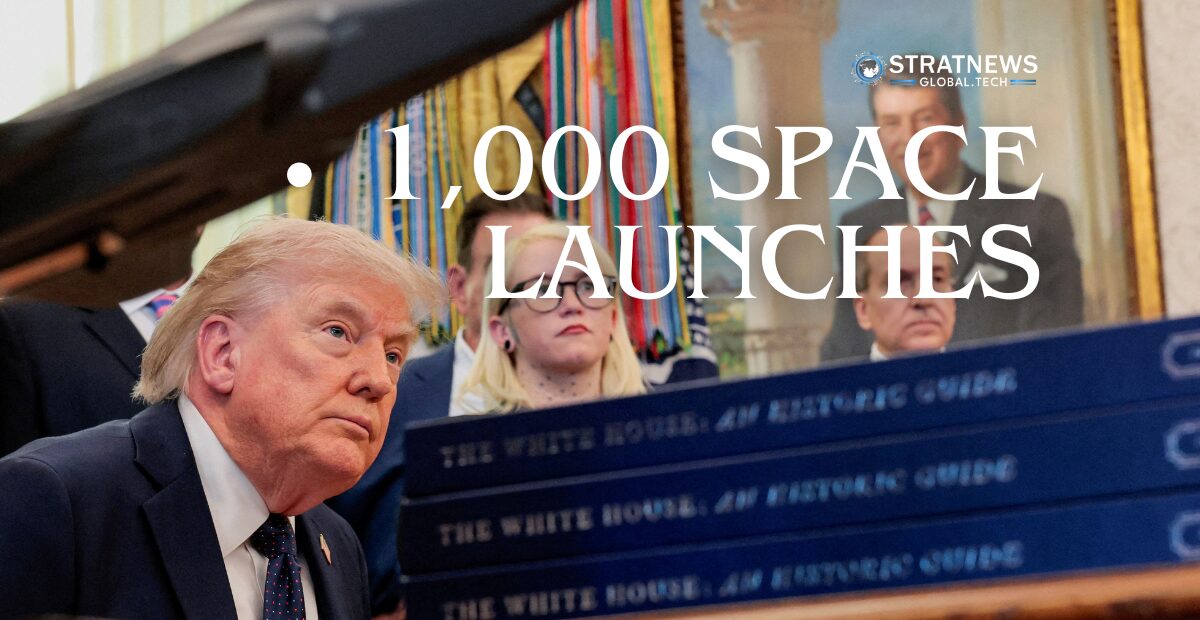
U.S. President Donald Trump on Thursday, August 20, signed a memorandum aimed at sharply increasing the number of commercial space launches and re-entries in the United States. The directive also asks government agencies to assess federal land for new launch and re-entry sites.
The White House wants the country to support at least 1,000 launches and re-entries each year by 2030. That target compares with 178 launches recorded last year, a figure already about 10 times higher than the number recorded in 2013. Elon Musk’s SpaceX has dominated the sector.
The memorandum focuses on expanding the commercial space industry. It calls on federal agencies to encourage private-sector partnerships to co-develop space transportation infrastructure. It also seeks faster permitting and environmental reviews, alongside adequate wireless spectrum for space launches.
Trump Targets 1,000 Annual Launches
The new policy sets a major expansion target for U.S. space transportation. Therefore, federal agencies will be expected to identify ways to support the infrastructure needed for a much higher launch rate.
Trump also wants several cabinet agencies to quickly identify potential launch and re-entry sites on government property. In addition, he wants agencies to designate priority airspace for critical space launch corridors.
The memorandum also calls for space transportation activities to be integrated into the modernisation of the U.S. air traffic control system. This would support the growing number of commercial launches while helping coordinate their use of national airspace.
Moon and Mars Missions
Trump also wants U.S. astronauts to return to the Moon by 2028. As part of the policy, the memorandum directs NASA to facilitate commercial transportation to the Moon and commercial robotic access to Mars.
Furthermore, NASA is directed to explore commercial options for sending humans to Mars. The policy therefore places commercial activity at the centre of the administration’s broader plans for lunar and Martian exploration.
White House Office of Science and Technology Policy Director Michael Kratsios said the national space transportation policy responds to rapid growth in the sector. He said it would position the United States to lead the next era of space activity.
Kratsios described the approach as “commercial-first”. He said it would support Americans on the Moon by 2028, initial Moon Base elements by 2030 and rapid, resilient launch capabilities for national security.
New Re-Entry Site Planned
Trump wants a new federal re-entry site identified within 90 days. At the same time, the memorandum directs agencies to avoid conducting government space transportation activities that could prevent, discourage or compete with U.S. commercial space transportation activities.
However, the directive allows exceptions when government activities are required for public safety or national security.
The push comes as commercial launch activity continues to expand. In May, the head of the Federal Aviation Administration said SpaceX aimed to reach 10,000 annual launches within five years.
SpaceX conducted 170 launches in 2025 and deployed about 2,500 satellites. In January, the company said it wanted to launch a constellation of 1 million satellites around Earth and use the Sun to power artificial intelligence data centres.
The new policy also calls for priority airspace for key launch corridors and closer integration of commercial space transportation with air traffic control modernisation. Together, these measures are intended to support the rapid expansion of U.S. commercial space launches.