

Close Menu
Stratnews GlobalStratnews Global
    Facebook X (Twitter) Instagram
    Trending
    • China to Launch Space-Based AI Data Centres in Challenge to SpaceX
    • India’s Middle Class Is Trading Up—And It Changes Everything
    • India’s Social Media Market Booms Amid Growing Concerns Over Digital Addiction
    • Nvidia CEO Hopes China Will Approve Sales of Powerful H200 AI Chip
    • Nokia Chair Sari Baldauf To Step Down, Timo Ihamuotila Set To Succeed Her
    • Union Budget 2026–27: Space and Geospatial Industry Pushes for Tax Relief
    • AI Productivity Boom Signals Spread Beyond The United States
    • Gavin Newsom Accuses TikTok Of Suppressing Trump Critical Content
    Stratnews GlobalStratnews Global
    Write for Us
    Friday, January 30
    • Space
    • Science
    • AI and Robotics
    • Industry News
    Stratnews GlobalStratnews Global
    Home » Lost Since 1974, Experimental Satellite Rediscovered by U.S. Space Force

    Lost Since 1974, Experimental Satellite Rediscovered by U.S. Space Force

    StratNewsGlobal Tech TeamBy StratNewsGlobal Tech TeamMay 6, 2024Updated:May 6, 2024 Space No Comments2 Mins Read
    1974 Experimental Satellite

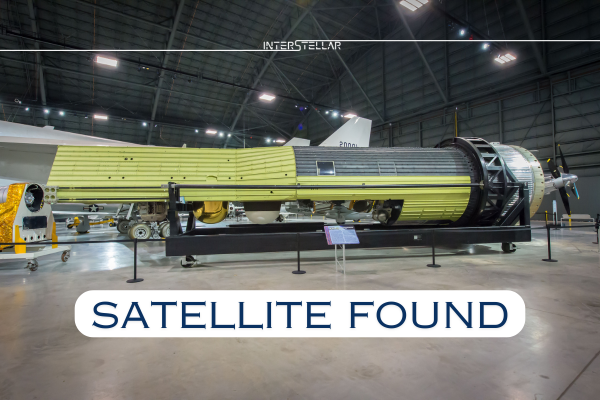
    After 25 years adrift in space, an experimental satellite launched in 1974 has been rediscovered using tracking data from the U.S. Space Force. The Infra-Red Calibration Balloon (S73-7), a small satellite that was part of the United States Air Force’s Space Test Program, was initially launched as part of “The Hexagon System.” This system involved deploying S73-7 from the larger KH-9 Hexagon satellite once in space.

    Originally designed to inflate and serve as a calibration target for remote sensing equipment, S73-7 failed to deploy correctly and subsequently drifted into obscurity as space junk. It was rediscovered in April after decades of remaining undetected, thanks in part to the efforts of astrophysicist Jonathan McDowell from the Harvard-Smithsonian Center for Astrophysics.

    McDowell, in an interview with Gizmodo, explained the challenges associated with tracking such objects. He noted that S73-7 went off the radar twice—once in the 1970s and again in the 1990s—likely due to its low radar cross-section, which complicates detection efforts. The object that was eventually tracked might not even be the satellite itself but a piece of its deployment mechanism or the uninflated balloon, which are not easily detectable by radar.

    The tracking and cataloguing of space debris are complicated by the sheer number of objects in orbit—over 20,000—and the difficulty in identifying them accurately. Ground-based radar and optical sensors can detect objects, but correlating them with known satellites or debris is challenging, especially if the object shares a similar orbit with many others.

    McDowell further elaborated on the complexities of matching observed objects with their identities in crowded orbits. The absence of recent orbital data can complicate these identifications, particularly if the object has drifted or its maneuvers are not well-documented.

    The rediscovery of the S73-7 highlights the ongoing challenges faced by engineers and scientists in monitoring and identifying space debris, an issue that will only grow as more satellites are launched. This discovery serves as a reminder of the importance of maintaining robust tracking systems to manage the risks associated with space debris and lost satellites.

    Author

    • StratNewsGlobal Tech Team
      StratNewsGlobal Tech Team

      View all posts
    Featured
    Share. Facebook Twitter Pinterest LinkedIn Tumblr Email Reddit Telegram WhatsApp
    StratNewsGlobal Tech Team
    • Website

    Keep Reading

    China to Launch Space-Based AI Data Centres in Challenge to SpaceX

    India’s Social Media Market Booms Amid Growing Concerns Over Digital Addiction

    Nvidia CEO Hopes China Will Approve Sales of Powerful H200 AI Chip

    Nokia Chair Sari Baldauf To Step Down, Timo Ihamuotila Set To Succeed Her

    Union Budget 2026–27: Space and Geospatial Industry Pushes for Tax Relief

    Gavin Newsom Accuses TikTok Of Suppressing Trump Critical Content

    Add A Comment
    Leave A Reply Cancel Reply

    Anti Drone System (CUAS)
    Latest Posts

    China to Launch Space-Based AI Data Centres in Challenge to SpaceX

    January 29, 2026

    India’s Middle Class Is Trading Up—And It Changes Everything

    January 29, 2026

    India’s Social Media Market Booms Amid Growing Concerns Over Digital Addiction

    January 29, 2026

    Nvidia CEO Hopes China Will Approve Sales of Powerful H200 AI Chip

    January 29, 2026

    Nokia Chair Sari Baldauf To Step Down, Timo Ihamuotila Set To Succeed Her

    January 29, 2026

    Union Budget 2026–27: Space and Geospatial Industry Pushes for Tax Relief

    January 28, 2026

    AI Productivity Boom Signals Spread Beyond The United States

    January 28, 2026

    Gavin Newsom Accuses TikTok Of Suppressing Trump Critical Content

    January 28, 2026

    ASML AI Chip Demand Fuels Market Dominance And Share Surge

    January 28, 2026

    2026 Beijing International Commercial Space Exhibition Highlights Industry Growth

    January 27, 2026

    Subscribe to News

    Get the latest sports news from NewsSite about world, sports and politics.

    • Astronomical Events
    • Space Missions
    • Industry News
    • Science
    StratNewsGlobal Tech
    Facebook X (Twitter) Instagram LinkedIn YouTube
    © 2026 StratNews Global, A unit of BharatShakti Communications LLP
    • About Us
    • Contributors
    • Copyright
    • Contact
    • Write for Us

    Type above and press Enter to search. Press Esc to cancel.