

Close Menu
Stratnews GlobalStratnews Global
    Facebook X (Twitter) Instagram
    Trending
    • Forget FPIs. Follow the Earnings: Sanjay Bakshi on Investing in India
    • Beyond the Strait of Hormuz: The New Battle for Energy and Trade Security
    • India’s Working-Hour Rules: Why Factories Struggle to Scale
    • Vietnam vs India: What Must Change for India to Grow at 10%?
    • India’s Green Transition: Can Sustainability and Competitiveness Go Together?
    • Can A Weakening Indian Rupee Become A Global Currency?
    • India’s Resilience Is Facing A Perfect Storm
    • Why Are Indian MSMEs So Resilient?
    • Support Us
    Stratnews GlobalStratnews Global
    Write for Us
    Friday, November 13
    • Space
    • Science
    • AI and Robotics
    • Industry News
    • Support Us
    Stratnews GlobalStratnews Global
    Home » New IMO Shipping Fuel Regulations Cut Pollution but Potentially Warm Oceans

    New IMO Shipping Fuel Regulations Cut Pollution but Potentially Warm Oceans

    StratNewsGlobal Tech TeamBy StratNewsGlobal Tech TeamMay 31, 2024 Science No Comments2 Mins Read
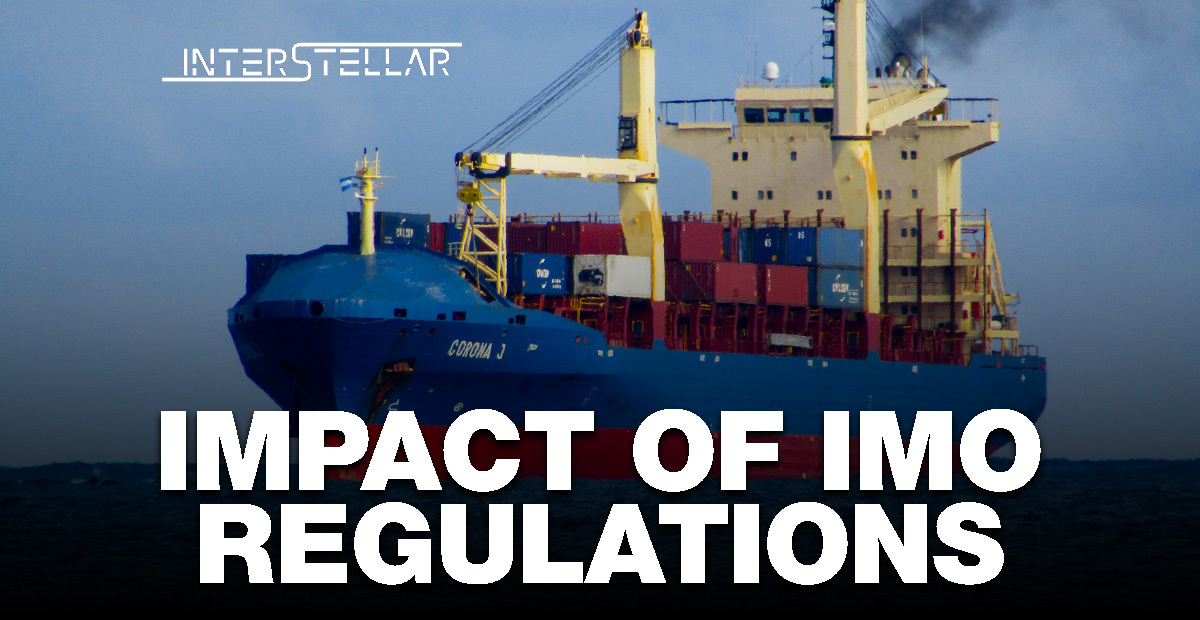
    IMO Shipping Fuel

    Stricter IMO Shipping Fuel Regulations Cut Pollution but May Warm Oceans

    New IMO shipping fuel regulations introduced in 2020 have significantly reduced sulphur dioxide (SO2) pollution but may have inadvertently contributed to ocean warming by reducing cloud cover. This finding comes from a modelling study led by Tianle Yuan at the University of Maryland, published in the Communications Earth & Environment journal.

    Impact of IMO Regulations

    The International Maritime Organization (IMO) implemented rules to reduce marine pollution, mandating that shippers cut their fuel sulphur content from 3.5% to 0.5%. This led to an 80% decline in SO2 emissions. SO2, while a significant pollutant, also forms aerosols that thicken clouds, reflecting sunlight back into space and thus masking global warming.

    Potential Consequences

    The research team estimates that IMO fuel standards might account for 80% of the planet’s total net heat uptake since 2020, particularly affecting busy shipping lanes. This reduction in SO2 has been identified as a potential factor in record ocean temperatures last year. Additionally, global cuts in air pollution may have accelerated global warming.

    “This cooling effect (of SO2) is well understood – and documented episodes have occurred as consequences of several major volcanic eruptions emitting SO2 during the past 2,000 years,” noted Stuart Haszeldine, director of the Edinburgh Climate Change Institute at the University of Edinburgh. While Haszeldine did not participate in the study, he emphasised the significant and worrying trend highlighted by the research.

    Varied Scientific Opinions

    However, some scientists believe the study may overstate the IMO policy’s impact. Joel Hirschi from Britain’s National Oceanography Centre commented, “Research into why recent temperatures have been so high is ongoing, and the reduced sulphur content in ship fuel is only one contributing factor.”

    Exploring Geoengineering Solutions

    The authors suggest that “marine cloud brightening” could be a potential geoengineering solution to global warming. This involves reflecting heat back into space, with controversial proposals such as injecting SO2 into the atmosphere and experiments spraying seawater into the air to thicken clouds being considered.

    Author

    • StratNewsGlobal Tech Team
      StratNewsGlobal Tech Team
      View all posts
    Featured
    Share. Facebook Twitter Pinterest LinkedIn Tumblr Email Reddit Telegram WhatsApp
    StratNewsGlobal Tech Team
    • Website

    Keep Reading

    Social Media Bans Expand For Children Worldwide

    Perplexity Valuation Could Exceed $30 Billion

    Vatican Renewable Energy Plant To Power Holy See

    Terrier Cyber Quest 2026 Opens National Hackathon

    Firebase Banking Scams Prompt India Action Against Google

    China Indonesia Energy Technology Cooperation Expands

    Add A Comment
    Leave A Reply Cancel Reply

    Anti Drone System (CUAS)
    Latest Posts

    Forget FPIs. Follow the Earnings: Sanjay Bakshi on Investing in India

    November 12, 2026

    Beyond the Strait of Hormuz: The New Battle for Energy and Trade Security

    November 6, 2026

    India’s Working-Hour Rules: Why Factories Struggle to Scale

    October 29, 2026

    Vietnam vs India: What Must Change for India to Grow at 10%?

    October 22, 2026

    India’s Green Transition: Can Sustainability and Competitiveness Go Together?

    October 15, 2026

    Can A Weakening Indian Rupee Become A Global Currency?

    October 8, 2026

    India’s Resilience Is Facing A Perfect Storm

    October 1, 2026

    Why Are Indian MSMEs So Resilient?

    September 24, 2026

    9/11@25: How Terrorism Reshaped Global Geopolitics

    September 17, 2026

    The Indian Economy Keeps Beating Expectations

    September 10, 2026

    Subscribe to News

    Get the latest sports news from NewsSite about world, sports and politics.

    • Astronomical Events
    • Space Missions
    • Industry News
    • Science
    StratNewsGlobal Tech
    Facebook X (Twitter) Instagram LinkedIn YouTube
    © 2026 StratNews Global, A unit of BharatShakti Communications LLP
    • About Us
    • Contributors
    • Copyright
    • Contact
    • Write for Us

    Type above and press Enter to search. Press Esc to cancel.