

Close Menu
Stratnews GlobalStratnews Global
    Facebook X (Twitter) Instagram
    Trending
    • AI optimism dominates Davos despite fears over jobs
    • Jensen Huang’s China visit highlights uncertainty over H200 chip sales
    • Elon Musk and Ryanair Clash over Cost of Starlink In-Flight WiFi
    • Taiwan Eyes Greater Chip Investment in Arizona to Deepen U.S. Ties
    • Microsoft Restores 365 Services After North America Outage
    • TikTok Creates U.S. Joint Venture to Secure Data and Avoid Ban
    • Self-Eating Spacecraft Promises Affordable Deep Space Access
    • Elon Musk Challenges U.S. Solar Tariffs and Sets Bold Tesla Goals at Davos
    Stratnews GlobalStratnews Global
    Write for Us
    Sunday, January 25
    • Space
    • Science
    • AI and Robotics
    • Industry News
    Stratnews GlobalStratnews Global
    Home » Solar-Powered Streetlamps to Illuminate the Moon’s Dark Nights

    Solar-Powered Streetlamps to Illuminate the Moon’s Dark Nights

    Arushi PandeyBy Arushi PandeyAugust 21, 2024 Science No Comments3 Mins Read
    Solar-powered towers

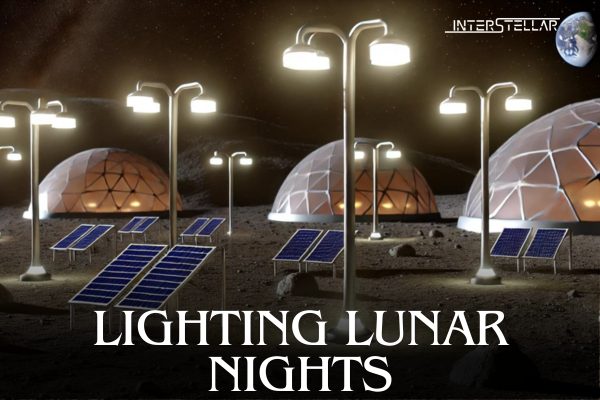
    Illuminating the Moon: New Solar-Powered Towers Could Light Up Lunar Nights

    The Moon could soon become the first extraterrestrial construction zone for humanity, with ambitious plans for permanent settlements, levitating train systems, and innovative nuclear reactors. However, before these developments can take place, the Moon needs a reliable light source.

    The Challenge of Lunar Nights

    One day on the Moon lasts the equivalent of two Earth weeks, and the freezing lunar nights are equally long. These extended periods of darkness have already caused problems for lunar landers that depend on sunlight for power. As humans prepare to explore the Moon further, these long, dark nights could pose even greater threats.

    LUNARSABER: A Solution to the Lunar Night Problem

    Honeybee Robotics, a company under Jeff Bezos’ Blue Origin, has proposed a novel solution. The project, known as Lunar Utility Navigation with Advanced Remote Sensing and Autonomous Beaming for Energy Redistribution (LUNARSABER), involves the creation of enormous lunar streetlamps that double as solar-powered batteries. Funded by the US government’s Defense Advanced Research Projects Agency (DARPA), this project aims to support the next era of lunar exploration.

    How LUNARSABER Works

    Each LUNARSABER lamp would be an impressive 330 feet (100 metres) tall, towering higher than the Statue of Liberty. These massive light poles are designed to store solar energy during the lunar daytime and then illuminate the surrounding area with powerful floodlights during the two-week-long lunar night.

    The height of these solar-powered streetlamps is essential for looking over the rims of lunar craters and for elevating up to 1 metric ton of scientific equipment, such as cameras and communication devices, to higher vantage points. The base of each tower would also have power adapters to recharge lunar rovers or other nearby infrastructure. If deployed across the Moon, this network of LUNARSABER towers could serve as the first lunar power grid.

    The challenge of erecting such colossal structures on the Moon is being addressed by Honeybee engineers, who have designed an automated system. Each LUNARSABER tower would rise from its base by bending rolled-up metal bands into cylindrical tubes. This method simplifies transportation, as spacecraft would only need to deliver the base, with the tower rolled up inside.

    Although still in the early stages of development, LUNARSABER is part of DARPA’s 10-Year Lunar Architecture (LunA-10) Capability Study, which aims to prepare for a new era of lunar exploration. If successful, this project will ensure that the Moon’s future won’t be shrouded in darkness.

    Author

    • Arushi Pandey
      Arushi Pandey

      View all posts
    Featured
    Share. Facebook Twitter Pinterest LinkedIn Tumblr Email Reddit Telegram WhatsApp
    Arushi Pandey

      Keep Reading

      AI optimism dominates Davos despite fears over jobs

      Jensen Huang’s China visit highlights uncertainty over H200 chip sales

      Elon Musk and Ryanair Clash over Cost of Starlink In-Flight WiFi

      Taiwan Eyes Greater Chip Investment in Arizona to Deepen U.S. Ties

      Microsoft Restores 365 Services After North America Outage

      TikTok Creates U.S. Joint Venture to Secure Data and Avoid Ban

      Add A Comment
      Leave A Reply Cancel Reply

      Anti Drone System (CUAS)
      Latest Posts

      AI optimism dominates Davos despite fears over jobs

      January 24, 2026

      Jensen Huang’s China visit highlights uncertainty over H200 chip sales

      January 24, 2026

      Elon Musk and Ryanair Clash over Cost of Starlink In-Flight WiFi

      January 23, 2026

      Taiwan Eyes Greater Chip Investment in Arizona to Deepen U.S. Ties

      January 23, 2026

      Microsoft Restores 365 Services After North America Outage

      January 23, 2026

      TikTok Creates U.S. Joint Venture to Secure Data and Avoid Ban

      January 23, 2026

      Self-Eating Spacecraft Promises Affordable Deep Space Access

      January 23, 2026

      Elon Musk Challenges U.S. Solar Tariffs and Sets Bold Tesla Goals at Davos

      January 23, 2026

      Blue Origin Unveils TeraWave, a 5,400-Satellite Network for Global Data Connectivity

      January 22, 2026

      Apple Moves to Block CCI from Accessing Global Financial Records

      January 22, 2026

      Subscribe to News

      Get the latest sports news from NewsSite about world, sports and politics.

      • Astronomical Events
      • Space Missions
      • Industry News
      • Science
      StratNewsGlobal Tech
      Facebook X (Twitter) Instagram LinkedIn YouTube
      © 2026 StratNews Global, A unit of BharatShakti Communications LLP
      • About Us
      • Contributors
      • Copyright
      • Contact
      • Write for Us

      Type above and press Enter to search. Press Esc to cancel.