


Close Menu
Stratnews GlobalStratnews Global
    Facebook X (Twitter) Instagram
    Trending
    • Union Budget 2026–27: Space and Geospatial Industry Pushes for Tax Relief
    • AI Productivity Boom Signals Spread Beyond The United States
    • Gavin Newsom Accuses TikTok Of Suppressing Trump Critical Content
    • ASML AI Chip Demand Fuels Market Dominance And Share Surge
    • 2026 Beijing International Commercial Space Exhibition Highlights Industry Growth
    • WhatsApp Designated Very Large Platform Under EU Digital Services Act
    • Valve Faces Steam Commission Lawsuit After UK Tribunal Ruling
    • SEC Drops Case Against Gemini After Crypto Investors Repaid
    Stratnews GlobalStratnews Global
    Write for Us
    Thursday, January 29
    • Space
    • Science
    • AI and Robotics
    • Industry News
    Stratnews GlobalStratnews Global
    Home » GMRT Unveils Largest Plasma Jets from Supermassive Black Hole, Spanning 23 Million Light Years

    GMRT Unveils Largest Plasma Jets from Supermassive Black Hole, Spanning 23 Million Light Years

    Kanika SharmaBy Kanika SharmaOctober 7, 2024Updated:October 14, 2024 Space No Comments3 Mins Read
    GMRT

    International Astronomers Discover Record-Breaking Plasma Jets Using GMRT

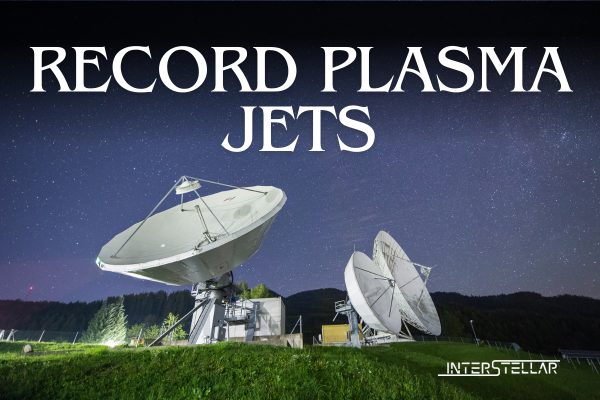
    A team of international astronomers has used the Giant Metrewave Radio Telescope (GMRT) near Pune, India, to discover the largest pair of plasma jets ever observed emanating from a supermassive black hole. These colossal jets span a staggering 23 million light years from end to end, making them more than 100 times the size of our Milky Way galaxy.

    A Landmark Discovery in Astrophysics

    The discovery, published in the prestigious journal Nature, sets a new record for the longest supermassive black hole jets ever found. Prof Yogesh Wadadekar from the National Centre for Radio Astrophysics-Tata Institute of Fundamental Research (NCRA-TIFR) in Pune explained the significance of the find: “The GMRT telescope located in Khodad, 80 km from Pune, played a crucial role in this discovery.”

    Giant jets like these are streams of fast-moving plasma that shoot out from supermassive black holes at the centre of galaxies. While jets of such lengths are rare, this one is the longest known so far. The structure has been nicknamed Porphyrion, after a giant from Greek mythology, and dates back to a time when the universe was 6.3 billion years old.

    The Role of the GMRT and the Keck I Telescope

    To determine the immense length of these plasma jets, astronomers required a powerful radio telescope capable of tracing them back to their host galaxy. This is where the GMRT proved indispensable. The telescope’s sensitive, high-resolution observations allowed researchers to pinpoint the precise position of the host galaxy, making it possible to measure the true scale of the jets.

    Lead author Martijn Oei, a postdoctoral scholar at the California Institute of Technology (Caltech), highlighted GMRT’s contribution: “Without the precise position provided by the GMRT observations, it would have been impossible to identify the optical host galaxy and to determine the giant extent of the radio megastructure.”

    After identifying the host galaxy, the researchers used the Keck I optical telescope in Hawaii to confirm the distance, further solidifying their findings.

    Implications for the Study of Supermassive Black Hole Jets

    The study of supermassive black hole jets in radio galaxies has been a key research focus for the GMRT over the last two decades. This discovery of the Porphyrion megastructure is another milestone, reinforcing GMRT’s critical role in advancing our understanding of these astronomical phenomena.

    The enormous size of these jets offers valuable insights into the behaviour and growth of supermassive black holes, as well as the conditions in the universe billions of years ago. Such findings help astronomers refine their models of how galaxies and their central black holes evolve over time.

    As research on supermassive black hole jets continues, this discovery could pave the way for new explorations and further contributions from telescopes like the GMRT.

    Author

    • Kanika Sharma
      Kanika Sharma

      View all posts
    Featured Just In
    Share. Facebook Twitter Pinterest LinkedIn Tumblr Email Reddit Telegram WhatsApp
    Kanika Sharma
    Kanika Sharma

      Keep Reading

      Union Budget 2026–27: Space and Geospatial Industry Pushes for Tax Relief

      Gavin Newsom Accuses TikTok Of Suppressing Trump Critical Content

      ASML AI Chip Demand Fuels Market Dominance And Share Surge

      2026 Beijing International Commercial Space Exhibition Highlights Industry Growth

      WhatsApp Designated Very Large Platform Under EU Digital Services Act

      Valve Faces Steam Commission Lawsuit After UK Tribunal Ruling

      Add A Comment
      Leave A Reply Cancel Reply

      Anti Drone System (CUAS)
      Latest Posts

      Union Budget 2026–27: Space and Geospatial Industry Pushes for Tax Relief

      January 28, 2026

      AI Productivity Boom Signals Spread Beyond The United States

      January 28, 2026

      Gavin Newsom Accuses TikTok Of Suppressing Trump Critical Content

      January 28, 2026

      ASML AI Chip Demand Fuels Market Dominance And Share Surge

      January 28, 2026

      2026 Beijing International Commercial Space Exhibition Highlights Industry Growth

      January 27, 2026

      WhatsApp Designated Very Large Platform Under EU Digital Services Act

      January 27, 2026

      Valve Faces Steam Commission Lawsuit After UK Tribunal Ruling

      January 27, 2026

      SEC Drops Case Against Gemini After Crypto Investors Repaid

      January 27, 2026

      Zhuque-3 Reusable Rocket Signals New Era For China Commercial Space

      January 27, 2026

      Monarch Butterfly Tracking Technology Transforms Migration Research

      January 27, 2026

      Subscribe to News

      Get the latest sports news from NewsSite about world, sports and politics.

      • Astronomical Events
      • Space Missions
      • Industry News
      • Science
      StratNewsGlobal Tech
      Facebook X (Twitter) Instagram LinkedIn YouTube
      © 2026 StratNews Global, A unit of BharatShakti Communications LLP
      • About Us
      • Contributors
      • Copyright
      • Contact
      • Write for Us

      Type above and press Enter to search. Press Esc to cancel.