


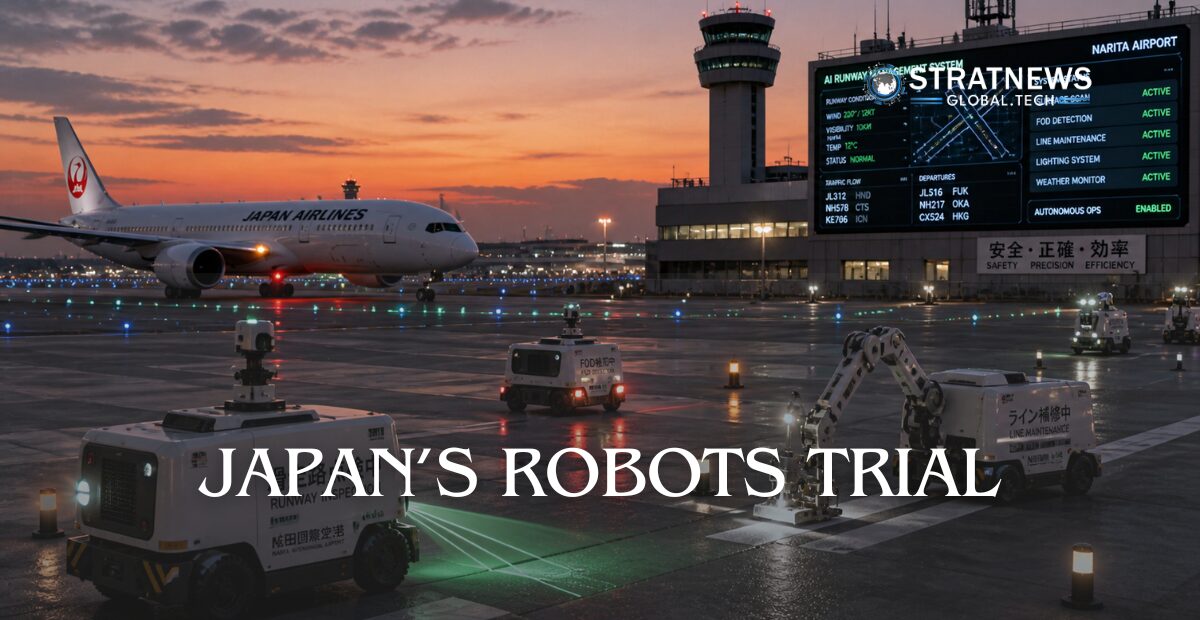
In a strategic pivot to address a deepening demographic crisis, Japan Airlines (JAL) has launched humanoid robot trials at Tokyo’s Haneda Airport. This project is a collaborative effort between the Japan Airlines Group and the GMO AI & Robotics Corporation. The primary goal of these 3-year trials is to determine if robots can successfully manage ground handling tasks, such as towing aircraft and loading or unloading baggage and cargo. If proven successful at Haneda, the use of these robots could be expanded across other major domestic airports throughout Japan.
A demonstration video recently showcased a humanoid robot developed by the Chinese company Unitree. In the footage, the robot was seen contributing to various airport duties, including cleaning aircraft cabins and handling passenger luggage. These tasks are essential to the airline’s daily workflow but are becoming increasingly difficult to maintain using only human labour.
The timing of this experiment is linked to a massive surge in international travel. In February, Japan saw a record-breaking 3.46 million tourists enter the country. According to data from the Japan National Tourism Organisation, this represents a 6.4% increase compared to the visitor numbers recorded in February 2025. This influx of travellers has put significant pressure on the aviation industry, and even though Japan Airlines alone employs nearly 4,000 workers, the company is finding it hard to manage the sheer volume of work required to keep up with the demand.
Ground handling is a demanding field that requires highly skilled staff to ensure safety. Tasks such as aircraft marshalling and cargo loading are not only technical but also put a heavy physical burden on workers. Because Japan is dealing with a shrinking working-age population and a serious labour shortage, the industry is looking for ways to reduce the workload and replace labour with technology.
Experiment results will likely go beyond runways to other applications. Japan’s labour crisis has already led to severe economic consequences. A report from Tokyo Shoko Research noted that 397 companies were forced to close their doors in 2025 because they simply could not find enough employees to stay in business. If these humanoid robots pass rigorous testing, they could eventually fill the labour gaps in many different industries across the country, helping to prevent further business closures in the future.

