


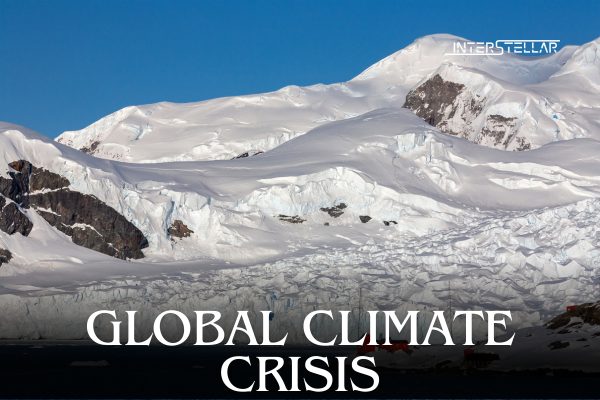
Antarctic Conference Highlights Urgent Climate Crisis
Experts Warn of Accelerating Antarctica’s Rapid Changes
This week, nearly 1,500 Antarctic researchers and scientists convened in southern Chile for the 11th Scientific Committee on Antarctic Research conference. Experts from diverse fields such as geology, biology, and glaciology came together to address a pressing issue: Antarctica’s rapid changes. The discussions emphasised that these changes could have severe global repercussions.
Alarming Evidence of Extreme Weather and Ice Melt
During the conference, researchers presented disturbing evidence of extreme weather events in Antarctica, including heavy rainfall, intense heatwaves, and sudden Foehn winds. These events are contributing to significant ice melt and the breaking off of massive glaciers. This situation is causing serious global concern, as it may indicate that Antarctica has reached a critical tipping point, potentially leading to accelerated and irreversible ice loss from the West Antarctic ice sheet.
Paleoclimate specialist Liz Keller from Victoria University of Wellington expressed uncertainty about these observations. She questioned whether they represent a temporary dip in sea ice or a more permanent downward trend. The data is concerning because the Antarctic ice sheet holds enough ice to raise global sea levels by up to 58 metres. This is particularly worrying, as one-third of the world’s population lives below 100 vertical metres of sea level.
Historical Context and Future Risks
Experts noted that the pace of change in Antarctica is unprecedented. Liz Keller highlighted that carbon dioxide (CO2) levels, which once took thousands of years to rise, have now surged within just a century. Mike Weber, a paleooceanographer from the University of Bonn, compared this situation to sediment records from 21,000 years ago. These records show that similar rapid ice melts led to centuries-long phases of ice loss and significantly higher sea levels.
Weber warned that we might already be entering a phase where stopping sea ice loss could become impossible. He added that while some natural mechanisms, such as the Earth’s crust rebounding, might slow the effects, the outcome will depend heavily on the rate of change and human intervention.
Emission Reductions: A Vital Path Forward
Despite the dire warnings, scientists remain hopeful that the worst outcomes can be avoided. Significant reductions in fossil fuel emissions could prevent the most catastrophic scenarios. Mike Weber explained that keeping emissions low could eventually halt these ongoing changes. However, if emissions remain high, we may face a runaway situation with no way to reverse the consequences.
Paleoclimate expert Mathieu Casado pointed out that current carbon emissions are unprecedented in both scale and speed. Ice core data, which reconstructs temperature patterns in Antarctica over the past 800,000 years, indicates that the recent temperature rise is far outside natural variability. This evidence clearly points to industrial carbon emissions as the primary driver of climate change.
Gino Casassa, head of the Chilean Antarctic Institute, warned that sea levels could rise by 4 metres by 2100 if emissions continue unchecked, with the potential for even more drastic increases. Casassa stressed that what happens in Antarctica has global implications. The continent’s stability is crucial, as its conditions are closely tied to global atmospheric, oceanic, and weather patterns.

