


Close Menu
Stratnews GlobalStratnews Global
    Facebook X (Twitter) Instagram
    Trending
    • India’s Gaganyaan Enters the Big League of Human Spaceflight Systems
    • Italian Probe Finds False Alarms Behind Suspected Russian Drone Flights
    • Theranos Reporter Leads Copyright Suit Against xAI, OpenAI, and Others
    • Larry Ellison Personally Guarantees Paramount’s $40.4 Billion Warner Bros Bid
    • Nvidia Eyes Mid-February Launch for H200 Chip Shipments to China
    • China’s Long March 12A Booster Recovery Fails in Reusable Rocket Test
    • U.S. Adds DJI and Autel to National Security Risk List, Tightens Drone Restrictions
    • Kuaishou Shares Drop 6% After Cyberattack Hits Livestreaming Services
    Stratnews GlobalStratnews Global
    Write for Us
    Wednesday, December 24
    • Space
    • Science
    • AI and Robotics
    • Industry News
    Stratnews GlobalStratnews Global
    Home » NASA Underwater Robots to Help Study Antarctic Ice Sheets

    NASA Underwater Robots to Help Study Antarctic Ice Sheets

    Aditya LenkaBy Aditya LenkaAugust 31, 2024 Climate Change No Comments3 Mins Read
    NASA underwater robots

    NASA Engineers Develop Underwater Probes to Monitor Antarctic Ice Melt

    NASA engineers are working on an innovative fleet of underwater robot probes designed to measure how rapidly climate change is melting Antarctica’s vast ice sheets. This project aims to provide critical data on rising sea levels and their potential impact on the global environment.

    Underwater Robots for Hard-to-Reach Areas

    The Jet Propulsion Laboratory (JPL) in California is leading the development of these submersible vehicles. A prototype was recently tested in the Arctic, beneath the frozen Beaufort Sea near Alaska, in March. These NASA underwater robots are designed to reach some of the most inaccessible locations on Earth, collecting data essential for understanding the dynamics of ice melt.

    Paul Glick, a robotics engineer at JPL and the principal investigator for the IceNode project, highlighted the importance of these probes. He stated that these robots are crucial for delivering scientific instruments to areas that have been challenging to study, particularly beneath the Antarctic ice.

    Monitoring Antarctic Ice Sheets

    The primary goal of these probes is to collect accurate data on the rate at which warming ocean waters are melting Antarctica’s coastal ice. This information will help scientists improve computer models that predict future sea level rise. The state of Antarctica’s ice sheet is a major focus for researchers worldwide, especially those attending the 11th Scientific Committee on Antarctica Research conference in southern Chile.

    A 2022 JPL analysis revealed that Antarctica’s ice shelf had lost around 12 trillion tons of mass since 1997, a figure that doubles previous estimates. If the entire ice shelf were to melt, global sea levels could rise by an estimated 200 feet (60 meters).

    Ice shelves, massive floating slabs of frozen freshwater, play a crucial role in holding back glaciers that would otherwise slide into the ocean. However, satellite images have shown that these shelves are calving into icebergs faster than they can regenerate. Rising ocean temperatures are also eroding the shelves from underneath, a process that the IceNode probes or NASA underwater robots are designed to study more precisely.

    Deployment and Data Collection

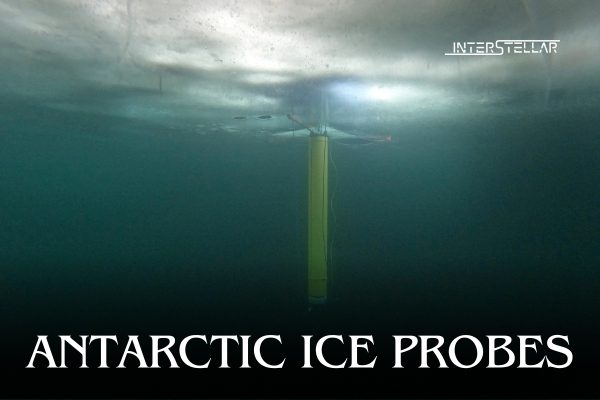
    The IceNode probes are cylindrical, measuring about 8 feet (2.4 meters) in length and 10 inches (25 cm) in diameter. They can be deployed from boreholes in the ice or from vessels at sea. Although these robots lack propulsion, they drift with ocean currents, guided by specialized software, to reach grounding zones where ice meets ocean and land. These areas are inaccessible to satellite signals, making the data collected by IceNode crucial.

    Upon reaching their target, the probes will drop their ballast and float upwards to attach themselves to the underside of the ice shelf using three-pronged landing gear. Once in position, the IceNodes will continuously record data for up to a year, capturing seasonal changes. After completing their mission, the probes will release themselves to drift back to open water and transmit their findings via satellite.

    Earlier methods for documenting ice shelf thinning relied on satellite altimeters, which measure changes in ice height from above. The IceNode probes offer a more direct and precise way to study the melting process from beneath the ice.

    In a field test conducted in March, an IceNode prototype successfully descended 330 feet (100 meters) into the ocean, gathering data on salinity, temperature, and water flow. Previous tests took place in California’s Monterey Bay and beneath the frozen surface of Lake Superior.

    Scientists believe that deploying 10 probes within a single ice shelf cavity would provide the most comprehensive data. However, more development and testing are required before a timeline for full-scale deployment can be established.

    Author

    • Aditya Lenka
      Aditya Lenka

      A multi-faceted professional with a diverse range of skills and experiences. He currently works as a Producer, Digital Marketer, and Journalist for several well-known media outlets, namely StratNewsGlobal, BharatShakti, and Interstellar. With a passion for storytelling and a keen eye for detail, Aditya has covered a wide range of topics and events across India, bringing a unique perspective to his work.When he's not busy producing content, Aditya enjoys exploring new places and cuisines, having traveled extensively throughout India. He's also an avid writer and poet, often penning his thoughts and musings in his free time. And when he wants to unwind and relax, Aditya spends time with his two loyal companions, Zorro and Pablo, his beloved dogs.Aditya's dynamic personality and varied interests make him a unique individual, always eager to learn and experience new things.

      View all posts
    Featured
    Share. Facebook Twitter Pinterest LinkedIn Tumblr Email Reddit Telegram WhatsApp
    Aditya Lenka
    Aditya Lenka

      A multi-faceted professional with a diverse range of skills and experiences. He currently works as a Producer, Digital Marketer, and Journalist for several well-known media outlets, namely StratNewsGlobal, BharatShakti, and Interstellar. With a passion for storytelling and a keen eye for detail, Aditya has covered a wide range of topics and events across India, bringing a unique perspective to his work.When he's not busy producing content, Aditya enjoys exploring new places and cuisines, having traveled extensively throughout India. He's also an avid writer and poet, often penning his thoughts and musings in his free time. And when he wants to unwind and relax, Aditya spends time with his two loyal companions, Zorro and Pablo, his beloved dogs.Aditya's dynamic personality and varied interests make him a unique individual, always eager to learn and experience new things.

      Keep Reading

      India’s Gaganyaan Enters the Big League of Human Spaceflight Systems

      Italian Probe Finds False Alarms Behind Suspected Russian Drone Flights

      Theranos Reporter Leads Copyright Suit Against xAI, OpenAI, and Others

      Larry Ellison Personally Guarantees Paramount’s $40.4 Billion Warner Bros Bid

      Nvidia Eyes Mid-February Launch for H200 Chip Shipments to China

      China’s Long March 12A Booster Recovery Fails in Reusable Rocket Test

      Add A Comment
      Leave A Reply Cancel Reply

      Anti Drone System (CUAS)
      Latest Posts

      India’s Gaganyaan Enters the Big League of Human Spaceflight Systems

      December 23, 2025

      Italian Probe Finds False Alarms Behind Suspected Russian Drone Flights

      December 23, 2025

      Theranos Reporter Leads Copyright Suit Against xAI, OpenAI, and Others

      December 23, 2025

      Larry Ellison Personally Guarantees Paramount’s $40.4 Billion Warner Bros Bid

      December 23, 2025

      Nvidia Eyes Mid-February Launch for H200 Chip Shipments to China

      December 23, 2025

      China’s Long March 12A Booster Recovery Fails in Reusable Rocket Test

      December 23, 2025

      U.S. Adds DJI and Autel to National Security Risk List, Tightens Drone Restrictions

      December 23, 2025

      Kuaishou Shares Drop 6% After Cyberattack Hits Livestreaming Services

      December 23, 2025

      AI-Generated Documents Used in Cyberattack on Russian Defence Firms

      December 22, 2025

      Nexperia’s China Arm Secures Local Wafer Supply Amid Rift with Dutch Parent

      December 22, 2025

      Subscribe to News

      Get the latest sports news from NewsSite about world, sports and politics.

      • Astronomical Events
      • Space Missions
      • Industry News
      • Science
      StratNewsGlobal Tech
      Facebook X (Twitter) Instagram LinkedIn YouTube
      © 2025 StratNews Global, A unit of BharatShakti Communications LLP
      • About Us
      • Contributors
      • Copyright
      • Contact
      • Write for Us

      Type above and press Enter to search. Press Esc to cancel.