

Close Menu
Stratnews GlobalStratnews Global
    Facebook X (Twitter) Instagram
    Trending
    • G Spider AI robot canal cleaning in Thiruvananthapuram boosts sanitation safety
    • Data Is The New Oil: Iran’s Strikes on Amazon, Microsoft Centres Redefine Warfare
    • Pentagon blocks Anthropic AI military use after Anthropic supply chain risk designation
    • Sierra Space valuation rises as Sierra Space Series C funding reaches $8 billion
    • India Digital Public Infrastructure model sets global benchmark for population scale systems
    • Karnataka social media ban for under 16 announced by Chief Minister Siddaramaiah
    • NASA moon rocket component shift could see United Launch Alliance hardware used
    • Scientists Grow Chickpeas in Simulated Lunar Soil for Future Moon Missions
    • Support Us
    Stratnews GlobalStratnews Global
    Write for Us
    Saturday, March 7
    • Space
    • Science
    • AI and Robotics
    • Industry News
    • Support Us
    Stratnews GlobalStratnews Global
    Home » Scientists Battle to Save Cuba’s Prehistoric Manjuari Fish from Extinction

    Scientists Battle to Save Cuba’s Prehistoric Manjuari Fish from Extinction

    Arushi PandeyBy Arushi PandeyNovember 25, 2025 Science No Comments2 Mins Read
    Manjuari Fish

    Cuba Fights to Save Ancient Fish from Extinction in Mosquito-Ridden Swamp

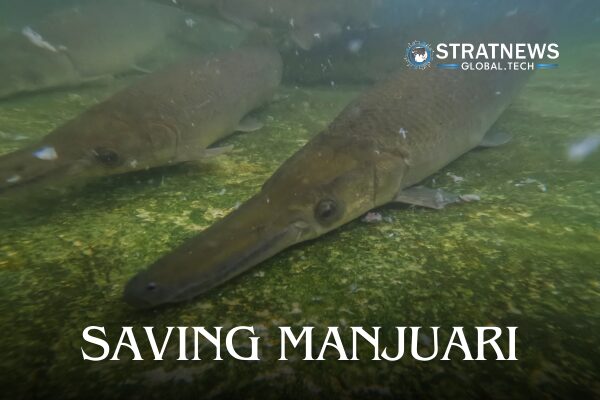
    In the heart of Cuba’s vast Zapata Swamp, the buzz of mosquitoes fills the air as scientists fight to save one of the island’s most ancient creatures — the manjuari, or Cuban gar. This prehistoric fish, which has survived for over 140 million years, is now teetering on the brink of extinction.

    A Living Fossil in Peril

    “The manjuari is a jewel among Cuban fishes,” said park biologist Andrés Hurtado as he waded through mangroves under a cloud of mosquitoes. The species, long and slender with a snout full of sharp teeth, is listed as “critically endangered” by the International Union for Conservation of Nature (IUCN).

    Its decline has been driven by centuries of overfishing, widespread habitat destruction, and the arrival of the invasive African Walking Catfish in 1999. The catfish, a voracious predator, has severely disrupted the delicate balance of the Zapata ecosystem — the Caribbean’s largest intact wetland.

    Restoring a Fragile Population

    In a small hatchery near the swamp, Hurtado and his team have been working to breed the elusive manjuari and raise young fish before releasing them back into the wild. The process is slow and demanding, hindered by shortages of supplies, the swamp’s isolation, and the manjuari’s secretive nature.

    The young fish, barely the length of a pencil, are dark and well-camouflaged, disappearing almost instantly among the tangled roots of mangroves once released. Despite the challenges, Hurtado remains hopeful that each release strengthens the species’ fragile foothold in the wild.

    Signs of Hope in the Swamp

    Though it is difficult to count the manjuari directly, some evidence suggests the project is working. “Local fishermen tell us the manjuari are here,” said Eduardo Abreu, an administrator at Cienaga de Zapata National Park. “Perhaps not as abundant as before, but they are here, and there is an established population.”

    For now, in this mosquito-filled corner of Cuba, a small group of scientists continues its quiet struggle to preserve one of the island’s oldest living links to Earth’s prehistoric past.

    with inputs from Reuters

    Author

    • Arushi Pandey
      Arushi Pandey

      View all posts
    Featured
    Share. Facebook Twitter Pinterest LinkedIn Tumblr Email Reddit Telegram WhatsApp
    Arushi Pandey

      Keep Reading

      G Spider AI robot canal cleaning in Thiruvananthapuram boosts sanitation safety

      Data Is The New Oil: Iran’s Strikes on Amazon, Microsoft Centres Redefine Warfare

      Pentagon blocks Anthropic AI military use after Anthropic supply chain risk designation

      Sierra Space valuation rises as Sierra Space Series C funding reaches $8 billion

      India Digital Public Infrastructure model sets global benchmark for population scale systems

      Karnataka social media ban for under 16 announced by Chief Minister Siddaramaiah

      Add A Comment
      Leave A Reply Cancel Reply

      Anti Drone System (CUAS)
      Latest Posts

      G Spider AI robot canal cleaning in Thiruvananthapuram boosts sanitation safety

      March 6, 2026

      Data Is The New Oil: Iran’s Strikes on Amazon, Microsoft Centres Redefine Warfare

      March 6, 2026

      Pentagon blocks Anthropic AI military use after Anthropic supply chain risk designation

      March 6, 2026

      Sierra Space valuation rises as Sierra Space Series C funding reaches $8 billion

      March 6, 2026

      India Digital Public Infrastructure model sets global benchmark for population scale systems

      March 6, 2026

      Karnataka social media ban for under 16 announced by Chief Minister Siddaramaiah

      March 6, 2026

      NASA moon rocket component shift could see United Launch Alliance hardware used

      March 6, 2026

      Scientists Grow Chickpeas in Simulated Lunar Soil for Future Moon Missions

      March 6, 2026

      New CPI, New India: The Structural Shift in Inflation

      March 5, 2026

      India Builds AI Talent Pipeline Through Education and Skilling Initiatives

      March 5, 2026

      Subscribe to News

      Get the latest sports news from NewsSite about world, sports and politics.

      • Astronomical Events
      • Space Missions
      • Industry News
      • Science
      StratNewsGlobal Tech
      Facebook X (Twitter) Instagram LinkedIn YouTube
      © 2026 StratNews Global, A unit of BharatShakti Communications LLP
      • About Us
      • Contributors
      • Copyright
      • Contact
      • Write for Us

      Type above and press Enter to search. Press Esc to cancel.