

Close Menu
Stratnews GlobalStratnews Global
    Facebook X (Twitter) Instagram
    Trending
    • How IIT Madras Quietly Built India’s Deep-Tech Powerhouse
    • India, Russia Launch Indo-Russia Technology Hub to Boost Digital Sovereignty
    • PM Modi Hails AI Start-Ups as ‘Co-Architects of India’s Future’ at Roundtable
    • Nostalgia Rules CES 2026 as Retro Gadgets Capture Hearts Across Generations
    • China Clarifies Japan Export Ban Targets Military Use Only
    • Lego Launches Smart Brick and Star Wars Sets at CES 2026
    • HIROH Secure SmartPhone and Samsung’s TriFold Lead Smartphone Innovations at CES 2026
    • Japanese Chemical Stocks Drop as China Probes Chipmaking Material Imports
    Stratnews GlobalStratnews Global
    Write for Us
    Friday, January 9
    • Space
    • Science
    • AI and Robotics
    • Industry News
    Stratnews GlobalStratnews Global
    Home » Aditya L1 Braves Strong Solar Storm Visible Even On The Surface Of Mars

    Aditya L1 Braves Strong Solar Storm Visible Even On The Surface Of Mars

    Dhruv YadavBy Dhruv YadavJune 11, 2024 Space Missions No Comments2 Mins Read
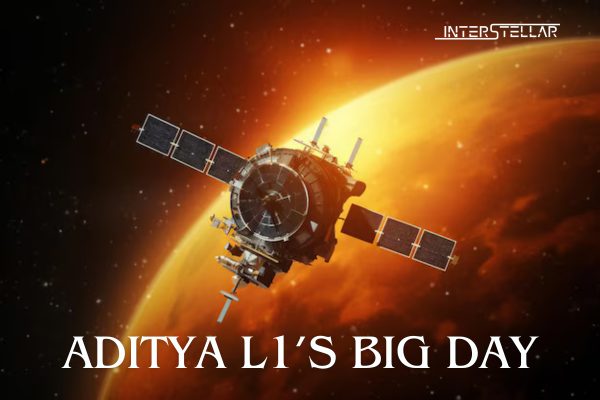
    Aditya L1

    Aditya L1, India’s resident solar observer in space, observed in great detail the recent geomagnetic storm on the solar surface. The Indian Space Research Organisation (ISRO) claimed that two sensors onboard the spacecraft made observations of the solar phenomenon using the Solar Low Energy X-ray Spectrometer (SoLEXS) and High Energy L-1 Orbiting X-ray Spectrometer (HEL1OS). While other equipment on the satellite such as the Aditya Solar Wind Particle Experiment (ASPEX) and High Resolution Digital Magnetometers detected the phenomenon using different techniques a couple of days later.

    Multiple X-class and M-class flares associated with the Coronal Mass Ejections (CMEs) led to the geomagnetic storms that were recorded by the lone sentinel in space. The observations were made in the AR13664 region of the sun. Solar Ultra Violet Imaging Telescope (SUIT) and the Visible Emission Line Coronagraph (VELC) detectors were not able to detect these sudden events as they were in baking and calibration modes. But these two sensors provided additional information later.

    Such geomagnetic storms can throw satellites off their orbits. This could lead to hampering of communications and could lead to internet blackouts in some areas. Strong solar storms can also affect navigation systems on Earth, trigger blackouts and jam high-frequency radios. This was the same storm because of which brighter Northern Lights or Aurora Borealis were observed across a much wider area than usual. Even NASA’s Mars Curiosity rover could see white specks of charged particles due to a later solar storm, the biggest surge in particle detection in the rover’s 12 years on Mars. Earth’s dense atmosphere protects us from such radiation from X-class flares. Although the northern and southern lights are a visible form of interaction with charged particles from the sun.

    Aditya L1, is ISRO’s coronagraphy spacecraft that is located at Lagrange Point 1. The satellite was sent by India to study the sun and is located roughly 15 lakh km from Earth. Lagrange Point (also known as Liberation Point) is an area where the gravitational forces of two massive celestial bodies cancel out each other’s gravitational force. This means that Aditya L1 is at a point where Earth & Sun’s gravities cancel each other out giving the satellite a stable orbit. Aditya was launched on September 2, 2023 and reached orbit on 6 January. The 1,500 KG satellite carries seven different payloads including Plasma Analyser Package For Aditya (PAPA) and the ones listed above.

    Author

    • Dhruv Yadav
      Dhruv Yadav

      View all posts
    Featured
    Share. Facebook Twitter Pinterest LinkedIn Tumblr Email Reddit Telegram WhatsApp
    Dhruv Yadav

      Keep Reading

      India, Russia Launch Indo-Russia Technology Hub to Boost Digital Sovereignty

      PM Modi Hails AI Start-Ups as ‘Co-Architects of India’s Future’ at Roundtable

      Nostalgia Rules CES 2026 as Retro Gadgets Capture Hearts Across Generations

      China Clarifies Japan Export Ban Targets Military Use Only

      Lego Launches Smart Brick and Star Wars Sets at CES 2026

      HIROH Secure SmartPhone and Samsung’s TriFold Lead Smartphone Innovations at CES 2026

      Add A Comment
      Leave A Reply Cancel Reply

      Anti Drone System (CUAS)
      Latest Posts

      How IIT Madras Quietly Built India’s Deep-Tech Powerhouse

      January 8, 2026

      India, Russia Launch Indo-Russia Technology Hub to Boost Digital Sovereignty

      January 8, 2026

      PM Modi Hails AI Start-Ups as ‘Co-Architects of India’s Future’ at Roundtable

      January 8, 2026

      Nostalgia Rules CES 2026 as Retro Gadgets Capture Hearts Across Generations

      January 8, 2026

      China Clarifies Japan Export Ban Targets Military Use Only

      January 8, 2026

      Lego Launches Smart Brick and Star Wars Sets at CES 2026

      January 8, 2026

      HIROH Secure SmartPhone and Samsung’s TriFold Lead Smartphone Innovations at CES 2026

      January 8, 2026

      Japanese Chemical Stocks Drop as China Probes Chipmaking Material Imports

      January 8, 2026

      NASA Mulls Early Crew-11 Return from ISS After Astronaut’s Medical Concern

      January 8, 2026

      AI and Defence Industries to Drive 50% Jump in Copper Demand by 2040, Says S&P

      January 8, 2026

      Subscribe to News

      Get the latest sports news from NewsSite about world, sports and politics.

      • Astronomical Events
      • Space Missions
      • Industry News
      • Science
      StratNewsGlobal Tech
      Facebook X (Twitter) Instagram LinkedIn YouTube
      © 2026 StratNews Global, A unit of BharatShakti Communications LLP
      • About Us
      • Contributors
      • Copyright
      • Contact
      • Write for Us

      Type above and press Enter to search. Press Esc to cancel.