


Astronauts Confident in Boeing’s Starliner Despite Thruster Issues
Extended Stay on the ISS
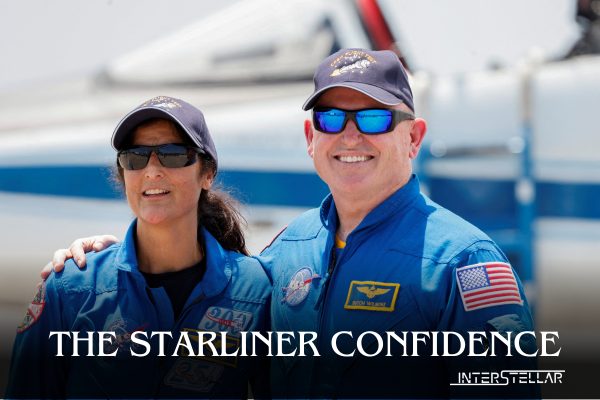
NASA astronauts Sunita “Suni” Williams and Barry “Butch” Wilmore, the first crew to fly Boeing’s Starliner capsule, expressed confidence in the spacecraft’s ability to return them safely to Earth. Their mission, which began on June 5, has been extended indefinitely due to issues with the capsule’s propulsion system.
Thruster Problems and Confidence in Return
During a news conference from the International Space Station (ISS), Williams stated, “I have a real good feeling in my heart that this spacecraft will bring us home, no problem.” Wilmore echoed this sentiment, emphasizing their commitment to testing and resolving the issues. The mission, originally set for eight days, has been prolonged due to the failure of five out of Starliner’s 28 maneuvering thrusters, a malfunctioning propellant valve, and five helium leaks.
Investigation and Testing
NASA and Boeing are conducting extensive tests to understand the propulsion issues. Engineers are test-firing identical thrusters at New Mexico’s White Sands Missile Range and investigating helium leaks at NASA’s Marshall Space Flight Center in Alabama. These tests are crucial to determining a safe return for the astronauts.
NASA’s Approach
Steve Stich, NASA’s commercial crew chief, highlighted the meticulous approach to testing. “We’re taking our time,” Stich said, noting that the results from the New Mexico tests are still pending. Stich hopes to complete testing by the weekend, followed by a detailed review to decide on the astronauts’ return plan.
Alternative Return Options
Currently, two other spacecraft are docked at the ISS: SpaceX’s Crew Dragon and a Russian Soyuz capsule. These could provide alternative return options if necessary. However, the primary plan remains to return Wilmore and Williams on Starliner. Stich reassured that “right now, we don’t see any reason that wouldn’t be the case.”
Starliner’s Readiness and Future
Starliner is approved to stay docked to the ISS for up to 90 days, depending on the health of its lithium-ion batteries. Despite not being certified for non-emergency returns due to the thruster issues, Boeing and NASA have stated that Starliner can safely return the astronauts in an emergency.
Last month, a Russian satellite breakup near the ISS prompted the astronauts to prepare for potential escape, including boarding Starliner. This incident demonstrated Starliner’s readiness to return the crew safely if required.
Confidence in Safety
Mark Nappi, Boeing’s Starliner chief, reiterated confidence in the capsule’s safety for emergency returns. Williams added, “I feel confident that if we had to, if there was a problem with the International Space Station, we can get in our spacecraft, and we can undock, talk to our team, and figure out the best way to come home.”
Conclusion
The extended mission of Williams and Wilmore underscores the importance of rigorous testing and problem-solving in space missions. Their confidence in Starliner, despite current challenges, reflects the resilience and determination of NASA and Boeing in ensuring astronaut safety and mission success.

