


ISRO’s Chandrayaan-3 Reveals Link to Earth’s First Lunar Meteorite
India’s Chandrayaan-3 mission has delivered another significant scientific discovery, with researchers finding that soil at its landing site closely matches the composition of the first confirmed lunar meteorite discovered on Earth. The findings provide fresh insights into the Moon’s geological history and suggest that the south polar region explored by the mission contains material originating from multiple layers of the lunar crust.
The study, published in Nature by researchers from the Indian Space Research Organisation (ISRO), analysed data collected by Chandrayaan-3’s instruments and sheds new light on how billions of years of asteroid impacts have reshaped the lunar surface.
Chandrayaan-3 Site Linked to Historic Lunar Meteorite
Scientists compared the composition of rocks and soil analysed at Shiv Shakti Point, Chandrayaan-3’s landing site near the Moon’s south pole, with laboratory studies of the Calcalong Creek meteorite, widely recognised as the first confirmed lunar meteorite found on Earth.
The comparison revealed striking similarities in mineral composition, suggesting that both the meteorite and the Chandrayaan-3 landing site may have originated from similar geological environments on the Moon.
This discovery helps bridge a long-standing gap in lunar science. Meteorites are ejected from the Moon during asteroid impacts before eventually falling to Earth, making it extremely difficult to identify their original locations. By matching the composition of the meteorite with material studied directly on the Moon, researchers have established an important geological connection.
Evidence of a Complex Lunar Crust
One of the study’s most significant findings is that the soil at Shiv Shakti Point is not composed of a single type of rock. Instead, it contains a mixture of materials derived from different depths within the Moon’s crust.
Researchers believe billions of years of asteroid and meteorite impacts repeatedly excavated underground rocks and scattered them across the lunar surface. This continuous process, often referred to as impact gardening, gradually mixed material from multiple geological layers into the surface soil.
As a result, the region preserves a far more complex geological record than scientists had previously understood.
The findings indicate that the south polar terrain contains evidence of the Moon’s long geological evolution, with ancient material from different crustal layers brought together by successive impact events.
Chandrayaan-3 Continues to Deliver Scientific Results
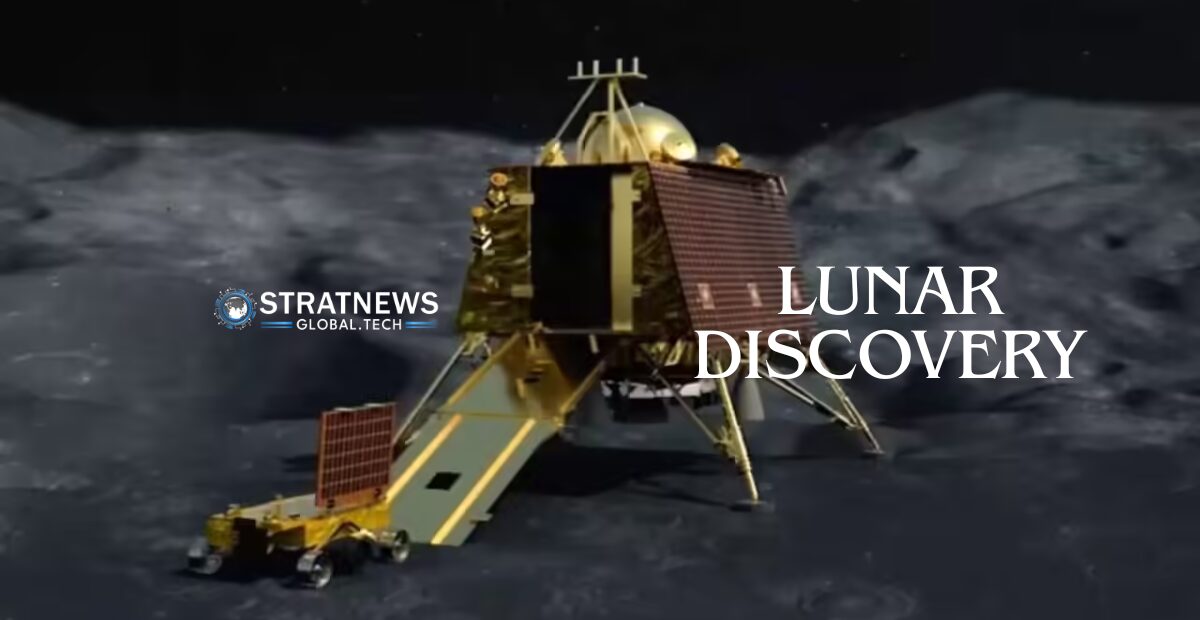
Chandrayaan-3 made history in August 2023 by becoming the first mission to achieve a successful soft landing near the Moon’s south pole. Its Vikram lander and Pragyan rover carried out in-situ investigations of the lunar environment, studying surface rocks, soil composition, temperature variations and elemental abundances.
Although the mission’s surface operations concluded after its planned scientific campaign, the data it collected continue to generate important discoveries.
The latest research demonstrates the enduring scientific value of Chandrayaan-3, with observations gathered during the mission still providing new insights into the Moon’s formation and evolution.
Connecting Earth and the Moon
By linking the composition of Shiv Shakti Point with the Calcalong Creek meteorite, researchers have established a valuable reference point for understanding the relationship between lunar samples found on Earth and their possible origins on the Moon.
Such connections allow scientists to interpret meteorites with greater confidence and improve models of how ancient impacts redistributed material across the lunar surface.
The study also reinforces the importance of in-situ exploration, as direct measurements from the Moon provide critical context that laboratory analysis of meteorites alone cannot offer.
New Insights Into Lunar Evolution
The findings suggest that the Moon’s crust has undergone extensive mixing over billions of years through repeated asteroid impacts. Rather than preserving isolated layers of rock, the surface at Shiv Shakti Point contains material excavated from different depths and redistributed across the landscape.
This complex geological history offers scientists a richer record of the processes that have shaped the Moon since its formation.
As researchers continue analysing Chandrayaan-3’s data, the mission is expected to deepen understanding of lunar evolution and improve knowledge of how impact events have transformed the Moon’s surface over geological time.
The latest discovery also highlights the continuing scientific legacy of Chandrayaan-3, demonstrating that its observations remain a valuable resource for advancing lunar science years after the mission’s successful landing.