


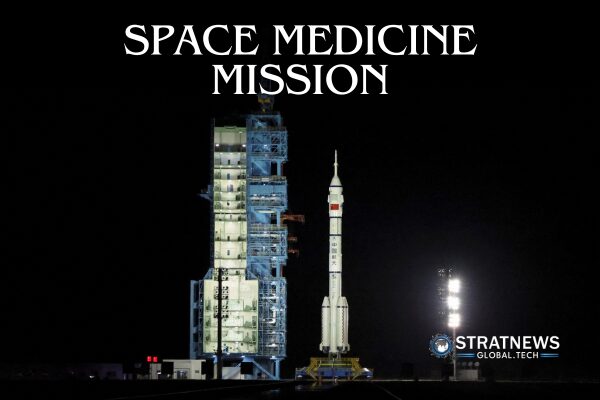
China’s Shenzhou-20 Mission: Pioneering Space Medicine Research
At the Jiuquan Satellite Launch Centre in northwest China, final preparations for the Shenzhou-20 mission were in full swing. Researchers carefully packed cell samples, ensuring their safe delivery for an extraordinary mission into space.
Swift Preparations to Protect Vital Samples
To preserve the cells’ integrity, scientists rehearsed the entire loading process beforehand. During the real event, the cells were loaded just six and a half hours before launch. This tight schedule aimed to maintain the best possible conditions for the samples.
Li Yinghui, a key researcher, explained, “We loaded the cells at the last minute before launching, aiming to provide them with the most suitable and optimal environmental conditions. During this process, we try to keep the cells in a dormant state as much as possible, so that their response to the environment can be minimised. After entering orbit, we have specialised cell culture incubators inside the space medicine experiment cabinet, which are set to 37 degrees Celsius. This is when we activate the cells.”
Launching into a New Phase of Space Exploration
The Shenzhou-20 spacecraft, atop the Long March-2F rocket, soared into the sky, carrying astronauts Chen Dong, Chen Zhongrui, and Wang Jie. Now aboard China’s space station, the team is preparing to conduct three pioneering cytology experiments.
These experiments build on years of scientific study, focusing on how human cells behave in the unique environment of space. Researchers hope the findings will offer new insights into human health, both in orbit and on Earth.
Exploring Thrombosis and Brain Function in Space
One major focus is the study of blood clots. Li Yinghui noted, “In space, there have been examples of astronauts developing blood clots, so we are focusing on the mechanisms of thrombosis. We have chosen cardiac muscle cells and endothelial cells to conduct co-cultivation, to observe their interactions under microgravity conditions.”
In another groundbreaking project, researchers will, for the first time globally, co-culture three types of brain cells — from the cortex, thalamus, and cerebellum — to create a ‘tri-brain-like’ organoid. This experiment aims to study their interactions from the perspective of motor function under weightless conditions.
Shenzhou-20 Blending Traditional and Modern Medicine
The team is also combining traditional and modern methods by exploring how classical clinical formulas from traditional Chinese medicine can help regulate neural cells. This innovative research hopes to enhance memory functions for astronauts in space.
With more than 22 successful cytology experiments completed during previous missions, the Shenzhou-20 crew’s work continues to push the frontiers of space medicine. Their findings could one day lead to breakthroughs in treating health issues on Earth and beyond.
From Jiuquan to orbit, China’s journey of scientific discovery continues to reach new heights.
with inputs from Reuters

