


Close Menu
Stratnews GlobalStratnews Global
    Facebook X (Twitter) Instagram
    Trending
    • Age Check laws gain momentum as nations target teen access
    • Space Exercise Device for Astronaut Microgravity Training
    • India Science Exhibition Highlights Space and Nuclear Progress
    • Social media ban planned for under 16 users in Indonesia
    • Russian hackers target Signal accounts globally
    • Anthropic lawsuit targets Pentagon blacklist decision
    • Commercial Space Strategy Faces Concentration Risks
    • AI in Space Technology could Transform Satellite Operations
    • Support Us
    Stratnews GlobalStratnews Global
    Write for Us
    Thursday, March 12
    • Space
    • Science
    • AI and Robotics
    • Industry News
    • Support Us
    Stratnews GlobalStratnews Global
    Home » NASA Reduces Boeing Starliner Contract, Plans Uncrewed Flight in 2026

    NASA Reduces Boeing Starliner Contract, Plans Uncrewed Flight in 2026

    Kanika SharmaBy Kanika SharmaNovember 25, 2025 Space No Comments3 Mins Read
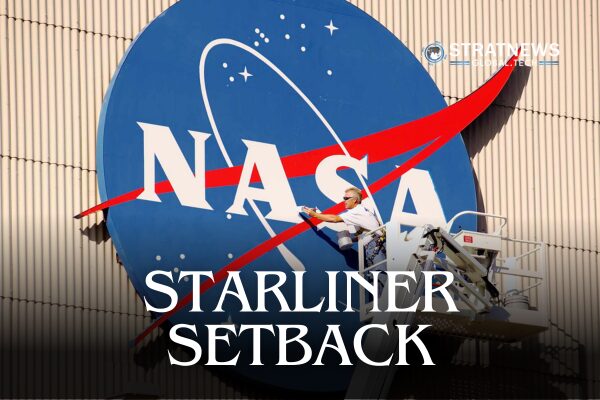
    NASA Starliner

    NASA Cuts Boeing Starliner Missions and Shifts Next Flight to Cargo

    NASA has scaled back Boeing’s Starliner programme, cutting the number of astronaut missions and confirming that the spacecraft’s next flight to the International Space Station (ISS) will be uncrewed. The decision marks a significant downsizing of Boeing’s role in the US space agency’s Commercial Crew Program, long overshadowed by Elon Musk’s SpaceX.

    Reduced Missions and Contract Value

    Under the revised contract, NASA will fund four Starliner flights — including up to three crewed missions and one uncrewed cargo flight scheduled for April next year. Two more flights remain optional. This modification slashes Boeing’s contract value by $768 million, reducing it from $4.5 billion to $3.732 billion. NASA said it has already paid $2.2 billion of that total.

    The changes follow years of delays and technical issues. Starliner’s first crewed test flight in 2024, carrying astronauts Butch Wilmore and Suni Williams, encountered serious problems when several thrusters failed during its approach to the ISS. The malfunction left the crew stranded on the station for nine months while NASA and Boeing worked on solutions.

    Boeing Stays the Course Despite Setbacks

    A Boeing spokeswoman said the company remains committed to the Starliner programme, stressing that “safety remains our highest priority.” She added that the upcoming Starliner-1 mission incorporates all lessons learned from previous tests.

    Steve Stich, who manages NASA’s Commercial Crew Program, said the agency and Boeing are “rigorously testing” the spacecraft’s propulsion system. He added that the latest contract update will allow both sides to focus on certifying Starliner safely by 2026 and preparing it for future missions aligned with the ISS’s operational timeline through 2030.

    SpaceX Pulls Ahead in the Race

    NASA selected both Boeing and SpaceX in 2014 to develop crewed capsules for astronaut transport to and from the ISS. While SpaceX’s Dragon spacecraft has successfully conducted regular crewed missions since 2020, Boeing’s Starliner has faced persistent delays, technical faults, and cost overruns.

    Amid Starliner’s struggles, NASA has granted SpaceX additional missions extending through the ISS’s planned retirement in 2030. The agency has maintained that two operational US spacecraft are essential to reduce dependence on Russian Soyuz capsules in case SpaceX’s Dragon becomes grounded.

    Despite setbacks, Boeing views Starliner as a potential commercial craft for future private space stations beyond the ISS era. For now, its next mission — Starliner-1 — set for April 2026, will carry cargo instead of astronauts as the company works toward full certification.

    with inputs from Reuters

    Author

    • Kanika Sharma
      Kanika Sharma

      View all posts
    Featured
    Share. Facebook Twitter Pinterest LinkedIn Tumblr Email Reddit Telegram WhatsApp
    Kanika Sharma
    Kanika Sharma

      Keep Reading

      Age Check laws gain momentum as nations target teen access

      Space Exercise Device for Astronaut Microgravity Training

      India Science Exhibition Highlights Space and Nuclear Progress

      Social media ban planned for under 16 users in Indonesia

      Russian hackers target Signal accounts globally

      Anthropic lawsuit targets Pentagon blacklist decision

      Add A Comment
      Leave A Reply Cancel Reply

      Anti Drone System (CUAS)
      Latest Posts

      Age Check laws gain momentum as nations target teen access

      March 10, 2026

      Space Exercise Device for Astronaut Microgravity Training

      March 10, 2026

      India Science Exhibition Highlights Space and Nuclear Progress

      March 10, 2026

      Social media ban planned for under 16 users in Indonesia

      March 10, 2026

      Russian hackers target Signal accounts globally

      March 10, 2026

      Anthropic lawsuit targets Pentagon blacklist decision

      March 10, 2026

      Commercial Space Strategy Faces Concentration Risks

      March 9, 2026

      AI in Space Technology could Transform Satellite Operations

      March 9, 2026

      Semiconductor Training Expands Through India’s C2S Initiative

      March 9, 2026

      Digital Divide Narrows Through India’s Digital Transformation

      March 9, 2026

      Subscribe to News

      Get the latest sports news from NewsSite about world, sports and politics.

      • Astronomical Events
      • Space Missions
      • Industry News
      • Science
      StratNewsGlobal Tech
      Facebook X (Twitter) Instagram LinkedIn YouTube
      © 2026 StratNews Global, A unit of BharatShakti Communications LLP
      • About Us
      • Contributors
      • Copyright
      • Contact
      • Write for Us

      Type above and press Enter to search. Press Esc to cancel.