


Russia is making steady progress on its own satellite internet network, known as “Rassvet” (which translates to “dawn”).
The project, led by Bureau 1440, is part of a broader push to reduce reliance on foreign technology, especially in communications. After a series of recent tests, Rassvet is now edging closer to real-world deployment and could eventually compete with SpaceX’s Starlink.
Real Progress
So far there has been successful testing of laser communication between satellites and this is very important for modern satellite constellations.
According to available data, these inter-satellite links have reached speeds of up to 10 Gbps, with low latency. That is a strong indicator that the system could eventually support fast, stable internet across large distances.
Earlier experiments were more modest, initial test satellites recorded download speeds of around 12 Mbps back in 2023. Since then, six prototype satellites have been orbiting Earth, helping engineers refine the system.
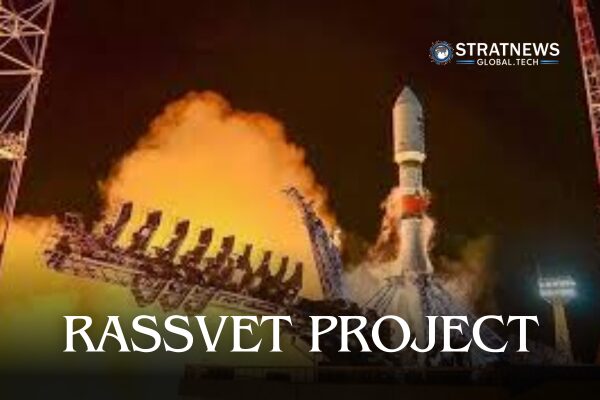
Today, a Soyuz-2.1B rocket from Russia successfully deployed 16 more satellites. This marks the first real step toward building out the network at scale, rather than just testing individual components.
An Alternative to Starlink
Elon Musk’s Starlink presently leads in the satellite internet space, with active users around the world as it has thousands of satellites already in orbit.
Since Starlink is not available in Russia, there was a need to create a network that can serve both civilian and government needs, especially in remote regions like the Arctic. Once fully operational successfully, this can also be offered to other countries, adding a geopolitical dimension to the project.
Scaling Up Will Take Time
Despite the recent progress, there have been several delays. The first larger batch of satellites was originally expected earlier.
Even so, the long-term plan is ambitious:
- Up to around 150 satellites in orbit by 2026
- Close to 300 by 2027
- More than 900 satellites by 2035
Commercial service is expected to begin around 2027, once a few hundred satellites are operational. User terminals—essentially the ground equipment customers will need—are also expected to enter mass production by late 2026.
The project is backed by Russia’s “Data Economy” program, which means it has significant government support behind it.
Remote Connectivity
Just like Starlink, Rassvet will use low-Earth orbit (LEO) satellites. As these satellites fly closer to Earth than traditional ones, they can deliver faster speeds and lower latency.
One area where Rassvet could stand out is its focus on laser links between satellites. This could make the network more independent and potentially more secure, an important factor for both infrastructure and defence.
Its main purpose, though, is straightforward: bringing reliable internet to places where cables and cell towers don’t reach.
Competitive Future in Space
Satellite internet is entering a new phase globally. Systems like Starlink have already shown how effective LEO networks can be, even in remote or disaster-hit areas.
Rassvet’s progress suggests that more countries want their own versions, not just for business, but for control over critical infrastructure.
Starlink still has a huge head start, but if Rassvet stays on track for its 2027 rollout, it could become a serious regional competitor.