


This Indian Woman Scientist’s Research Reached NASA While Her Technology Now Guides Flights Across India
Behind many of India’s advances in defence, aviation and aerospace stands a group of scientists whose contributions rarely receive public attention. Among them is Dr. Shubha Venkatesh Iyengar, whose decades of research helped solve complex scientific challenges and strengthened India’s technological capabilities. Her work ranged from supporting the Agni missile programme to leading the development of an indigenous runway visibility system that now assists aircraft operations across the country.
Moreover, her research earned international recognition after papers she authored were published by NASA as official reports. Although she has largely remained out of the spotlight, her contributions have had a lasting impact on India’s scientific progress.
A Childhood Shaped by Determination
Dr. Iyengar grew up as the youngest of nine siblings in a family that valued education despite the social barriers faced by girls at the time. According to her, her father strongly encouraged her to pursue higher studies when many discouraged women from continuing their education.
She excelled academically from an early age. She secured first rank in both her undergraduate and postgraduate Physics degrees at Bangalore University and received several gold medals for her outstanding performance.
Her father remained her greatest source of encouragement. He insisted that she pursue a PhD despite prevailing attitudes towards women in higher education. After completing her master’s degree with top honours, she received a fellowship without having to appear for a written examination or interview, allowing her to continue her research journey.
Building India’s Aerospace Capabilities
The fellowship led Dr. Iyengar to the National Aeronautical Laboratory, now known as the National Aerospace Laboratories (NAL), where she joined as a research student in 1974.
Over the following decades, she worked on technologies that contributed to India’s aerospace, aviation and defence sectors. Her dedication and scientific achievements earned recognition, including the Young Scientist Award from the Computer Society of India in 1989.
Her long career reflected a commitment to developing indigenous technologies that addressed critical national requirements.
Developing the Indigenous ‘Drishti’ System
One of Dr. Iyengar’s most significant achievements came with the development of Drishti, India’s first indigenous runway visibility measuring system.
Dense winter fog often reduces visibility at airports, particularly in northern India, making aircraft landings difficult and increasing the risk of delays and disruptions. As the team leader, Dr. Iyengar played a central role in developing a cost-effective system capable of accurately measuring runway visibility and weather conditions.
She stated that Drishti, created in 2011, became India’s first indigenous runway visibility system designed to guide aircraft safely during poor visibility conditions.
Today, Drishti is installed at every international airport in India as a mandatory system. In addition, the Indian Air Force also uses the technology. Its development reduced the country’s dependence on expensive imported systems while saving valuable foreign exchange.
Contributions to India’s Defence Programme
Dr. Iyengar’s work extended beyond civil aviation. She also contributed to India’s defence programmes by helping resolve a critical technical issue that had prevented the Agni missile from reaching its intended target.
Later, she developed indigenous components capable of operating at speeds of Mach 5 while withstanding temperatures approaching 3,000 Kelvin. These advancements supported several important defence and space missions over many years.
Although much of this work remained behind the scenes, it played a significant role in strengthening India’s strategic technological capabilities.
International Recognition and National Honour
Dr. Iyengar’s research gained recognition beyond India when papers she authored were published by NASA as official reports. This acknowledgement highlighted the international relevance of her scientific work.
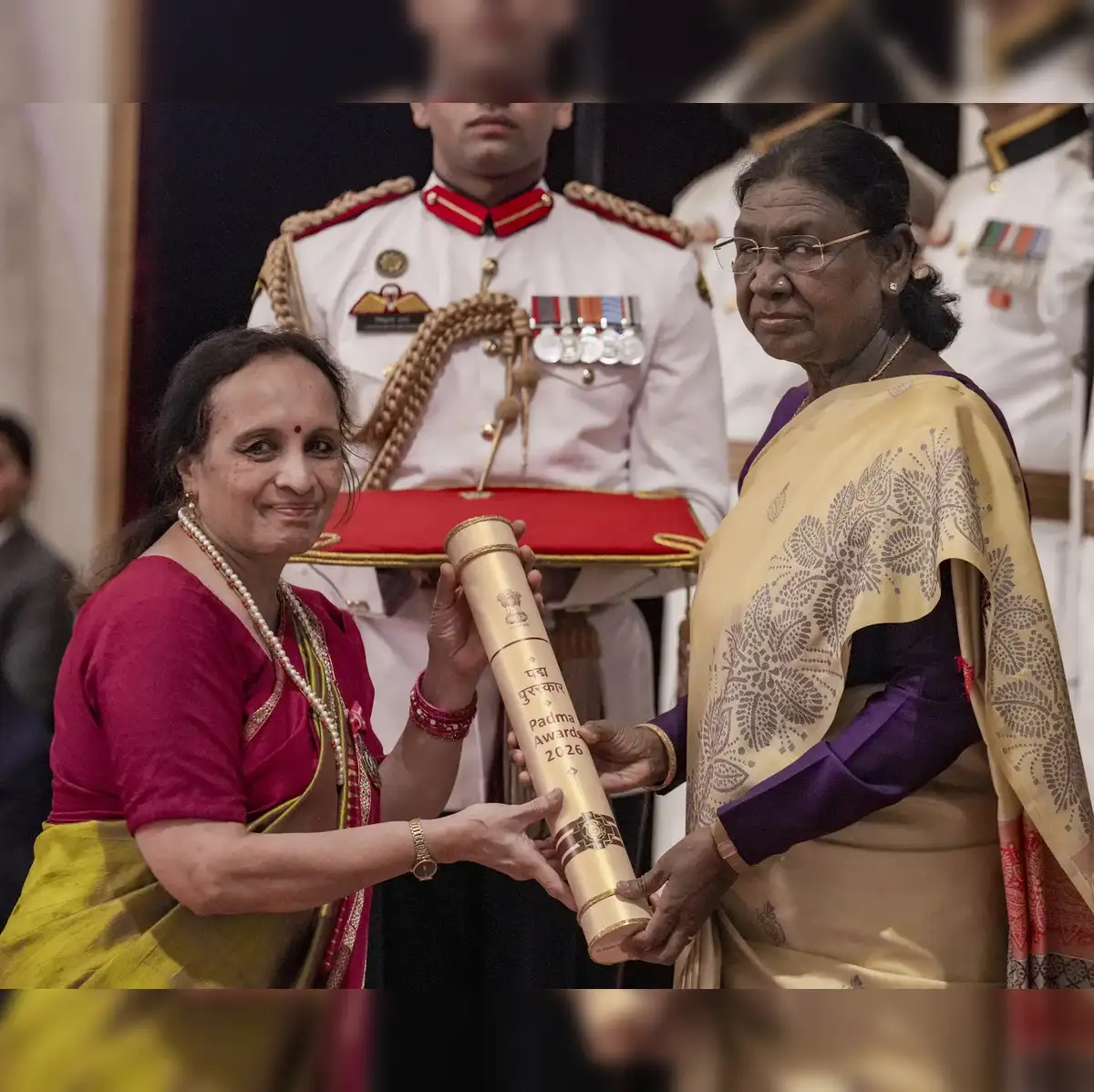
In 2026, she received the Padma Shri for developing Drishti, India’s first indigenous runway visibility measuring system. The honour recognised her decades of dedication to scientific research and indigenous innovation.
Reflecting on her career, Dr. Iyengar has said that her greatest satisfaction comes not from awards but from contributing to the nation. She has encouraged women to pursue any profession they choose, believing that determination and commitment enable them to succeed.
Her journey demonstrates how perseverance, scientific excellence and quiet dedication can create technologies that benefit an entire nation while inspiring future generations of women in science.